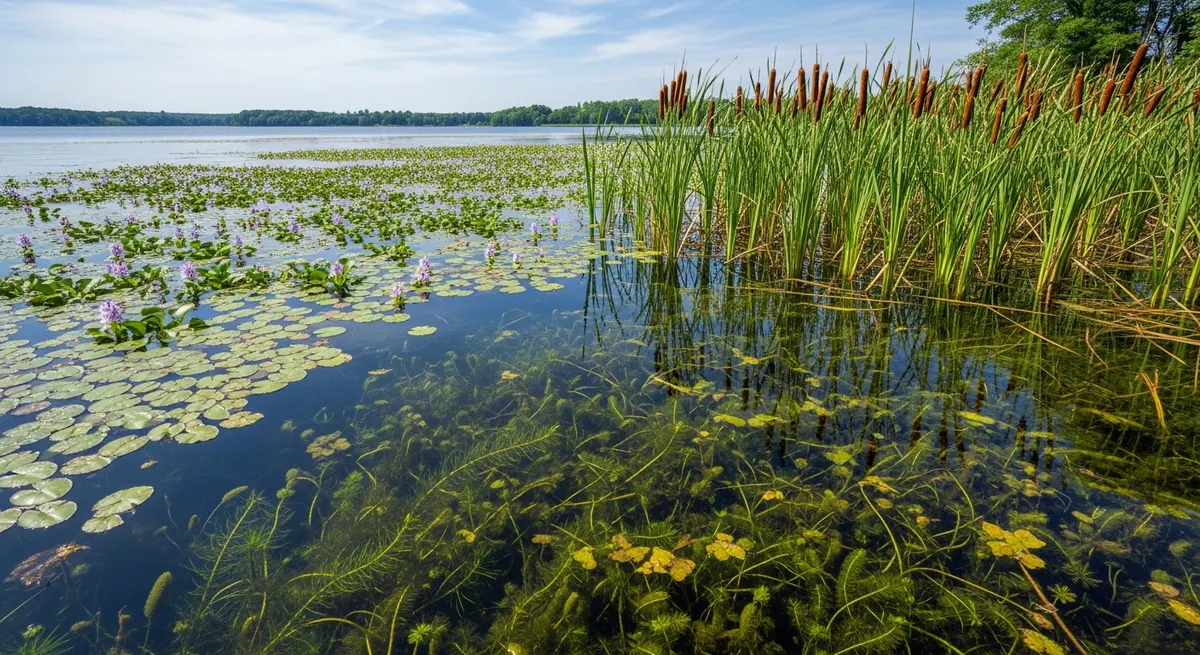
Research consistently documents that aquatic weed infestations significantly reduce lakefront property values. Studies across multiple states find reductions of 10–25% on lakes with significant weed problems compared to well-managed lakes of similar characteristics. For a typical lakefront community, this translates to millions of dollars in reduced property values — far exceeding any realistic management program cost.
- Studies show aquatic weed infestations can reduce lakefront property values by 10–20% or more.
- Recreational impairment — blocked boat access, reduced swimming areas, poor aesthetics — is the primary driver.
- Property value impacts extend beyond the infested parcel to adjacent properties on the same water body.
- Successful weed management programs have documented property value recovery in lake association case studies.
- Buyers of lakefront property increasingly conduct weed assessments before purchase — infestations affect sale prices.

The Research on Aquatic Weeds and Property Values
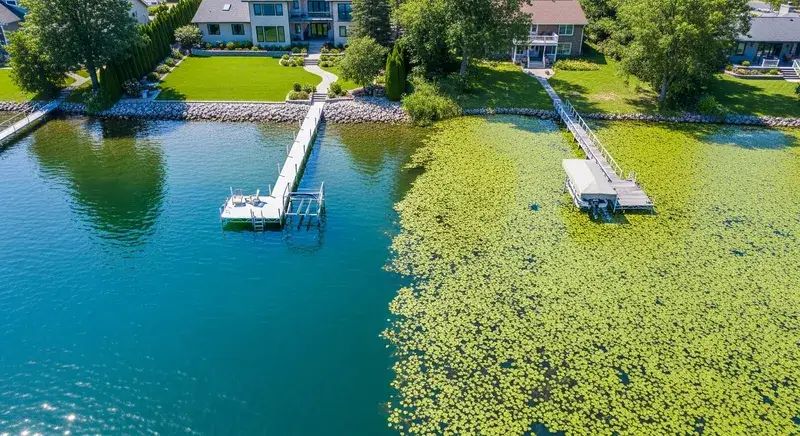
The economic relationship between aquatic weed infestations and lakefront property values has been studied systematically in multiple states. Hedonic pricing models — which decompose property values into components attributable to different characteristics — consistently find that water quality indicators including water clarity, shoreline access, and weed coverage are among the strongest predictors of lakefront property prices.
Key studies include:
- A Wisconsin study of over 1,000 lakefront property sales found that properties on lakes with exotic aquatic weed infestations sold at prices 10–18% below comparable weed-free lakes
- A Minnesota study found that each 1-meter reduction in Secchi disk visibility (a water clarity measure often correlated with weed and algae problems) reduced property values by 2–3%
- A New Hampshire study documented 12–20% value reductions on lakes with significant watermilfoil infestations
- A national review found that the economic damage from aquatic invasive species includes both direct management costs and property value losses that together run into hundreds of millions of dollars annually
Mechanisms of Value Impact
Aquatic weeds reduce property values through multiple pathways:
Recreational Impairment
Dense weed beds block swimming, boating, fishing, and dock access — the primary recreational amenities that lakefront property premiums are purchased for. Properties that cannot be used for their primary recreational purpose suffer the most severe value reductions.
Visual and Aesthetic Impact
Water views — particularly clear, open water views — are a primary driver of lakefront property premiums. Dense floating weed mats, turbid weed-impacted water, and shoreline encroachment by emergent vegetation all degrade the visual quality that buyers pay premium prices for.
Ecological Indicators
Aquatic weed problems are often visible indicators of broader water quality degradation — elevated nutrients, reduced clarity, declining fish populations — that further reduce property values and recreational utility. Managing aquatic weeds as part of a comprehensive water quality program thus protects broader property value drivers in addition to addressing the specific weed problem.
Sources & Scientific References
- Horsch, E.J. & Lewis, D.J. (2009). The effects of aquatic invasive species on property values. Land Economics, 85(3), 391–405.
- Provencher, B. et al. (2012). Aquatic invasive species and property values. Journal of Environmental Economics and Management, 63(2), 220–235.
- Pimentel, D. et al. (2005). Update on the environmental and economic costs associated with alien-invasive species. Ecological Economics, 52, 273–288.
Frequently Asked Questions
Do aquatic weeds lower property values?
Yes. Multiple peer-reviewed studies document significant negative effects of aquatic weed infestations on lakefront property values. Studies in Wisconsin, Minnesota, and New Hampshire found property value reductions of 10–25% on lakes with significant exotic weed problems compared to weed-managed or weed-free lakes of similar characteristics. Water clarity (which invasive weeds reduce) is consistently one of the strongest determinants of lakefront property values in hedonic pricing studies.
How much do aquatic weeds decrease property value?
Documented reductions range from 10% to 25% depending on weed density, species, lake size, and real estate market conditions. A 2019 study in Wisconsin found that lakes with moderate to severe Eurasian watermilfoil infestations sold at values 10–18% below comparable weed-managed lakes. For a lakefront property valued at $500,000, this represents $50,000–$90,000 in reduced value — significantly exceeding a typical annual share of lake management costs.
Does weed management increase property values?
Research supports that active aquatic weed management maintains property values compared to unmanaged lakes. A Wisconsin study found that properties on association-managed lakes sold at significantly higher prices than comparable properties on unmanaged lakes with similar weed problems. The investment in management programs shows measurable return in maintained property values, supporting the economic case for lake association management funding.
Can I sell a lakefront home with aquatic weeds?
Aquatic weed disclosure requirements vary by state. Some states require disclosure of known aquatic invasive species in property transactions. Weed problems that impair recreational use or indicate water quality issues may affect appraisal values and buyer negotiations. Lakes with active management programs that control weeds to tolerable levels may not face significant value discounts compared to unmanaged weed-impacted lakes.
Key Takeaways
- Studies show aquatic weed infestations can reduce lakefront property values by 10–20% or more.
- Recreational impairment — blocked boat access, reduced swimming areas, poor aesthetics — is the primary driver.
- Property value impacts extend beyond the infested parcel to adjacent properties on the same water body.
- Successful weed management programs have documented property value recovery in lake association case studies.
- Buyers of lakefront property increasingly conduct weed assessments before purchase — infestations affect sale prices.
Ten-Year Lake Management Plan: Lake Wingra, WI
Lake Wingra, a 342-acre urban lake in Madison, WI, developed a comprehensive 10-year management plan coordinating the City of Madison, University of Wisconsin, and adjacent neighborhood associations. The plan addressed Eurasian watermilfoil, curly-leaf pondweed, and purple loosestrife through an integrated approach including targeted herbicide treatment, mechanical harvesting, native plant restoration, and public education.
Key outcome: The structured multi-agency planning process secured consistent funding across multiple budget cycles, a key advantage over ad hoc management. Native plant restoration efforts showed measurable progress in designated restoration zones within three years of initiation.
As a lakefront property owner I was completely lost until I found AquaticWeed.org. The permit guidance alone saved me from making costly, potentially illegal treatment mistakes.
Gerald Renfrew Lakefront Landowner, WI · Vilas CountyI've managed aquatic vegetation on Texas reservoirs for 15 years. The water hyacinth control content here is the most up-to-date, practical guidance I've found anywhere online.
Travis McKinley Commercial Fishing Guide, TX · Lake Travis / Lake Austin