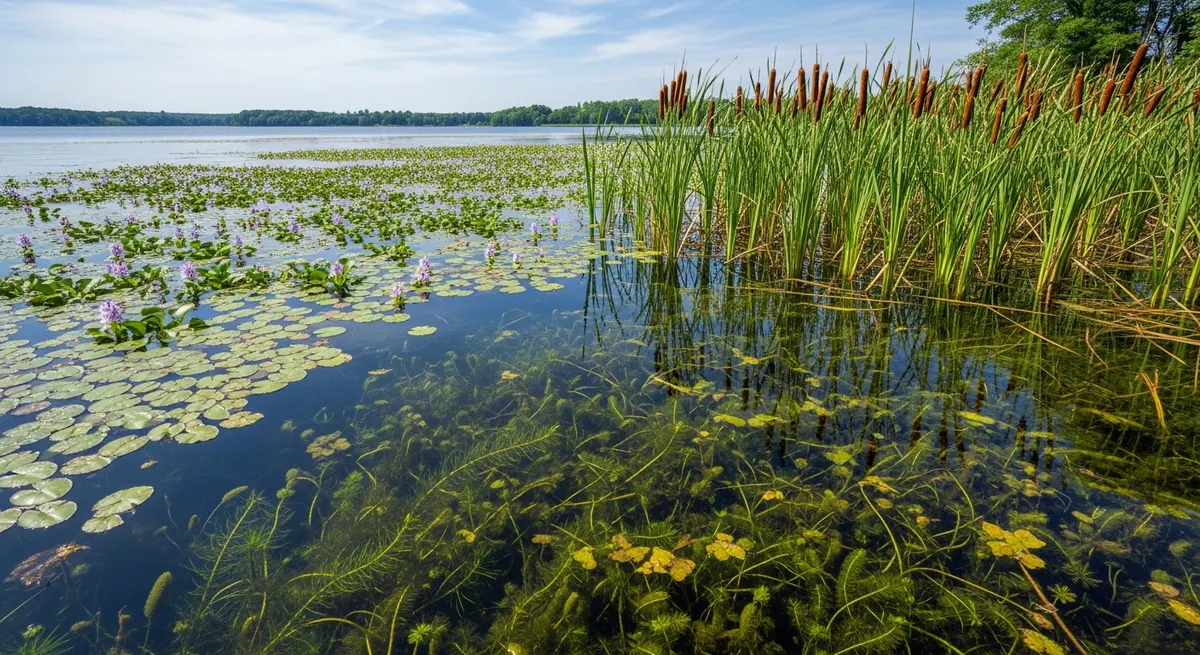
Climate change is amplifying the aquatic weed problem in the United States through multiple mechanisms: warming water temperatures expand the geographic range of warm-water invasive species, longer growing seasons allow higher peak biomass before winter die-back, increased precipitation intensity delivers more nutrients to water bodies, and earlier spring ice-out extends growing seasons in northern lakes. The combined effect is likely to substantially worsen aquatic weed management challenges over the coming decades.
- Warming water temperatures are expanding the suitable habitat range of warm-water invasives like hydrilla and water hyacinth northward.
- Longer growing seasons mean aquatic weeds reach higher peak biomass before natural cold-weather dieback.
- Increased precipitation and runoff from extreme weather events deliver more nutrients to water bodies, fueling weed growth.
- Earlier ice-out dates in northern lakes are allowing warm-water invasives to establish in historically cold-limited regions.
- Climate projections suggest management costs will increase substantially as species ranges shift and infestation severity increases.
The Temperature-Growth Relationship
Temperature is the single most important factor controlling the growth rate and seasonal biomass accumulation of most problematic aquatic weed species. Biochemical reaction rates approximately double with every 10°C increase in temperature within physiological limits. This means that a water body warming from an average July temperature of 22°C to 24°C experiences a substantial increase in weed growth rates — not just a modest, linear change.
For warm-water invasives like water hyacinth — which can double its population every 12 days at 28°C but slows dramatically below 20°C — small increases in average summer temperatures translate to significantly larger end-of-season biomass. Water bodies in states where summer temperatures now routinely exceed 25°C face more intense management pressure than they did 20–30 years ago. States where summer temperatures previously stayed below the threshold for rapid growth are beginning to experience conditions that support more aggressive invasive establishment. Aquatic weed growth rates →
Range Expansion: Documented and Projected
The northward range expansion of warm-water aquatic invasive species is already documented in occurrence databases. USGS Nonindigenous Aquatic Species records show hydrilla, water hyacinth, and related species appearing in states at or beyond their historical northern range limits. Eurasian watermilfoil — already established in every contiguous state — is producing denser infestations in northern lakes that previously experienced less severe problems due to cold temperature limitations.
Predictive habitat modeling using climate change scenarios consistently projects that by mid-century, suitable habitat for hydrilla and water hyacinth will extend substantially further north. States in the Great Plains, Midwest, and New England that currently have fewer aquatic weed problems than their southern counterparts should begin investing in prevention infrastructure now — while infestations are small or absent — rather than waiting for the management crisis that typically follows establishment. Early detection programs →
Precipitation, Nutrients, and the Compounding Effect
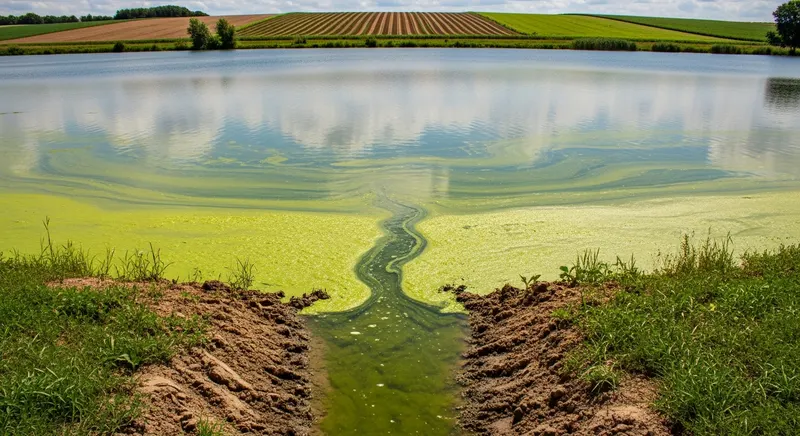
Changes in precipitation patterns compound the temperature-driven growth acceleration. Warmer temperatures with no change in nutrient availability would produce a meaningful increase in weed problems. Warmer temperatures combined with increased nutrient loading — from more intense runoff events, earlier snowmelt, and longer ice-free periods that allow more nutrient cycling — produce a compounding effect significantly worse than either driver alone. The US Global Change Research Program's National Climate Assessment projects both increasing temperature and increasing precipitation intensity across most of the contiguous US, with both changes unfavorable from an aquatic weed management perspective. Aquatic weed growth drivers →
Management Implications
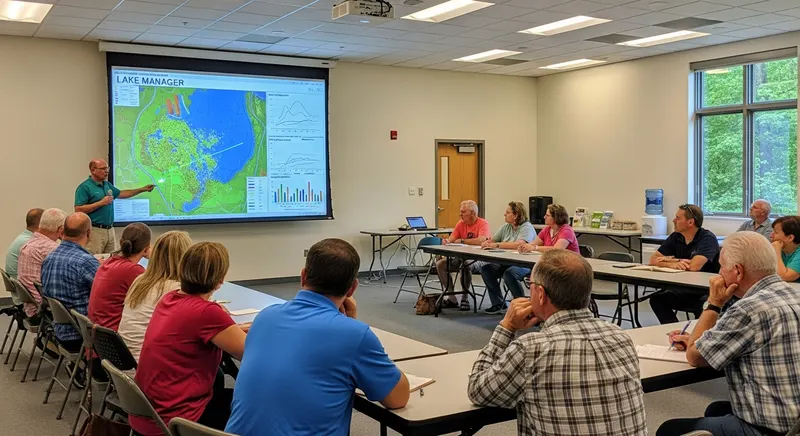
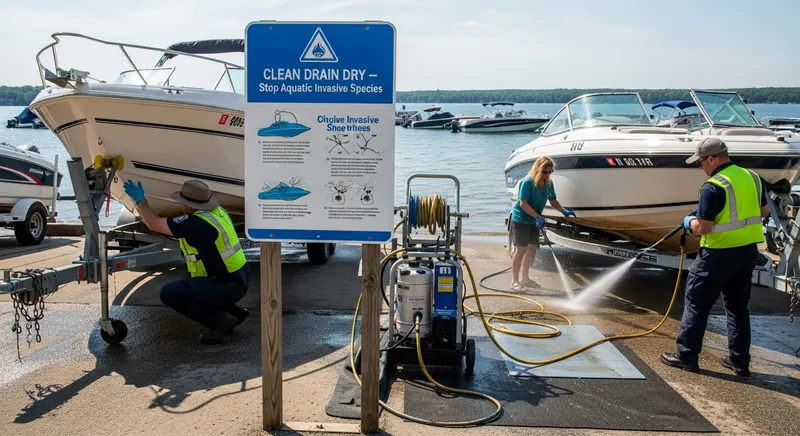
Lake managers are already adapting to changing conditions in several ways. Treatment timing is being adjusted to account for earlier spring emergence — early-season herbicide applications before plants reach the surface are more effective than reactive treatment of surface mats, and the optimal treatment window is shifting earlier in the calendar. Monitoring programs are being extended into seasons that previously didn't require surveillance. Prevention investments are being prioritized to stop new species from establishing in newly suitable habitats before they require intensive management. Nutrient reduction — reducing the phosphorus loading that amplifies weed growth — is increasingly recognized as the highest-leverage long-term adaptation, as nutrient availability is the one major driver of weed growth that management can directly address.
Sources & Scientific References
- Rahel, F.J. & Olden, J.D. (2008). Assessing the effects of climate change on aquatic invasive species. Conservation Biology, 22(3), 521–533.
- Poff, N.L. et al. (2002). Aquatic ecosystems and global climate change. Pew Center on Global Climate Change.
- Strayer, D.L. (2010). Alien species in fresh waters: ecological effects, interactions with other stressors, and prospects for the future. Freshwater Biology, 55, 152–174.
Frequently Asked Questions
Is climate change making aquatic weed problems worse?
Yes, across most of the United States. Warming water temperatures are the most direct effect — most problematic aquatic invasive species grow fastest in warm water, and temperature is the primary factor limiting their northern range extent. As average water temperatures increase and winter cold periods shorten, the conditions that naturally suppress warm-water invasives in northern states are becoming less effective. Studies have documented the northward range expansion of several key invasive species over the past two decades.
How does warming water temperature affect aquatic weed growth?
Most problematic aquatic weeds — hydrilla, water hyacinth, giant salvinia, and Eurasian watermilfoil — grow fastest at water temperatures above 25°C (77°F). Warmer temperatures accelerate the entire growth cycle: faster cell division, more rapid biomass accumulation, earlier spring emergence, and later fall senescence. A water body that historically reached peak weed biomass in late August may now peak in mid-August and maintain high biomass through September as fall cooling is delayed. This added growing time means more total biomass to manage each season.
Are invasive aquatic plants spreading north due to climate change?
Yes. Range expansion data for several key species shows a clear northward trend consistent with climate projections. Water hyacinth has expanded its established range northward in the southeastern US. Hydrilla has been documented in new northern states where it was not established 20–30 years ago. Giant salvinia, which historically could not survive frost, is being found in increasingly northern locations. Computer models projecting future suitable habitat ranges under various climate scenarios consistently predict substantial northward range expansion for warm-water aquatic invasive species.
How does increased precipitation affect aquatic weed problems?
Climate change is projected to intensify precipitation in most of the US — producing both more intense individual rain events and more variable conditions (droughts followed by floods). Intense rain events deliver concentrated pulses of nutrient-laden runoff (fertilizer, sediment, organic matter) to lakes and rivers, elevating phosphorus and nitrogen concentrations that fuel aquatic weed growth. Drought conditions concentrate nutrients in reduced water volumes. Both extremes worsen the nutrient conditions that drive aquatic weed proliferation.
What can lake managers do to adapt to climate change impacts on aquatic weeds?
Adaptive management for climate change in aquatic systems includes: intensifying prevention and early detection programs to catch new species establishing in newly suitable ranges; adjusting treatment timing to account for earlier spring emergence and later fall persistence; increasing monitoring frequency during newly extended growing seasons; reducing nutrient loading from the watershed — the highest-leverage action that reduces weed-favorable conditions regardless of temperature; and engaging in regional coordination to respond to species range shifts that cross political boundaries.
Key Takeaways
- Warming water temperatures are expanding the suitable habitat range of warm-water invasives like hydrilla and water hyacinth northward.
- Longer growing seasons mean aquatic weeds reach higher peak biomass before natural cold-weather dieback.
- Increased precipitation and runoff from extreme weather events deliver more nutrients to water bodies, fueling weed growth.
- Earlier ice-out dates in northern lakes are allowing warm-water invasives to establish in historically cold-limited regions.
- Climate projections suggest management costs will increase substantially as species ranges shift and infestation severity increases.
Ten-Year Lake Management Plan: Lake Wingra, WI
Lake Wingra, a 342-acre urban lake in Madison, WI, developed a comprehensive 10-year management plan coordinating the City of Madison, University of Wisconsin, and adjacent neighborhood associations. The plan addressed Eurasian watermilfoil, curly-leaf pondweed, and purple loosestrife through an integrated approach including targeted herbicide treatment, mechanical harvesting, native plant restoration, and public education.
Key outcome: The structured multi-agency planning process secured consistent funding across multiple budget cycles, a key advantage over ad hoc management. Native plant restoration efforts showed measurable progress in designated restoration zones within three years of initiation.
I've managed aquatic vegetation on Texas reservoirs for 15 years. The water hyacinth control content here is the most up-to-date, practical guidance I've found anywhere online.
Travis McKinley Commercial Fishing Guide, TX · Lake Travis / Lake AustinThe species identification guides on AquaticWeed.org are the most accurate I've used in 18 years of lake management. I now send all my new clients here first before we discuss treatment options.
Robert Harmon Certified Lake Manager, FL · Lake Okeechobee region