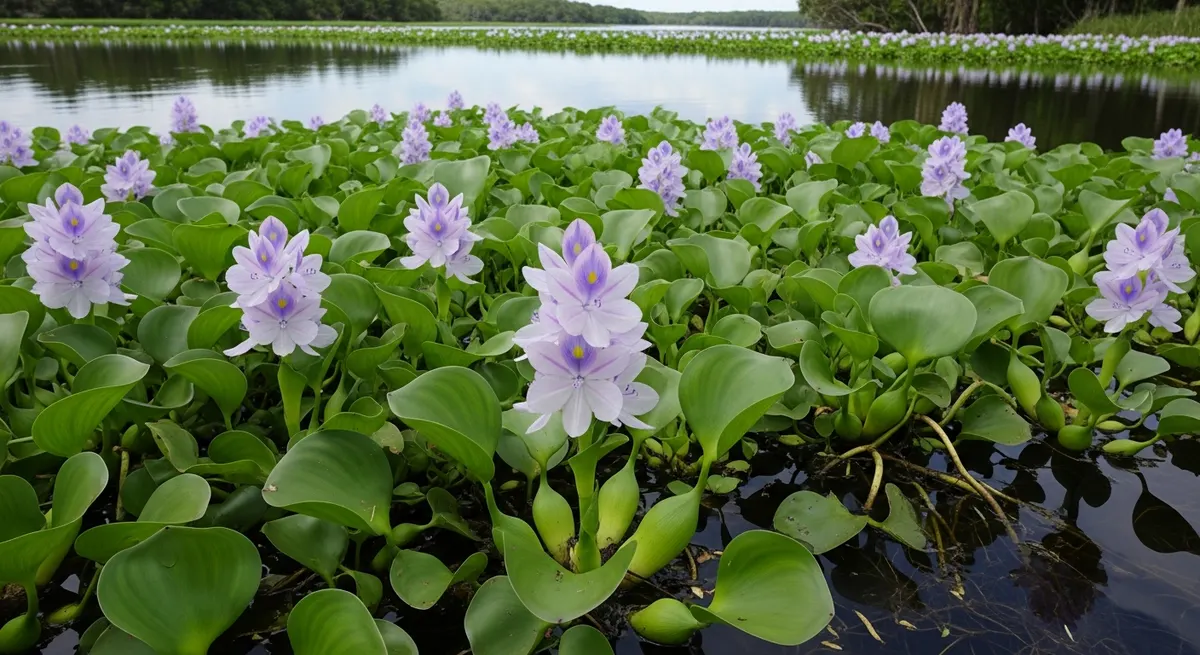
The Fastest-Growing Aquatic Weed
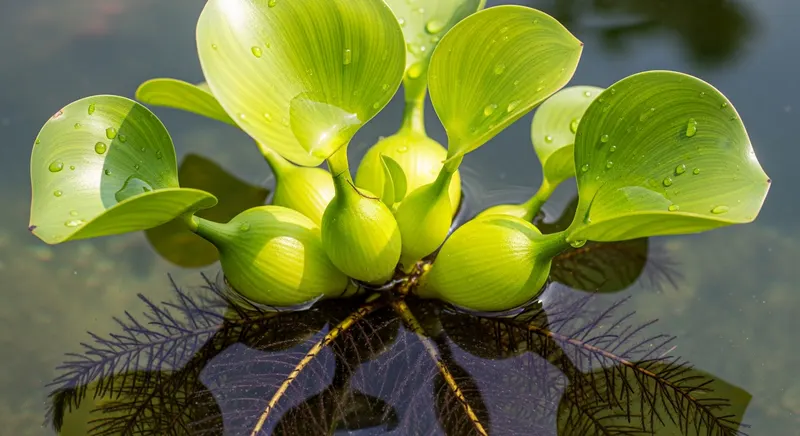
Water hyacinth holds one of the most remarkable growth records in the plant kingdom. Under optimal conditions — warm temperatures (25–30°C), full sunlight, high phosphorus and nitrogen levels — water hyacinth populations can double in as little as 6–18 days. This extraordinary rate of population growth is the primary reason water hyacinth is considered the world's most problematic aquatic weed: a small, seemingly manageable patch can become an ecological and navigational crisis within a single growing season.
To put this growth rate in concrete terms: a single plant weighing 25 grams (less than 1 ounce) can theoretically generate descendants covering 1 hectare (2.5 acres) in 3 months under ideal conditions. While real-world growth is always slower due to nutrient limitations, self-shading, temperature fluctuations, and herbivory, observed growth rates in eutrophic water bodies confirm that seasonal increases of 100–400% of initial area are common. Understanding what drives this growth — and how to disrupt it — is the foundation of effective management.
Factors Controlling Growth Rate
Temperature
Water hyacinth is a warm-water plant. Growth is minimal below 10°C (50°F) and essentially ceases below 5°C. Optimal growth occurs between 25–30°C (77–86°F). Lethal cold occurs at approximately -3°C (27°F) for above-ground tissue, though seeds survive and can reestablish from the sediment after a killing frost in areas where water hyacinth produces viable seeds. This temperature sensitivity explains why water hyacinth is a dominant problem in tropical and subtropical regions but is largely an annual pest in temperate areas with cold winters. In Florida and the Gulf Coast, year-round growth is possible in all but the coldest winters.
Nutrient Availability
Phosphorus and nitrogen are the primary nutrients that determine water hyacinth growth rate. Water hyacinth grows in a wide range of nutrient concentrations but achieves maximum growth rates in eutrophic water with total phosphorus above 20–30 μg/L and total nitrogen above 1–2 mg/L. In oligotrophic (low-nutrient) water, growth is dramatically slower, which is why water hyacinth is rarely a management problem in pristine natural lakes but can be catastrophic in agricultural drainage canals, municipal stormwater ponds, and any water body receiving nutrient inputs from human activities. This relationship makes nutrient management a critical component of long-term water hyacinth control: reducing phosphorus and nitrogen inputs from the watershed slows growth and reduces the frequency of management intervention required.
Light Availability
Water hyacinth is a sun-loving species that achieves maximum photosynthetic rates in full sunlight. As mats become dense, inner plants begin to shade each other, creating self-limiting growth dynamics in very dense populations. Shading by trees or steep banks can significantly reduce growth rates in portions of a water body. However, water hyacinth can tolerate partial shade better than many submerged plants, maintaining positive growth rates in light conditions that would prevent most submersed species from growing.
Density-Dependent Effects
Water hyacinth growth is density-dependent: isolated plants and sparse populations grow much faster per plant than dense mat populations. As density increases, individual plants compete for light and nutrients, reducing individual growth rates. Dense mats also alter local chemistry — dissolved oxygen depletion beneath mats, altered pH, reduced nutrient concentrations — that can slow overall mat expansion even while providing conditions inhospitable to most other organisms. This density-dependence is important for management: partial treatment that reduces density but does not eliminate the population often results in rapid growth of surviving plants as resource competition is relieved.
Vegetative Reproduction Rate
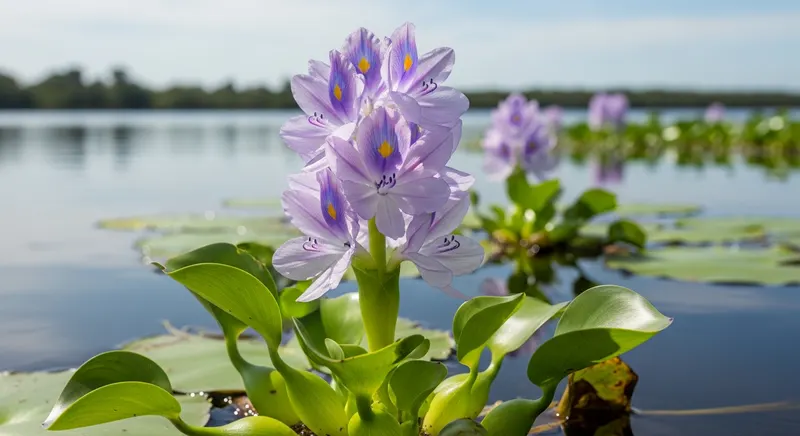
Water hyacinth spreads primarily through vegetative reproduction — stolons (runners) extend from established rosettes and produce daughter plants within 1–4 weeks. Under optimal conditions, a single plant can produce 2–8 daughter plants per month. Each daughter plant becomes a separate floating individual capable of its own stolon production within 2–4 weeks of separation from the parent. This exponential branching of vegetative reproduction explains the population doubling times observed in field studies.
Each individual plant also increases in biomass through leaf expansion. Leaf number per rosette ranges from 1–25+, with leaves reaching 4–20 cm in diameter. Biomass per plant can exceed 500 grams (fresh weight) in mature individuals in nutrient-rich water. Total above-ground biomass in dense mats can reach 20–40 metric tons (fresh weight) per hectare — a quantity that creates enormous challenges for mechanical removal programs.
Seasonal Growth Patterns in the United States
In the Gulf Coast states and Florida, water hyacinth grows actively from late February through November and maintains reduced growth through mild winters. Peak growth occurs June–September when water temperatures and light are maximum. In California's Sacramento-San Joaquin Delta, growth is active April–October with slower winter growth. In states with colder winters (Georgia, South Carolina, Texas inland areas), frost kills above-ground tissue, but seed banks and occasionally surviving root buds allow reestablishment in spring. Management programs typically time their most aggressive interventions for spring — targeting early-season populations before exponential growth begins — and fall — reducing overwintering biomass before seed production and spring regrowth.
Implications for Management
The extraordinary growth rate of water hyacinth means that management programs must stay ahead of growth rather than simply responding to problem densities. Allowing populations to reach high density before treating is both more expensive (more biomass to kill and remove) and more ecologically damaging (more time spent blocking light, depleting oxygen). Programs based on early detection, rapid response to new growth, and nutrient reduction to limit growth rate are consistently more cost-effective than reactive programs responding to bloom events. For complete management guidance, see water hyacinth control methods.
References
- Gopal, B. (1987). Water Hyacinth. Elsevier Science Publishers.
- Penfound, W.T. & Earle, T.T. (1948). Biology of water hyacinth. Ecological Monographs 18:447–472.
- Reddy, K.R. & Tucker, J.C. (1983). Productivity and nutrient uptake by water hyacinth. Economic Botany 37(2):237–247.
Whole-Lake Hydrilla Management: Lake Tohopekaliga, FL
Lake Tohopekaliga ("Lake Toho"), a 22,700-acre Central Florida lake, has sustained one of the most intensively managed hydrilla programs in the U.S. since the 1990s. Annual fluridone treatments combined with targeted mechanical harvesting in high-use recreational areas have maintained hydrilla coverage below nuisance thresholds while preserving native submersed vegetation communities in designated littoral zones.
Key outcome: Multi-decade integrated program demonstrates that hydrilla can be managed at acceptable levels in large water bodies, but requires sustained annual investment and coordinated agency cooperation across FDEP, SFWMD, and local fisheries managers.
We used the integrated management framework from this site to structure our Eurasian watermilfoil control program. After three seasons we've reduced lake-wide coverage by 78% on our 340-acre water body.
Susan Thibodeau Lake District Manager, MN · Crow Wing CountyThe seasonal timing guidance has been invaluable. Treating at the right growth stage cut our herbicide costs by nearly 30% without sacrificing efficacy on our county-managed reservoir.
Dale Buchanan County Parks Director, MI · Kalamazoo County