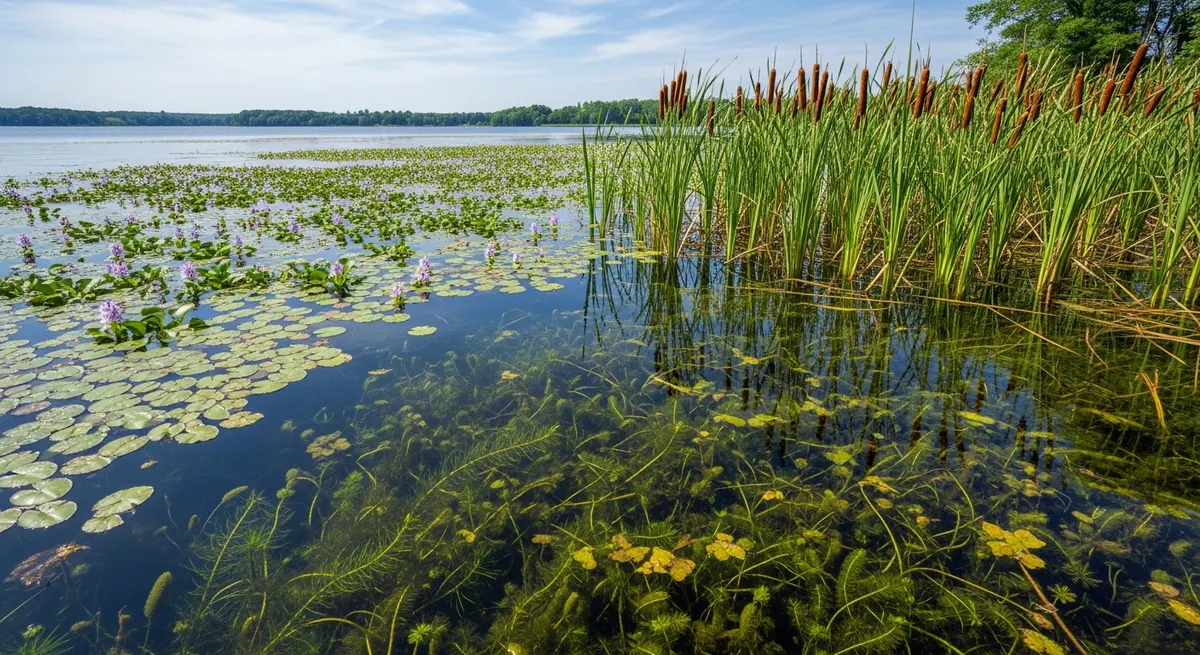
Early Detection and Rapid Response (EDRR) is the management philosophy — and the network of programs — designed to find new aquatic invasive plant populations before they grow beyond eradication feasibility, then respond rapidly enough to eliminate them before they establish. The cost-benefit rationale is compelling: eradicating a new hydrilla population at 0.1 acres costs an estimated $5,000–$25,000; managing an established landscape-scale population costs millions annually without any prospect of elimination.
- Early Detection and Rapid Response (EDRR) programs aim to find new invasive weed populations before they spread beyond control.
- A new hydrilla infestation detected at 0.1 acres costs an estimated $100–$500 to eradicate; at 10 acres, over $100,000.
- Effective EDRR programs combine boat launch monitoring, trained volunteer survey networks, and professional surveillance diving.
- Most successful eradications in the US occurred when populations were detected at fewer than 500 square meters.
- Citizen science apps like iNaturalist and EDDMapS allow boaters and anglers to report suspected new invasions immediately.
The Cost-Benefit Case for Early Detection
The economic argument for investing in EDRR programs is straightforward and compelling. Early detection is a cost-avoidance strategy: by catching new invasions before they require indefinite annual management, EDRR programs prevent costs far exceeding their program cost. Research on hydrilla management costs has found that eradication of a small new population (under 0.5 acres) costs $5,000–$50,000 total. Annual management of an established landscape-scale hydrilla population in a large lake costs $200,000–$1,000,000 per year — with no eradication endpoint. Prevention and early detection programs are estimated to cost roughly $0.10 per dollar of management costs they prevent.
The window for eradication closes rapidly. A new aquatic weed introduction that goes undetected for one growing season may grow by 10–100×, potentially spreading across multiple bays or areas of a water body and establishing seed banks and vegetative propagule banks in the sediment. Once established at landscape scale, the management objective shifts from eradication to control — an indefinite, costly commitment. Prevention guide →
Program Components: How EDRR Works
Surveillance Networks
Professional surveillance includes: underwater surveys by SCUBA divers at high-risk locations (warm-water coves near popular boat launches, bays with high boating traffic); boat-based visual surveys of shallow water zones using underwater viewers or snorkeling; and sentinel site monitoring at water bodies near known infestations in adjacent water bodies. Professional surveys have high detection probability but are expensive and can only cover a limited number of sites.
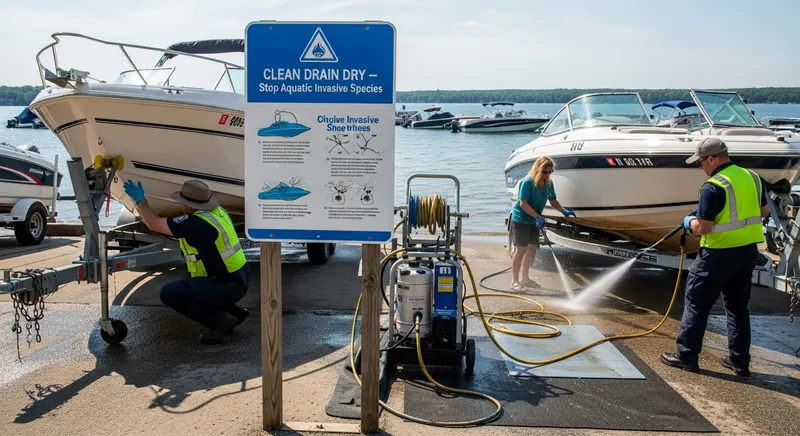
Volunteer surveillance networks extend coverage dramatically. Training boaters, anglers, kayakers, and shoreline property owners to recognize priority invasive species and report suspected sightings — using standardized ID guides and online reporting platforms — creates a surveillance network of thousands that no agency budget could replicate. Programs like Wisconsin's "Eyes on the Water" and Minnesota's "Lake Steward" programs have documented dozens of new invasive plant populations before they became established. Clean, Drain, Dry protocol →
Detection and Verification
Citizen science reports of suspected invasive species must be verified by experts before triggering a formal response. State programs typically have botanists or certified aquatic plant managers who can review photographs and, if warranted, conduct field verification surveys. Many programs provide identification guides, comparison photos of invasive vs. native look-alike species, and direct contact information for expert consultation. The goal of verification is to avoid both false positives (deploying management resources for a misidentified native plant) and false negatives (missing a confirmed invasion due to inadequate follow-up).
Rapid Response Protocols
Effective EDRR programs pre-position resources for rapid deployment when a new invasion is confirmed. Key elements include: pre-authorized emergency funding that can be accessed without lengthy appropriation delays; standing agreements with licensed aquatic herbicide applicators who can be mobilized quickly; pre-approved treatment protocols for priority species that streamline the permit process; and communication protocols that notify affected stakeholders (lakeshore owners, recreational users) about detection and planned response. Treatment within the same growing season as detection is the standard for programs that have achieved successful eradication. Funding programs →
Sources & Scientific References
- Leung, B. et al. (2002). An ounce of prevention or a pound of cure: bioeconomic risk analysis of invasive species. Proceedings of the Royal Society B, 269(1508), 2407–2413.
- Mehta, S.V. et al. (2007). Optimal detection and control strategies for invasive species management. Ecological Economics, 61(2–3), 237–245.
- Vander Zanden, M.J. et al. (2010). A pound of prevention, plus a pound of cure: Early detection and eradication of invasive species in the Laurentian Great Lakes. Journal of Great Lakes Research, 36(1), 199–205.
Frequently Asked Questions
What is an EDRR program for aquatic weeds?
An Early Detection and Rapid Response (EDRR) program is a coordinated system for: monitoring water bodies for new invasive species (early detection); verifying suspected detections through expert identification; triggering a pre-planned response protocol when a new invasion is confirmed; rapidly deploying management resources (herbicide treatment, mechanical removal) to eliminate or contain the new population; and evaluating treatment effectiveness through follow-up monitoring. Effective EDRR programs combine professional surveillance, trained volunteer survey networks, citizen science reporting, and standing response authority and funding.
How does citizen science support early detection of aquatic weeds?
Citizen science programs enlist trained volunteers — boaters, anglers, lake association members, kayakers, and shoreline residents — as the 'eyes and ears' for detecting new invasive plant populations. Online reporting platforms (iNaturalist, EDDMapS, state-specific apps) allow volunteers to submit photos and location data for suspected invasive plants; experts review reports and confirm or rule out invasive species. Citizen science networks dramatically increase the spatial and temporal coverage of monitoring — no state agency has the budget to survey all potential invasion sites regularly. Volunteer programs trained in identification of priority species have documented new invasions months or years earlier than professional surveys would have.
How quickly must a response happen after detection?
Response speed is critical. The goal of rapid response is to treat new populations while they are still small enough to be eradicated — typically defined as fewer than 500 square meters (about 5,000 square feet). A hydrilla population detected at 100 square meters in August can grow to 10,000 square meters by the following August without treatment. EDRR programs ideally have pre-authorized treatment protocols, standing contractual access to licensed applicators, and emergency funding availability that allows treatment within 1–4 weeks of confirmed detection. Delays of a full season can mean the difference between eradication and permanent establishment.
What information is needed to confirm a new aquatic weed detection?
To confirm a new invasive plant detection, program managers typically need: a specimen or high-quality photographs showing diagnostic characteristics (leaf structure, whorls, stem texture, root type); precise location data (GPS coordinates, water body name, depth, substrate); date of observation; name and contact information of the observer; and if possible, an estimate of the area covered. Many state EDRR programs provide identification guides and reporting forms for priority invasive species. Expert confirmation by a botanist or aquatic plant management professional is standard before triggering a formal response.
Has early detection actually led to successful eradication of aquatic weeds?
Yes. Several documented eradication successes in the US and Canada occurred because new populations were detected and treated when still small. Moosehead Lake in Maine had a small Eurasian watermilfoil population eradicated through rapid herbicide treatment in the early 2000s. Several Pacific Northwest water bodies have achieved eradication or near-eradication of Brazilian elodea populations through rapid response to new detections. These successes share a common characteristic: detection occurred when the population was still under 1,000 square meters, and treatment was applied within weeks of confirmation.
Key Takeaways
- Early Detection and Rapid Response (EDRR) programs aim to find new invasive weed populations before they spread beyond control.
- A new hydrilla infestation detected at 0.1 acres costs an estimated $100–$500 to eradicate; at 10 acres, over $100,000.
- Effective EDRR programs combine boat launch monitoring, trained volunteer survey networks, and professional surveillance diving.
- Most successful eradications in the US occurred when populations were detected at fewer than 500 square meters.
- Citizen science apps like iNaturalist and EDDMapS allow boaters and anglers to report suspected new invasions immediately.
Ten-Year Lake Management Plan: Lake Wingra, WI
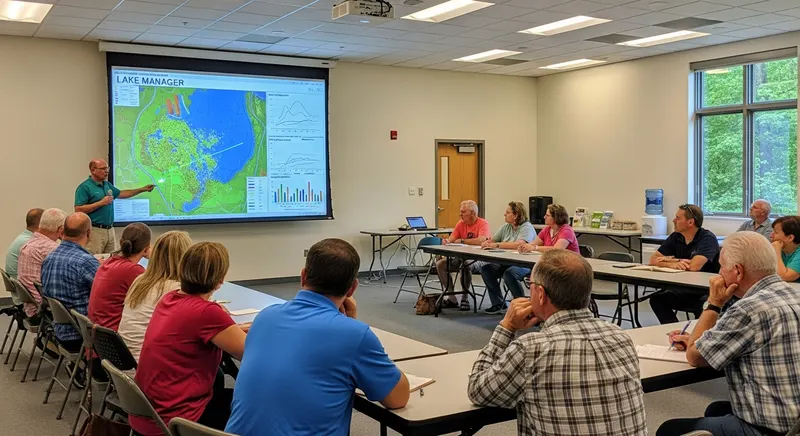
Lake Wingra, a 342-acre urban lake in Madison, WI, developed a comprehensive 10-year management plan coordinating the City of Madison, University of Wisconsin, and adjacent neighborhood associations. The plan addressed Eurasian watermilfoil, curly-leaf pondweed, and purple loosestrife through an integrated approach including targeted herbicide treatment, mechanical harvesting, native plant restoration, and public education.
Key outcome: The structured multi-agency planning process secured consistent funding across multiple budget cycles, a key advantage over ad hoc management. Native plant restoration efforts showed measurable progress in designated restoration zones within three years of initiation.
As a lakefront property owner I was completely lost until I found AquaticWeed.org. The permit guidance alone saved me from making costly, potentially illegal treatment mistakes.
Gerald Renfrew Lakefront Landowner, WI · Vilas CountyI've managed aquatic vegetation on Texas reservoirs for 15 years. The water hyacinth control content here is the most up-to-date, practical guidance I've found anywhere online.
Travis McKinley Commercial Fishing Guide, TX · Lake Travis / Lake Austin