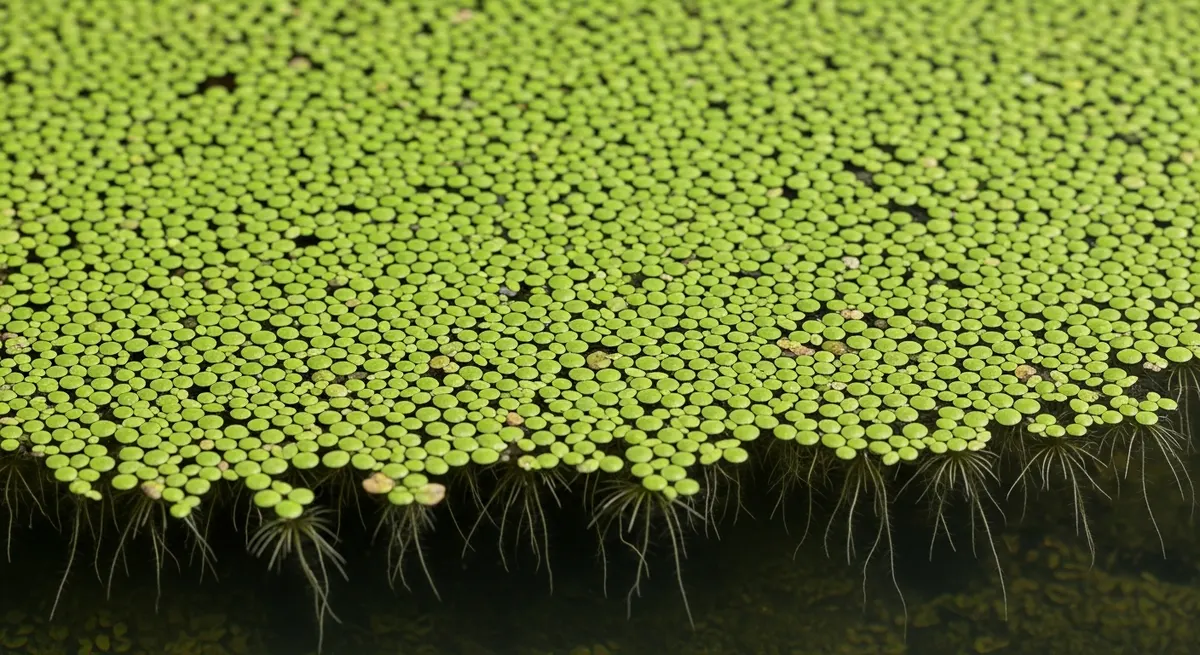
Yes — Under Dense Bloom Conditions
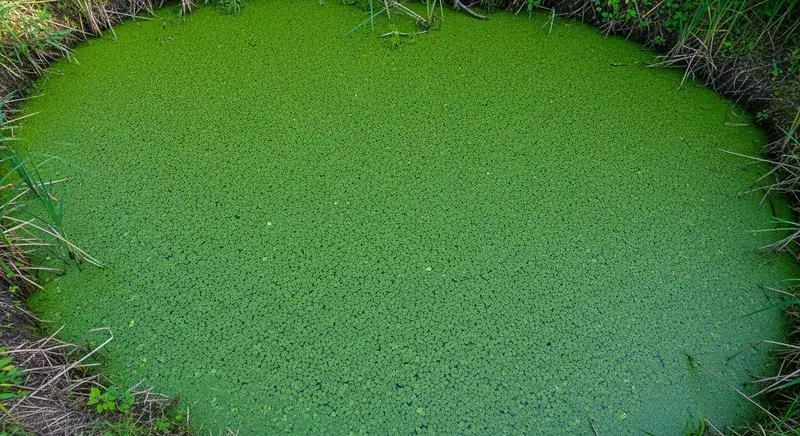
One of the most common questions from pond owners experiencing duckweed blooms is whether duckweed can harm fish. The answer is yes — under dense bloom conditions, duckweed can cause severe oxygen depletion that results in fish kills. The mechanism involves multiple interacting processes that create hypoxic (low oxygen) conditions in the water beneath dense mats. Understanding these processes helps predict when fish are at risk and identifies the most effective management responses.
How Duckweed Depletes Oxygen: The Three Mechanisms
Mechanism 1: Surface Sealing and Gas Exchange Blockade
The primary source of oxygen in most ponds and small lakes is atmospheric exchange — oxygen diffuses from the air into the water at the surface. Wind mixing accelerates this exchange. When duckweed mats reach 70–100% surface coverage, they physically block this atmospheric exchange: the floating mat acts as a seal between the water and the air above. No surface exchange means no oxygen replenishment from the atmosphere. The water column beneath the mat becomes isolated from the atmospheric oxygen source and must rely entirely on photosynthesis within the water column — which is itself greatly reduced under a dense surface mat because light cannot penetrate.
Mechanism 2: Light Exclusion and Subaquatic Oxygen Production
Most submerged aquatic plants and algae in the water column produce oxygen through photosynthesis. A thick duckweed mat reduces light penetration to the water below by 70–90% or more. In the reduced light beneath the mat, submerged plants and phytoplankton cannot photosynthesize efficiently — subaquatic oxygen production drops dramatically. The combination of reduced atmospheric exchange (mechanism 1) and reduced photosynthetic oxygen production creates a progressively worsening oxygen deficit beneath the mat.
Mechanism 3: Decomposition Oxygen Demand
The underside of dense duckweed mats generates abundant dead plant material — shed fronds and roots accumulate at the sediment surface. Decomposition of this organic material is driven by aerobic bacteria that consume oxygen. In severe or long-established infestations, the oxygen demand from decomposing organic material at the sediment surface can exceed the supply, creating anoxic conditions near the bottom. Fish kills typically begin near the sediment surface where oxygen runs out first.
When Fish Kills Are Most Likely
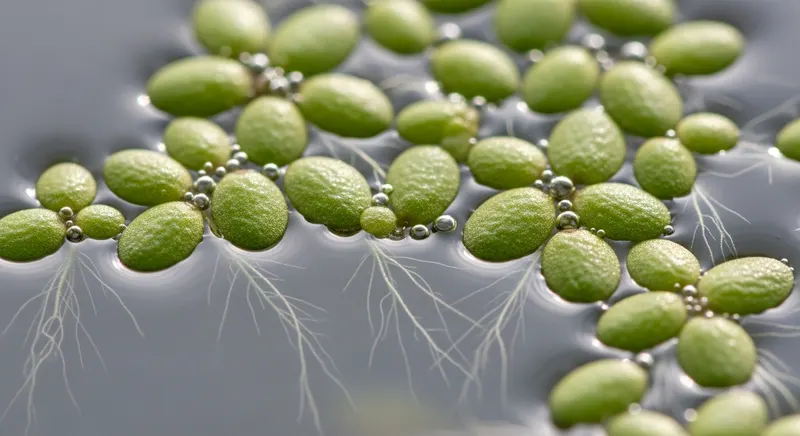
Not every duckweed bloom causes a fish kill. The risk depends on several interacting factors:
- Mat density and coverage: Near-complete coverage (>80–90%) is required for severe oxygen effects; partial coverage allows atmospheric exchange to continue
- Water depth: Shallow ponds are at much higher risk — a small volume of water with high organic load depletes oxygen faster than a deep lake with larger water volume
- Temperature: Warm water (>25°C) holds less dissolved oxygen than cool water AND biological oxygen demand (decomposition, respiration) is higher — a double jeopardy in summer
- Nutrient loading: High-nutrient ponds with abundant organic material have higher decomposition oxygen demand
- Wind: Even small amounts of wind mixing bring oxygen-rich surface water down into the water column; completely still, calm conditions are the highest-risk situation
- Time of night: Oxygen depletion is worst at dawn after a night of duckweed respiration without photosynthetic oxygen production. Fish kills typically occur in the early morning hours
Signs That Your Pond Has Low Oxygen
Warning signs of oxygen depletion associated with duckweed blooms: fish gasping at the surface or in the surface film (fish come up to breathe at the air-water interface when dissolved oxygen at depth is too low); large numbers of fish concentrated near any aeration devices, inflows, or the shallowest areas; dead or stressed fish visible at the surface in early morning; foul smell (hydrogen sulfide — "rotten egg" smell) from the pond bottom, indicating anoxic sediment. If these signs appear, immediate intervention is needed — add emergency aeration (a surface aerator or aerator pump running 24 hours) and contact a licensed aquatic management professional for herbicide treatment of the duckweed bloom.
Prevention and Management
The most effective prevention of duckweed-related oxygen depletion is preventing dense blooms from developing in the first place through early-season management, nutrient reduction, and aeration. Submersed aeration (an air pump driving a diffuser at the pond bottom) greatly reduces oxygen depletion risk even when duckweed mats are present, by continuously mixing oxygen-rich deeper water with depleted bottom water and disturbing the surface mat. Surface aerators (fountains and surface agitators) also help by breaking up the mat and promoting atmospheric exchange. For complete management guidance, see duckweed control methods.
References
- Boyd, C.E. (1990). Water Quality in Ponds for Aquaculture. Alabama Agricultural Experiment Station.
- Scheffer, M. (2004). Ecology of Shallow Lakes. Springer.
- Smith, C.S. & Barko, J.W. (1990). Ecology of Eurasian watermilfoil. Journal of Aquatic Plant Management 28:55–64.
Whole-Lake Hydrilla Management: Lake Tohopekaliga, FL
Lake Tohopekaliga ("Lake Toho"), a 22,700-acre Central Florida lake, has sustained one of the most intensively managed hydrilla programs in the U.S. since the 1990s. Annual fluridone treatments combined with targeted mechanical harvesting in high-use recreational areas have maintained hydrilla coverage below nuisance thresholds while preserving native submersed vegetation communities in designated littoral zones.
Key outcome: Multi-decade integrated program demonstrates that hydrilla can be managed at acceptable levels in large water bodies, but requires sustained annual investment and coordinated agency cooperation across FDEP, SFWMD, and local fisheries managers.
The species identification guides on AquaticWeed.org are the most accurate I've used in 18 years of lake management. I now send all my new clients here first before we discuss treatment options.
Robert Harmon Certified Lake Manager, FL · Lake Okeechobee regionWe referenced the biological control pages extensively when evaluating our grass carp stocking proposal. The detail on stocking rates and target species specificity helped us present a credible case to our board.
Karen Ostrowski HOA Lake Committee Chair, MN · Lake Minnetonka association