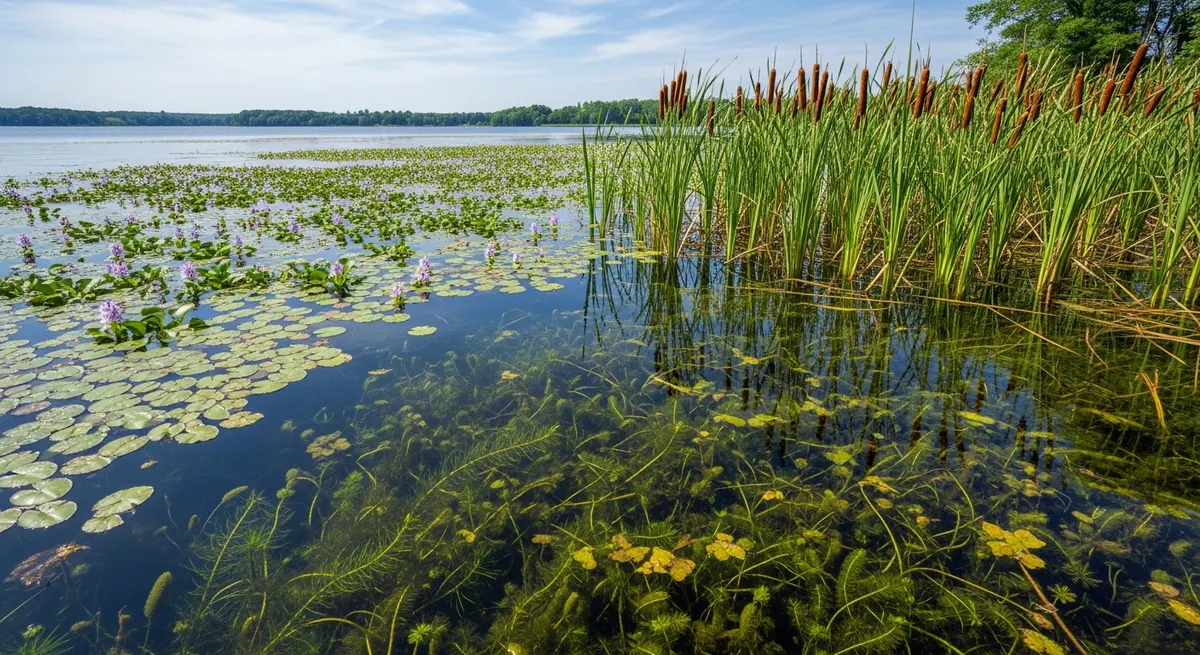
Dense aquatic weed growth creates real, if often underappreciated, risks for swimmers. Physical entanglement — particularly in submerged plants like hydrilla and Eurasian watermilfoil — is the most significant direct hazard. Swimmer's itch (cercarial dermatitis), a parasitic skin reaction more common in weed-dense areas, affects hundreds of thousands of US swimmers annually. And water quality impairment from weed-associated algae and cyanobacteria can produce skin irritation and, in severe cases, systemic illness.
- Dense aquatic weed growth creates physical entanglement hazards, particularly for weaker swimmers in shallow water.
- Swimmer's itch (cercarial dermatitis) is more common in weed-dense areas where snails hosting the parasite thrive.
- Harmful algal blooms associated with weed-impacted water quality produce toxins that cause skin rashes and gastrointestinal illness.
- Visually impaired water reduces the effectiveness of lifeguard supervision and obscures underwater hazards.
- The best safety measure is actively managing weed populations in designated swim areas, combined with water quality monitoring.
Physical Entanglement: The Primary Direct Hazard
The most direct physical risk from aquatic weeds to swimmers is entanglement in dense submerged vegetation. Hydrilla — which forms mats that can reach the surface from depths of 10–20 feet — is particularly associated with entanglement risk because its dense, multi-branched growth creates a three-dimensional structure that can wrap around limbs. Eurasian watermilfoil and coontail create similar hazards. The primary danger is not physical restraint — most swimmers can extricate themselves with calm, deliberate movement — but the panic response that can exhaust swimmers and contribute to drowning.
Children, elderly swimmers, and less experienced swimmers are at highest risk. In recreational areas where aquatic weed beds are known hazards, clear signage, buoy line demarcation of safe swimming zones, and active management of weed density are essential safety measures. Lifeguards supervising weed-impacted swim areas benefit from specific training on entanglement rescue techniques. Managing aquatic weeds in swim areas →
Swimmer's Itch: The Most Common Impact
Swimmer's itch is estimated to affect hundreds of thousands of US swimmers annually, with the highest incidence in shallow, weedy, warm-water lakeshores. The condition typically begins with a mild tingling during or immediately after swimming, followed within hours by an intensely itchy rash of small raised bumps or blisters. The rash lasts 1–2 weeks and resolves on its own in most cases, though antihistamines and topical corticosteroids can reduce discomfort.
Prevention measures include: avoiding shallow, weedy areas during warm, calm weather conditions (when cercariae concentrations near shore are highest); toweling off vigorously immediately after leaving the water (to remove cercariae before they penetrate the skin); avoiding swimming when cercarial dermatitis advisories are posted; and managing the aquatic vegetation habitat of the snail intermediate hosts to reduce the population density of cercariae-releasing snails. Water quality impacts →
Cyanobacterial Toxins and Water Quality
The most serious water-quality risk to swimmers from aquatic weed-impacted water bodies is cyanotoxin exposure from harmful algal blooms (HABs). Dense aquatic weed beds contribute to HAB risk by promoting nutrient cycling and by creating thermally stratified, low-wind-speed microclimates conducive to cyanobacterial growth. When blooms occur, cyanotoxins can cause: contact dermatitis and eye irritation from skin and eye contact; gastrointestinal illness (nausea, vomiting, diarrhea) from accidental ingestion; and in severe cases, liver toxicity or neurological effects from substantial exposure. Children swimming in and swallowing bloom-impacted water are at highest risk.
Improving Swim Beach Safety
Swim beach operators, lake associations, and municipalities can take several steps to manage the risks aquatic weeds pose to swimmers: maintain weed-free zones in designated swimming areas through mechanical harvesting or targeted treatment; post clearly visible signage about current conditions, including any active swim advisories; monitor water quality regularly for cyanobacteria during warm-weather months; establish communication protocols for rapid posting of swim advisories when thresholds are exceeded; and coordinate with state health and environmental agencies who may provide monitoring support. Private pond management guide →
Sources & Scientific References
- Verbrugge, L.K. et al. (2004). Swimmer's itch: incidence and risk factors in Michigan. Journal of Great Lakes Research, 30(3), 426–432.
- US EPA. (2019). Cyanobacteria and Cyanotoxins: Information for Drinking Water Systems. EPA 815-F-19-002.
- Cantrell, M.A. (1994). Aquatic weed control and recreational water safety. Lake and Reservoir Management, 10(1), 45–52.
Frequently Asked Questions
Can you get tangled in aquatic weeds while swimming?
Yes. Dense beds of submerged aquatic weeds — particularly hydrilla, Eurasian watermilfoil, and coontail — can ensnare swimmers, especially children and weaker swimmers, in shallow to moderate water depths. The primary risk is panic-induced exhaustion when swimmers struggle against entanglement rather than calmly extricating themselves. In rare cases, entanglement has contributed to drowning incidents, though comprehensive national data on weed-related drowning is limited. Designated swim areas with active weed management, clearly marked buoy lines, and lifeguard supervision reduce this risk substantially.
What is swimmer's itch and is it related to aquatic weeds?
Swimmer's itch (cercarial dermatitis) is an allergic skin reaction caused by cercariae — free-swimming larval parasites that normally infect waterfowl and other wildlife. When cercariae inadvertently penetrate human skin (they cannot complete their life cycle in humans), they cause an itchy rash within hours of exposure. Dense aquatic weed beds are associated with higher swimmer's itch risk for two reasons: they provide habitat for the aquatic snails that serve as the intermediate host for cercariae, and warm, shallow, weedy water in calm wind conditions concentrates cercariae near shore.
Is it safe to swim in a lake with cyanobacteria (blue-green algae)?
Swimming in water with visible cyanobacterial blooms — particularly those with paint-like, scum, or foam accumulations on the water surface — carries real health risk. Cyanotoxins produced by some cyanobacteria can cause skin rashes, eye irritation, gastrointestinal illness, and in rare cases with high-dose exposure, liver damage or neurological effects. Swimming should be avoided in water with visible algae blooms, particularly green or blue-green scums. State health departments issue swim advisories when cyanotoxin concentrations exceed health thresholds. Aquatic weed infestations can contribute to cyanobacteria blooms through nutrient cycling.
Do aquatic weeds reduce the safety of swimming areas?
Weedy water reduces swimming safety in two indirect ways: reduced water visibility makes it harder for lifeguards to monitor swimmers and respond to distress; and visually obscured hazards — submerged logs, rocks, sudden drop-offs — are more dangerous in turbid weed-impacted water. Local health departments in some states assess swim areas for weed density, water visibility, and water quality conditions as part of seasonal recreational water quality programs.
How do swim beaches manage aquatic weed problems?
Public and private swim areas manage aquatic weed problems using a combination of approaches: mechanical removal (raking or harvesting) of weeds within the designated swim area; aquatic herbicide treatment (if permitted) to manage weed beds within and adjacent to swim areas; benthic barriers in small designated swim zones to prevent weed establishment; and regular monitoring of water quality for cyanobacteria and swimmer's itch conditions. Regular communication with swimmers about current conditions — including posting of swim advisories when cyanobacteria or cercariae are detected — is considered best practice.
Key Takeaways
- Dense aquatic weed growth creates physical entanglement hazards, particularly for weaker swimmers in shallow water.
- Swimmer's itch (cercarial dermatitis) is more common in weed-dense areas where snails hosting the parasite thrive.
- Harmful algal blooms associated with weed-impacted water quality produce toxins that cause skin rashes and gastrointestinal illness.
- Visually impaired water reduces the effectiveness of lifeguard supervision and obscures underwater hazards.
- The best safety measure is actively managing weed populations in designated swim areas, combined with water quality monitoring.
Ten-Year Lake Management Plan: Lake Wingra, WI
Lake Wingra, a 342-acre urban lake in Madison, WI, developed a comprehensive 10-year management plan coordinating the City of Madison, University of Wisconsin, and adjacent neighborhood associations. The plan addressed Eurasian watermilfoil, curly-leaf pondweed, and purple loosestrife through an integrated approach including targeted herbicide treatment, mechanical harvesting, native plant restoration, and public education.
Key outcome: The structured multi-agency planning process secured consistent funding across multiple budget cycles, a key advantage over ad hoc management. Native plant restoration efforts showed measurable progress in designated restoration zones within three years of initiation.
I've managed aquatic vegetation on Texas reservoirs for 15 years. The water hyacinth control content here is the most up-to-date, practical guidance I've found anywhere online.
Travis McKinley Commercial Fishing Guide, TX · Lake Travis / Lake AustinThe species identification guides on AquaticWeed.org are the most accurate I've used in 18 years of lake management. I now send all my new clients here first before we discuss treatment options.
Robert Harmon Certified Lake Manager, FL · Lake Okeechobee region