Distribution Overview
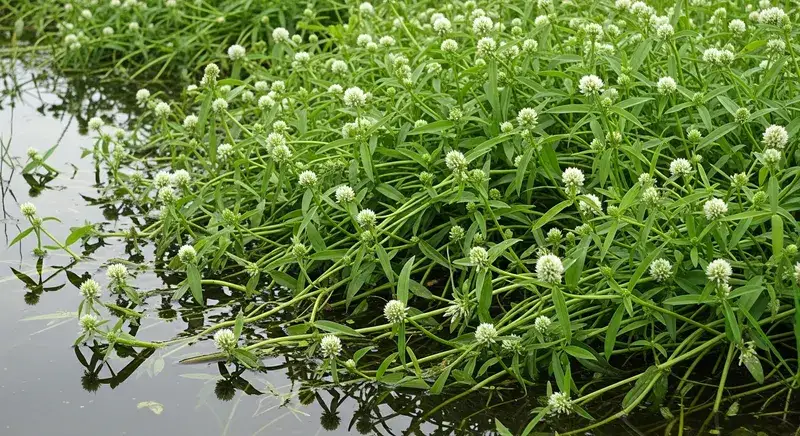
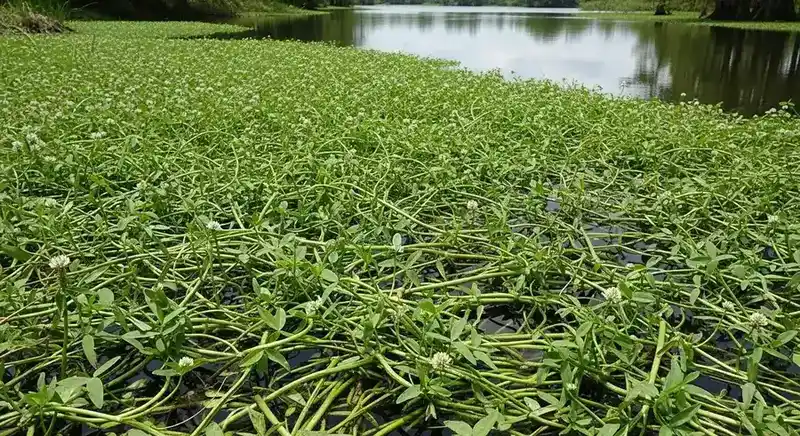
Alligator weed (Alternanthera philoxeroides) is established across the southeastern United States and California. Its primary range is the Gulf South — Louisiana, Mississippi, Alabama, Georgia, and Florida — where warm year-round temperatures allow persistent populations that have been intensively managed for decades. Significant populations also exist along the Atlantic Coastal Plain as far north as Virginia and North Carolina, in the interior Southeast (Tennessee, Arkansas), and in California's Central Valley irrigation and drainage canal system. Isolated occurrences exist in several other states but typically are not established, long-term populations without warm winters to support year-round growth.
Gulf Coast and Southeast (Core Range)
Louisiana has some of the most extensive alligator weed infestations in the country — its bayou, canal, and river systems are heavily infested, and the plant affects both commercial navigation on drainage canals and rice agriculture throughout the Mississippi Delta and Atchafalaya Basin regions. The biological control flea beetle (Agasicles hygrophila) has established throughout Louisiana and provides significant suppression in many areas, but the plant remains a management concern in agricultural and navigational contexts.
Florida has managed alligator weed since the early 20th century. Flea beetle populations in Florida are well-established and provide outstanding biological control in aquatic settings throughout the state. Alligator weed is present but generally at lower nuisance density in Florida than in Louisiana and Mississippi, largely due to the effectiveness of established flea beetle populations. Mississippi and Alabama have significant alligator weed in river backwaters, drainage canals, and agricultural areas of their coastal plains. Georgia has alligator weed in its coastal waterways and some interior river systems.
Atlantic Coastal Plain
South Carolina, North Carolina, Virginia, and Maryland have alligator weed populations in river corridors and coastal plain waterways. Flea beetle populations in these states are less established than in the Gulf South, partly due to colder winters that reduce beetle survival and reproduction. Management in the Carolinas and Virginia often requires more active herbicide treatment to supplement insufficient biological control. The plant's range in this region has expanded in recent decades as it has spread along river corridors from more established Gulf Coast populations.
California
California has a significant alligator weed problem centered in the Sacramento Valley irrigation and drainage canal system. The California infestations are believed to have originated separately from the Gulf Coast populations — likely through contaminated agricultural equipment, seed stock, or other agricultural pathways. California's State Department of Food and Agriculture has engaged in active management programs targeting alligator weed in irrigation canals, where it obstructs water delivery critical to Central Valley agriculture. The flea beetle has been introduced in California and is partially established in some areas. California alligator weed populations also have terrestrial forms that colonize agricultural fields after flood events.
Temperature as the Range Limit
Alligator weed is limited northward by winter cold — sustained freezing temperatures (-5°C or below) kill above-ground tissue. In states with moderate winter cold (freezing temperatures but not sustained), alligator weed may die back annually but resprout from surviving roots in spring. In states with hard winters, the plant cannot maintain populations and introductions remain temporary. This cold sensitivity is why alligator weed management is a perennial challenge in the Gulf South and California but is less of a concern in the Great Lakes states or New England despite occasional introductions.
Reporting Sightings
New alligator weed introductions outside its established range should be reported to your state department of natural resources and through EDDMapS (eddmaps.org). Early detection of new infestations enables rapid response before establishment — many states have rapid response programs that can deploy eradication resources within days of a confirmed new detection. Contact your state invasive species program for reporting procedures. See also our regional distribution guides for more detail by region.
References
- EDDMapS (2025). Early Detection & Distribution Mapping System. University of Georgia. eddmaps.org
- USDA NRCS PLANTS Database. Alternanthera philoxeroides. plants.usda.gov
- Buckingham, G.R. (1996). Biological control of alligatorweed. Castanea 61:232–260.
Whole-Lake Hydrilla Management: Lake Tohopekaliga, FL
Lake Tohopekaliga ("Lake Toho"), a 22,700-acre Central Florida lake, has sustained one of the most intensively managed hydrilla programs in the U.S. since the 1990s. Annual fluridone treatments combined with targeted mechanical harvesting in high-use recreational areas have maintained hydrilla coverage below nuisance thresholds while preserving native submersed vegetation communities in designated littoral zones.
Key outcome: Multi-decade integrated program demonstrates that hydrilla can be managed at acceptable levels in large water bodies, but requires sustained annual investment and coordinated agency cooperation across FDEP, SFWMD, and local fisheries managers.
We referenced the biological control pages extensively when evaluating our grass carp stocking proposal. The detail on stocking rates and target species specificity helped us present a credible case to our board.
Karen Ostrowski HOA Lake Committee Chair, MN · Lake Minnetonka associationThe ecological impact section helped our team explain to county commissioners why early intervention matters. The oxygen depletion data alone secured funding for our early-detection monitoring program.
Donna Whitfield State Wildlife Biologist, GA · Okefenokee region