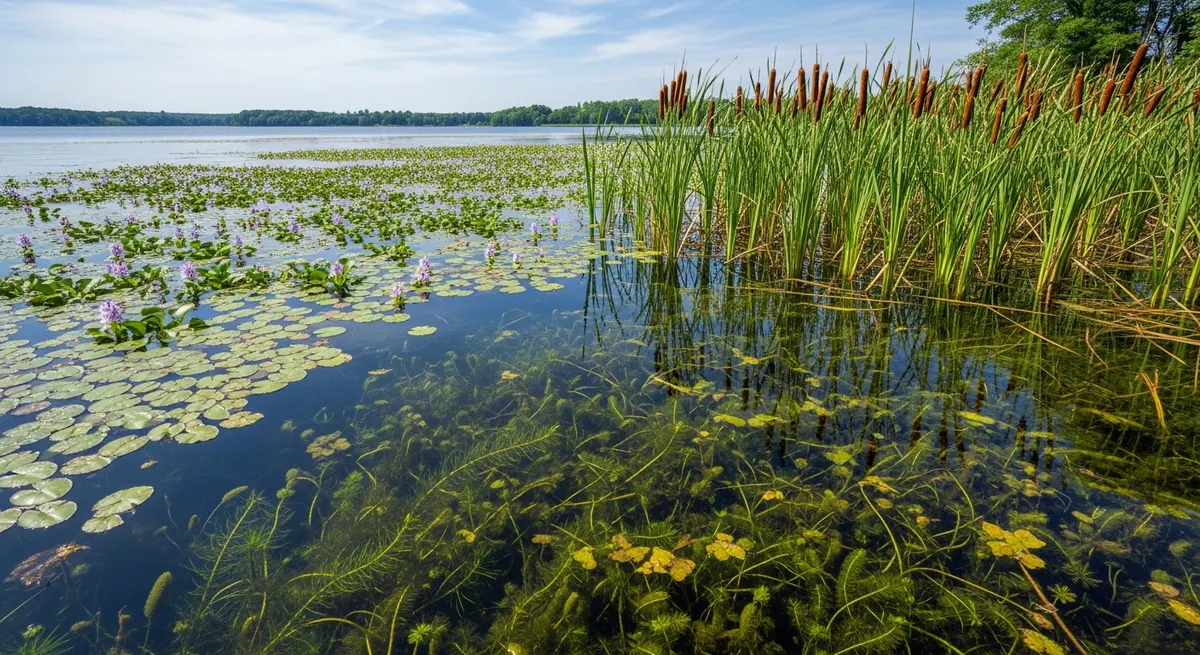
Filamentous algae consists of long, hair-like or cotton-like strands of multicellular algae that form mats anchored to the bottom, rocks, or other surfaces in ponds and lakes. It is one of the most common nuisance conditions in small, nutrient-rich water bodies. While not an aquatic plant (it lacks true vascular tissue), it causes similar problems — oxygen depletion, aesthetic nuisance, and ecological disruption — and requires distinct control approaches from true aquatic weeds.
- Filamentous algae are not true plants — they lack roots, stems, leaves, and vascular tissue.
- They form hair-like, slimy green mats that feel slippery and may smell like sulfur when decomposing.
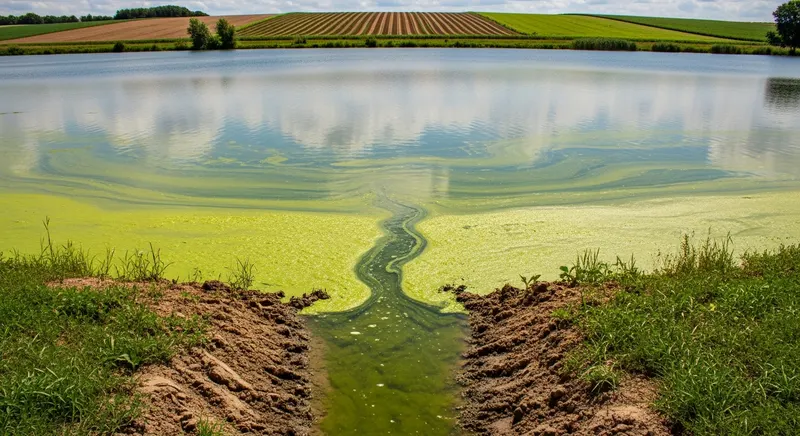
- High phosphorus and warm temperatures are the primary drivers of filamentous algae blooms.
- Copper sulfate and EPA-registered algaecides provide effective short-term control; nutrient reduction provides lasting results.
- Treatment is most effective in early spring when algae are actively growing and water temperatures are below 65°F.
What Is Filamentous Algae?
Filamentous algae encompasses multiple genera of green algae (Chlorophyta) that grow as long, thread-like or hair-like filaments rather than as single cells or small colonies. Common genera in freshwater settings include Cladophora, Spirogyra, Pithophora, Oedogonium, and Ulothrix, each with somewhat different ecology and slightly different appearance under a microscope (though all appear as green fibrous masses in the field).
Filamentous algae typically begins growth attached to rocks, sediment, or aquatic plant surfaces, then buoyantly detaches as photosynthesis produces oxygen bubbles within the mat. Floating mats accumulate at the downwind shore or pile up against docks and shorelines. The mats have a characteristic slippery, somewhat elastic texture — easily distinguished from the fibrous, rooted growth of true aquatic plants and from the soupy, paint-like texture of cyanobacteria (blue-green algae) surface blooms.
Seasonal Pattern of Filamentous Algae Growth
Filamentous algae typically blooms in spring and early summer, when water temperatures rise above 10°C, light levels increase, and nutrients are seasonally elevated from fall/winter decomposition and winter runoff. Different genera peak at different temperatures: cold-water genera like Spirogyra may peak as early as late winter; warm-water genera like Pithophora ("horse hair algae") bloom in mid-to-late summer. Peak spring blooms are a common nuisance on recreational ponds and water gardens. In ponds with chronically elevated nutrients, algae may persist throughout the growing season.
Treatment Options
Copper-Based Algaecides
Copper sulfate and chelated copper products are the most commonly used algaecides for filamentous algae in ponds and lakes. They are registered for aquatic use by EPA and available from professional applicators and, in consumer formulations, for DIY pond use. Copper algaecides are effective as contact treatments but do not prevent regrowth — nutrient management is still required for durable results. Copper can accumulate in sediment with repeated use, potentially reaching concentrations that affect invertebrates and some fish. Algae vs. aquatic weeds →
Peroxide-Based Products
Hydrogen peroxide-based algaecides (and sodium percarbonate products) are effective against filamentous algae and have lower environmental persistence than copper. They are particularly useful in sensitive water bodies where copper accumulation is a concern. They are contact treatments requiring good coverage of the algae mat.
Nutrient Management
Long-term, durable reduction of filamentous algae requires phosphorus management: buffer strips to intercept runoff, aeration to reduce internal loading, and elimination of direct fertilizer and organic matter inputs to the water body. Adding shade through shoreline tree planting and reducing the water body's light-accessible shallow area can also meaningfully reduce filamentous algae growth potential. Management planning guide →
Sources & Scientific References
- Graham, L.E. et al. (2009). Algae. Benjamin Cummings.
- USEPA (2012). National Lakes Assessment.
- Paerl, H.W. & Huisman, J. (2008). Blooms like it hot. Science, 320, 57–58.
Frequently Asked Questions
What causes filamentous algae in ponds?
Filamentous algae growth is driven primarily by excess nutrients (especially phosphorus), high light, and warm water. Ponds and lakes receiving agricultural runoff, lawn fertilizer, or septic leachate typically have elevated phosphorus that fuels filamentous algae blooms in spring and early summer when light levels increase. Shallow, clear water allows light to penetrate to the bottom, where filamentous algae anchors and grows. Reduction of nutrient inputs is the most durable long-term management approach.
Is filamentous algae the same as pond scum?
'Pond scum' is a colloquial term applied to several different organisms: filamentous algae, floating mats of blue-green algae (cyanobacteria), and decaying organic material. True filamentous algae forms fibrous, somewhat elastic strands that can be lifted from the water in handfuls. Blue-green algae 'scum' is typically a thinner, paint-like or soupy surface film that is often highly toxic. If you are unsure which type you have, do not allow contact with the water or the scum material, and contact your state environmental agency or public health department.
How do you get rid of filamentous algae naturally?
Natural approaches to filamentous algae management include: reducing nutrient inputs from external sources; installing aeration to increase dissolved oxygen and disrupt surface conditions algae prefer; stocking grass carp (where permitted) or other algae grazers; adding barley straw or barley extract (which releases compounds that inhibit algae growth as it decomposes); and shading the water body by planting trees on the sunny side. These approaches are most effective in small, enclosed water bodies and when integrated with nutrient source reduction.
What is the difference between filamentous algae and Chara?
Both form fibrous, mat-like structures in shallow water, but they are biologically distinct. Filamentous algae is typically bright green, extremely slippery when wet, and has a simple cellular structure with no distinct 'stems' and 'leaves.' Chara (stonewort) is a macroalga with a distinctive plant-like morphology including whorled branches on a central stem, is often grayish-green due to calcium carbonate encrustation, and has a distinctive musky or sulfurous odor. Both are algae, but Chara is often an indicator of good water quality and is treated with different management approaches.
Key Takeaways
- Filamentous algae are not true plants — they lack roots, stems, leaves, and vascular tissue.
- They form hair-like, slimy green mats that feel slippery and may smell like sulfur when decomposing.
- High phosphorus and warm temperatures are the primary drivers of filamentous algae blooms.
- Copper sulfate and EPA-registered algaecides provide effective short-term control; nutrient reduction provides lasting results.
- Treatment is most effective in early spring when algae are actively growing and water temperatures are below 65°F.
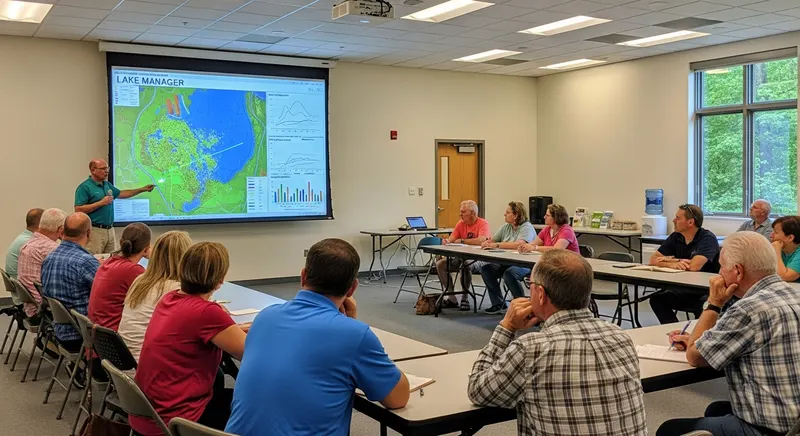
Ten-Year Lake Management Plan: Lake Wingra, WI
Lake Wingra, a 342-acre urban lake in Madison, WI, developed a comprehensive 10-year management plan coordinating the City of Madison, University of Wisconsin, and adjacent neighborhood associations. The plan addressed Eurasian watermilfoil, curly-leaf pondweed, and purple loosestrife through an integrated approach including targeted herbicide treatment, mechanical harvesting, native plant restoration, and public education.
Key outcome: The structured multi-agency planning process secured consistent funding across multiple budget cycles, a key advantage over ad hoc management. Native plant restoration efforts showed measurable progress in designated restoration zones within three years of initiation.
The species identification guides on AquaticWeed.org are the most accurate I've used in 18 years of lake management. I now send all my new clients here first before we discuss treatment options.
Robert Harmon Certified Lake Manager, FL · Lake Okeechobee regionWe referenced the biological control pages extensively when evaluating our grass carp stocking proposal. The detail on stocking rates and target species specificity helped us present a credible case to our board.
Karen Ostrowski HOA Lake Committee Chair, MN · Lake Minnetonka association