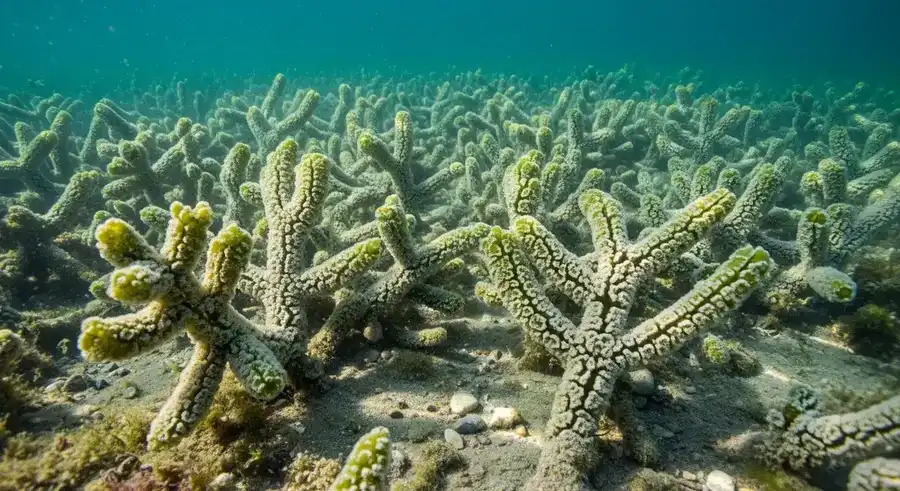
Not a Plant — But Often Managed Like One
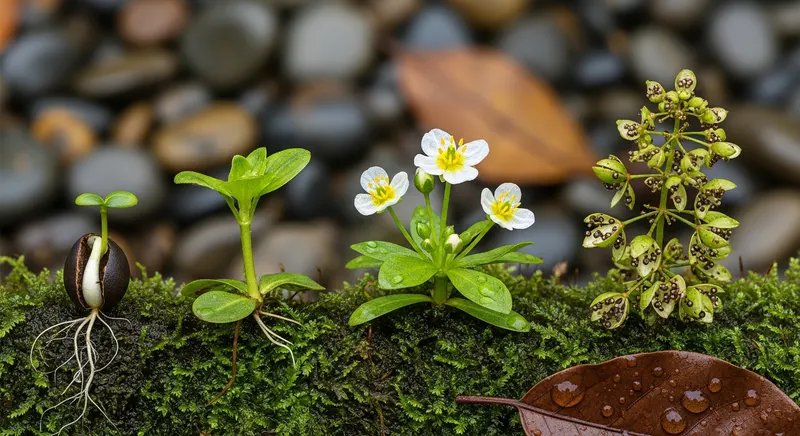
Chara (muskgrass) is one of the most ecologically important and frequently misunderstood organisms in freshwater aquatic systems. It looks exactly like a plant — it has an upright, branching structure with whorled "leaves," attaches to the sediment with root-like holdfasts, and grows in the same habitats as submerged aquatic plants. But chara is not a plant. It is a complex multicellular green alga belonging to the class Charophyceae — more closely related to terrestrial plants than other algae, but not a true plant by any scientific definition. It lacks roots, leaves, stems, vascular tissue, and flowers — the structures that define vascular plants.
Despite this botanical distinction, chara appears on almost every list of submerged "aquatic weeds" in lake management documents, because it grows in the same habitats, forms the same types of submerged beds, and causes (and provides) the same ecological effects as true submerged plants. Lake managers regularly encounter chara as part of plant surveys, must decide whether to manage it or protect it, and need reliable identification tools to distinguish it from true plants. This authority page provides the scientific and practical information needed for those decisions.
Taxonomy and Diversity
Chara is the largest genus in the class Charophyceae, with approximately 400 species worldwide. North America has approximately 30–40 species, many of which are rare or ecologically specialized. The most common species encountered in lake management across the U.S. include Chara vulgaris (common muskgrass), Chara globularis, Chara contraria, and several others. Species identification within the genus requires microscopic examination of reproductive structures and is typically left to specialists — for most management purposes, genus-level identification (Chara sp.) is sufficient.
The closely related genus Nitella is often grouped with chara in management contexts and shares many ecological characteristics, but differs in important ways — most notably in the absence of chara's distinctive garlic odor. See the chara vs. nitella comparison for identification details.
Why Chara Matters
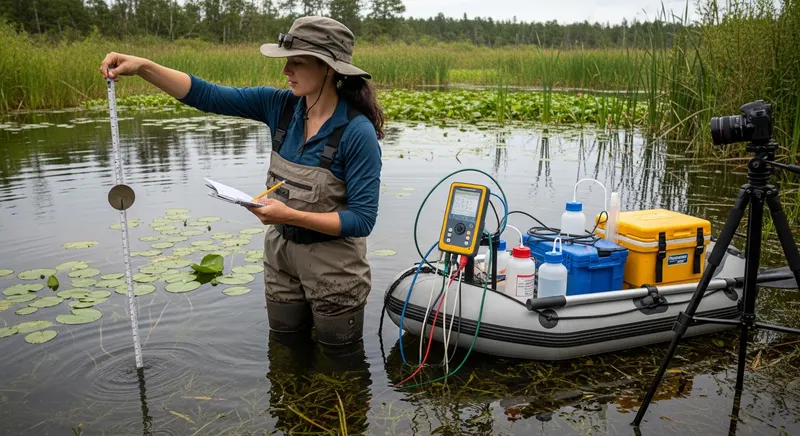
Chara is one of the most ecologically significant organisms in clear, low-nutrient lake systems. It serves as a water quality indicator, sediment stabilizer, waterfowl food source, and fish habitat component. Healthy chara beds in oligotrophic and mesotrophic lakes are indicators of good water quality and ecological integrity — their presence suggests low phosphorus, high water clarity, and absence of major pollution. The loss of chara beds from a previously chara-dominated lake is often one of the first ecological signs of eutrophication and a warning signal that requires management attention at the watershed level.
At the same time, chara in eutrophic ponds and enriched water bodies can reach nuisance density — forming dense mats that impede swimming and boating and give off a strong garlic-like odor that is objectionable to recreational users. Whether chara requires management depends entirely on the ecological context: protecting chara in oligotrophic lakes and managing it in eutrophic ponds often occur simultaneously in the same state. For management guidance, see chara control methods.
The Garlic Odor
Chara's most immediately recognizable characteristic is its strong, distinctive smell — a garlic or skunk-like odor released when the plant is crushed or disturbed. This smell is caused by volatile sulfur compounds produced by the alga. The odor is consistent across most Chara species and is absent in the closely related Nitella, making it the fastest field test for genus-level identification. If the plant smells like garlic when you crush a stem, it is Chara, not Nitella and not a true aquatic plant.
Management Considerations
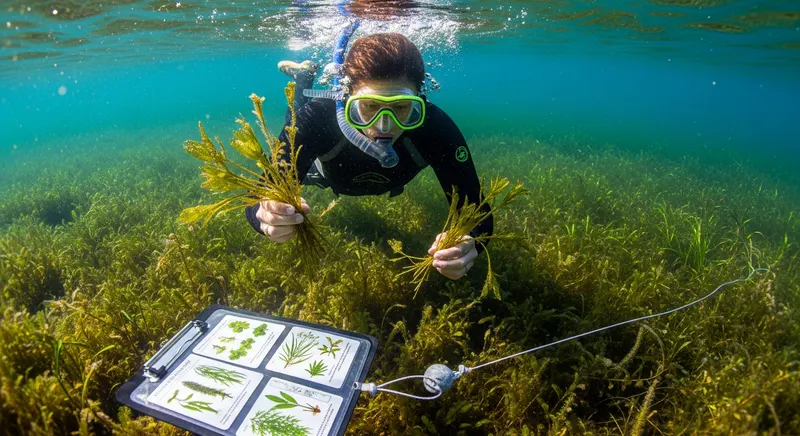
Whether chara requires management or active protection depends entirely on the ecological context of the water body. In clear, low-nutrient lakes and ponds, chara beds are ecologically valuable indicators of good water quality and should be protected from disturbance and management chemicals. Loss of chara from these systems typically signals declining water quality and should trigger watershed-level nutrient management rather than management of the chara itself. In eutrophic ponds and enriched water bodies where chara reaches nuisance density — forming thick mats with strong garlic odor objectionable to recreational users — management may be warranted. Copper-based algaecides, endothall, and diquat are registered for chara management and provide effective control; however, chara control without nutrient management produces only temporary results. Contact your state department of natural resources before applying any aquatic algaecide or herbicide, as permits are required and chara protection versus management guidance varies by state. For comprehensive management guidance, see chara control methods.
References
- Wood, R.D. & Imahori, K. (1965). A Revision of the Characeae. Cramer, Weinheim.
- van den Berg, M.S. (1999). Charophyte colonization in shallow lakes. Freshwater Biology 42:487–499.
- USDA NRCS PLANTS Database. Chara spp. plants.usda.gov
Whole-Lake Hydrilla Management: Lake Tohopekaliga, FL
Lake Tohopekaliga ("Lake Toho"), a 22,700-acre Central Florida lake, has sustained one of the most intensively managed hydrilla programs in the U.S. since the 1990s. Annual fluridone treatments combined with targeted mechanical harvesting in high-use recreational areas have maintained hydrilla coverage below nuisance thresholds while preserving native submersed vegetation communities in designated littoral zones.
Key outcome: Multi-decade integrated program demonstrates that hydrilla can be managed at acceptable levels in large water bodies, but requires sustained annual investment and coordinated agency cooperation across FDEP, SFWMD, and local fisheries managers.
The seasonal timing guidance has been invaluable. Treating at the right growth stage cut our herbicide costs by nearly 30% without sacrificing efficacy on our county-managed reservoir.
Dale Buchanan County Parks Director, MI · Kalamazoo CountyRunning a golf course with three retention ponds means constant weed pressure. The prevention and best management practices guide gave us a systematic approach that replaced our reactive spray schedule.
Paul Esteban Golf Course Superintendent, SC · Myrtle Beach area