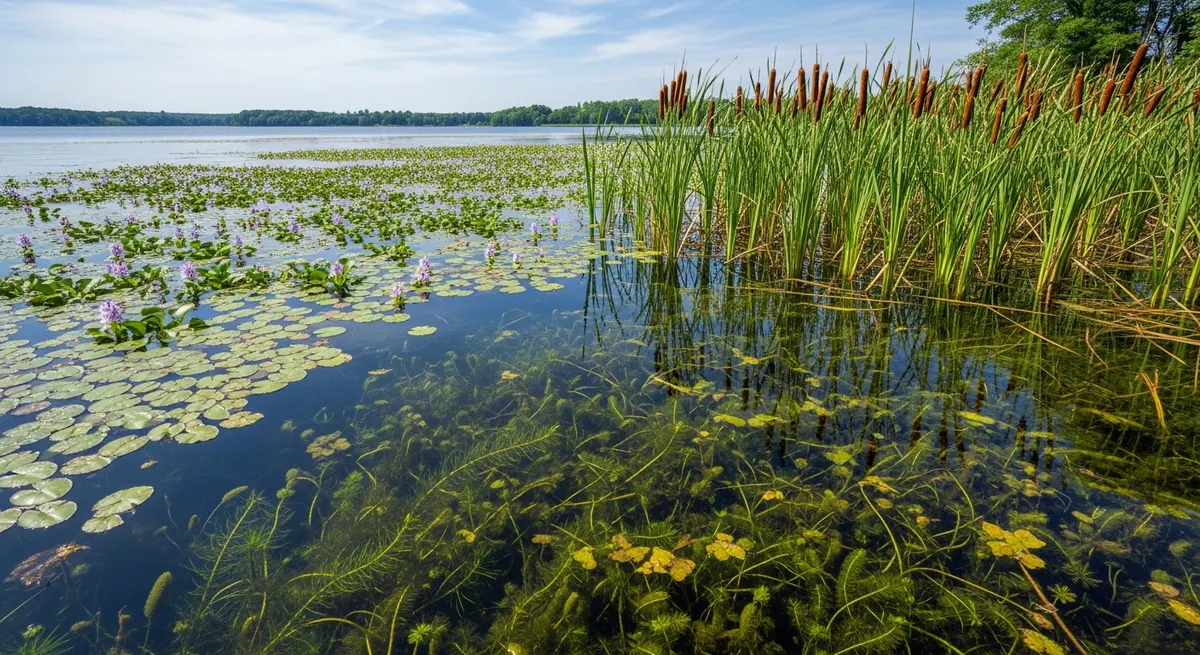
The dominant spread pathway for aquatic weeds between lakes is human watercraft. Boats, trailers, propellers, bilge water, live wells, and fishing equipment routinely transport viable plant fragments and seeds hundreds of miles in a single day. A fragment as small as 1 cm from a hydrilla plant or Eurasian watermilfoil can establish a new infestation in a receiving water body.
- Boats, trailers, propellers, bilge water, and live wells are the dominant long-distance spread pathways.
- A single fragment as small as 1 cm from hydrilla or Eurasian watermilfoil can establish a new infestation.
- Waterfowl carry seeds and fragments on feathers and feet, and transport viable seeds through digestion.
- Flooding events can move aquatic weed propagules across entire watersheds in a single event.
- The aquarium and water garden trade releases invasive species into wild waterways through careless disposal.
- Clean, Drain, Dry compliance is the most cost-effective tool to slow watercraft-mediated spread.
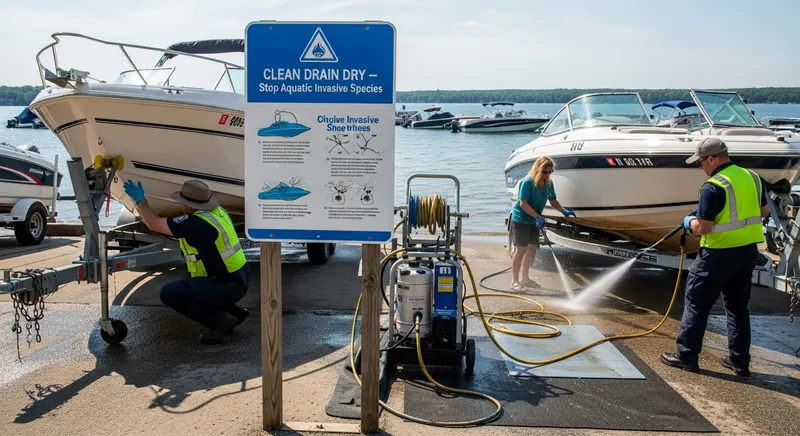
Watercraft: The Primary Vector
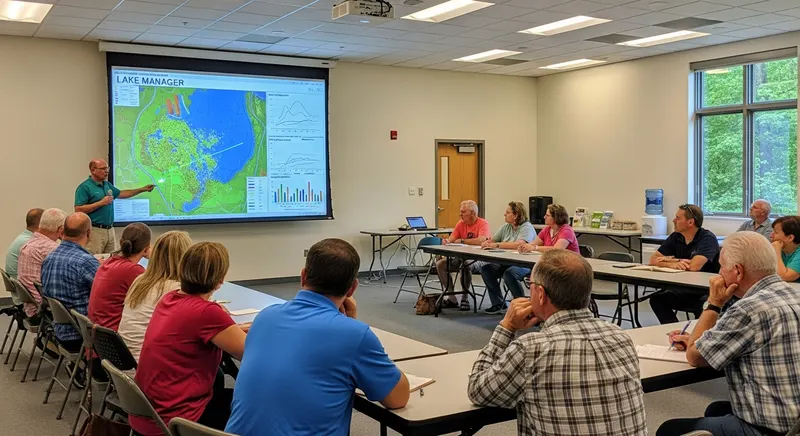
Research on aquatic invasive plant spread has consistently identified recreational and commercial watercraft as the dominant pathway for long-distance, cross-watershed dispersal. Boats operate at speeds that carry plant fragments quickly away from infested water bodies before they can be detected, and they travel on road networks that span the continent — enabling spread that would be impossible through natural processes alone.
The specific transport mechanisms on watercraft are numerous. Prop wash at launch sites picks up plant fragments and deposits them on hulls. Live wells and bilge compartments retain water that can contain fragments and seeds for hours. Anchor chains and ropes trap plant material. Fishing lines carry fragments from infested areas. Even the wet felt soles of wading boots — now banned in some states — can transport microscopic plant material and spores. The cumulative risk from a single boat used across multiple water bodies without cleaning is significant.
Studies of Eurasian watermilfoil distribution in the Great Lakes region found a strong positive correlation between the number of boat launches on a lake and the probability of infestation. This pattern held even after controlling for other factors, confirming that boat traffic — not natural dispersal — is the dominant driver of new introductions. Prevention best practices →
Fragments, Seeds, and Propagules
Different aquatic weed species spread by different propagule types, each with different survival requirements during transport. Understanding these differences helps explain why some species spread more readily than others and why prevention protocols must address multiple vectors simultaneously.
Vegetative Fragments
Eurasian watermilfoil, hydrilla, elodea, and coontail all spread effectively through vegetative fragmentation. A single plant node with an intact meristem can establish a new plant. These species are literally designed for fragmentation — mechanical disturbance by boats, harvesters, or wildlife simply produces more propagules. A boat propeller cutting through a dense milfoil bed can generate hundreds of viable fragments per pass, each capable of establishing independently. Eurasian watermilfoil species profile →
Specialized Structures
Hydrilla produces turions (dormant overwintering buds) and tubers (starchy underground storage structures) that can survive desiccation for weeks. These structures are commonly found in bilge water and on boat hulls. Giant salvinia produces spores. Curly-leaf pondweed produces turions that remain viable through winter. Each of these propagule types requires specific prevention attention beyond simple visible plant removal. Hydrilla biology and spread →
Seeds
Water hyacinth, water primrose, and several other species spread effectively through seeds that can remain viable in soil for years. Seed transport occurs through waterfowl, water flow, and attachment to equipment. Seeds are more resistant to drying than vegetative fragments, meaning that the "Dry" component of Clean, Drain, Dry is particularly important for species that spread by seed.
Natural Dispersal Pathways
Natural dispersal occurs through connected waterways, wildlife, and water flow, but is generally limited to shorter distances and within watershed boundaries. Flooding events can transport significant quantities of plant material downstream, which is how many aquatic weed species colonized entire river systems after initial introduction points. Waterfowl-mediated dispersal is well-documented for duckweed (carried on feathers and feet) and for species with adhesive or mucilaginous seeds.
The practical implication of the dominance of human-mediated spread is clear: regulations requiring boat inspection and cleaning, mandatory Clean, Drain, Dry protocols, and early detection programs at launch ramps are among the most cost-effective interventions available. Preventing a single new introduction typically costs orders of magnitude less than controlling an established infestation. US aquatic weed distribution →
The Aquarium and Horticulture Trade
Many of the most serious aquatic weed introductions in U.S. history trace directly to the aquarium trade or ornamental water gardening. Hydrilla was sold as an aquarium plant in the 1950s and 1960s before its invasive potential was recognized. Water hyacinth was introduced as an ornamental from South America in the 1880s. Parrot feather (Myriophyllum aquaticum) is still sold in some states. Eurasian watermilfoil likely entered through aquaria or water gardens. Releasing aquarium plants into natural water bodies is illegal in most states and should never be done regardless of perceived harmlessness. What aquatic weeds are illegal in the US? →
Sources & Scientific References
- Buchan, L.A.J. & Padilla, D.K. (2000). Predicting the likelihood of Eurasian watermilfoil presence in lakes, a macrophyte monitoring tool. Ecological Applications, 10(5), 1442–1455.
- Rothlisberger, J.D. et al. (2010). Aquatic invasive species transport via trailered boats. Fisheries, 35(3), 108–118.
- Leung, B. et al. (2006). An ounce of prevention or a pound of cure: bioeconomic risk analysis of invasive species. Proceedings of the Royal Society B, 273, 2407–2413.
Frequently Asked Questions
How do aquatic weeds spread from lake to lake?
The primary mechanism is human watercraft transport. Boat hulls, trailers, propellers, bilge water, live wells, and fishing gear carry plant fragments and seeds between water bodies. A single fragment of hydrilla or Eurasian watermilfoil can establish a new infestation. Wildlife (waterfowl, fish) and natural watercourses also play a role, but human transport accounts for the majority of long-distance spread.
Can birds spread aquatic weeds?
Yes. Waterfowl — particularly ducks and geese — carry aquatic plant seeds and fragments on their feathers and feet, and transport viable seeds through their digestive systems. Wading birds similarly move seeds and fragments between water bodies. However, wildlife-mediated dispersal typically occurs over shorter distances and within connected watersheds, while human-mediated transport accounts for the long-distance introductions that cross watershed boundaries.
What is the Clean, Drain, Dry protocol?
Clean, Drain, Dry is the standard prevention protocol for recreational watercraft: Clean all visible plant material from boats, trailers, and equipment before leaving a water body; Drain all water from live wells, bilges, and bait buckets; Dry all equipment completely before using it in a new water body. Drying time sufficient to kill plant fragments varies by species and climate but is generally 5–10 days.
Can aquatic weeds spread through connected waterways?
Yes. Water bodies connected by rivers, canals, or drainage ditches allow aquatic weed spread through natural water flow. Flooding events can move significant amounts of plant material downstream. This is why hydrilla and water hyacinth have spread extensively throughout the Florida river system and why Eurasian watermilfoil has colonized entire river catchments. Unconnected lakes rely almost entirely on human or wildlife transport for new introductions.
Key Takeaways
- Boats, trailers, propellers, bilge water, and live wells are the dominant long-distance spread pathways.
- A single fragment as small as 1 cm from hydrilla or Eurasian watermilfoil can establish a new infestation.
- Waterfowl carry seeds and fragments on feathers and feet, and transport viable seeds through digestion.
- Flooding events can move aquatic weed propagules across entire watersheds in a single event.
- The aquarium and water garden trade releases invasive species into wild waterways through careless disposal.
- Clean, Drain, Dry compliance is the most cost-effective tool to slow watercraft-mediated spread.
Ten-Year Lake Management Plan: Lake Wingra, WI
Lake Wingra, a 342-acre urban lake in Madison, WI, developed a comprehensive 10-year management plan coordinating the City of Madison, University of Wisconsin, and adjacent neighborhood associations. The plan addressed Eurasian watermilfoil, curly-leaf pondweed, and purple loosestrife through an integrated approach including targeted herbicide treatment, mechanical harvesting, native plant restoration, and public education.
Key outcome: The structured multi-agency planning process secured consistent funding across multiple budget cycles, a key advantage over ad hoc management. Native plant restoration efforts showed measurable progress in designated restoration zones within three years of initiation.
The seasonal timing guidance has been invaluable. Treating at the right growth stage cut our herbicide costs by nearly 30% without sacrificing efficacy on our county-managed reservoir.
Dale Buchanan County Parks Director, MI · Kalamazoo CountyRunning a golf course with three retention ponds means constant weed pressure. The prevention and best management practices guide gave us a systematic approach that replaced our reactive spray schedule.
Paul Esteban Golf Course Superintendent, SC · Myrtle Beach area