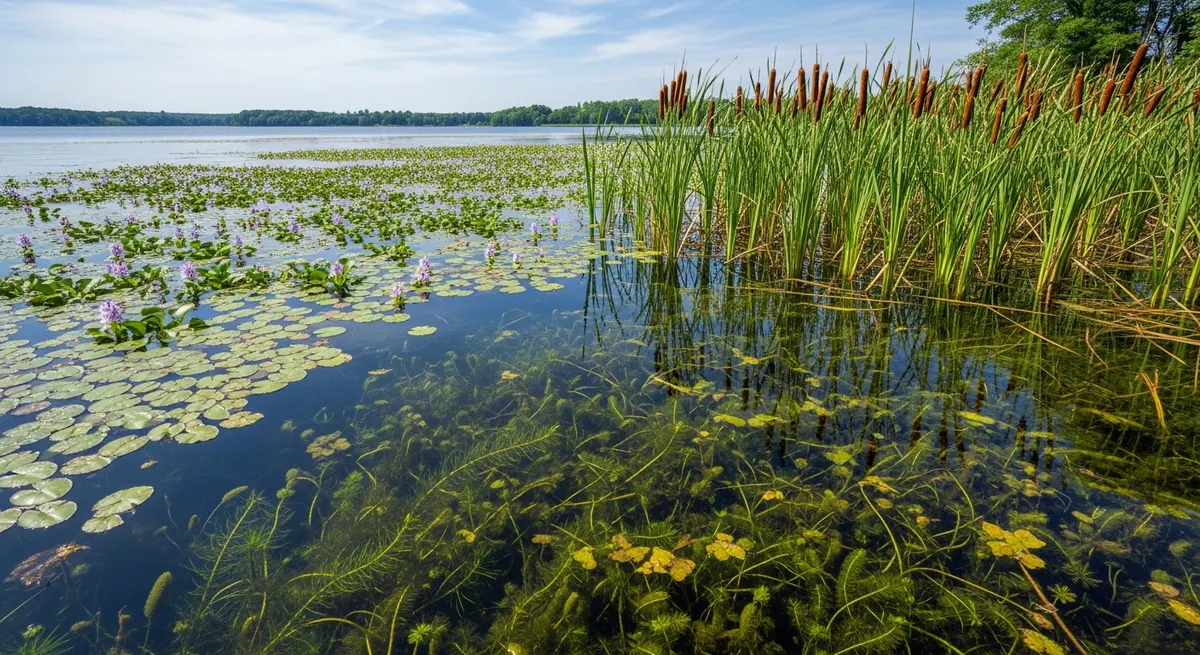
Florida, California, Louisiana, Texas, and the Great Lakes states consistently rank as the most severely impacted by aquatic weed problems in the United States. Florida tops all lists due to year-round warm temperatures, a high diversity of established invasive species, and the ecological sensitivity of its water bodies. No region of the country is free of aquatic weed concerns.
- Florida has the most severe aquatic weed problems in the US — year-round warmth allows continuous growth.
- Texas, Louisiana, Georgia, and the Carolinas have the most extensive infestation acreage after Florida.
- The Great Lakes states face significant challenges with Eurasian watermilfoil and curly-leaf pondweed.
- California's Sacramento-San Joaquin Delta hosts some of the largest water hyacinth and hydrilla infestations outside the South.
- Climate warming is expanding the geographic range of warm-water invasives into historically colder states.
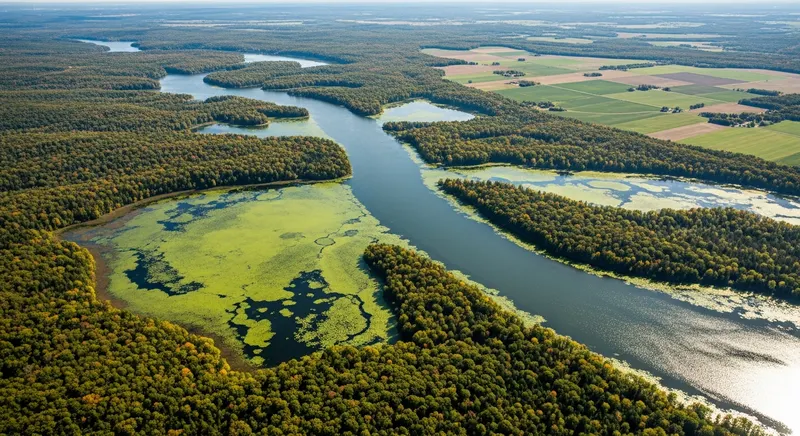
Florida: The Most Severely Impacted State
Florida's combination of year-round warm temperatures, abundant water bodies, and the largest diversity of established invasive aquatic species make it the most severely impacted state in the nation. The Florida Fish and Wildlife Conservation Commission (FWC) Invasive Plant Management Section is the largest state aquatic plant management program in the U.S., managing approximately 2 million acres of water bodies through contracted herbicide application, mechanical harvesting, and biological control. Key species include water hyacinth, water lettuce, hydrilla, giant salvinia, Hymenachne, and torpedo grass.
The ecological and economic stakes are particularly high in Florida because its extensive natural lakes, rivers, springs, and coastal waterways support world-class fishing, tourism, and biodiversity. The Kissimmee-Okeechobee-Everglades system is one of the most ecologically important water bodies in North America, and invasive aquatic plants are among the most significant threats to its ecological integrity. Southeast distribution profile →
The Gulf Coast: Louisiana, Texas, and the Southeast
Louisiana, Texas, Alabama, and Mississippi face severe water hyacinth and alligator weed infestations in coastal waterways, bayous, and agricultural canals. Water hyacinth, native to South America but introduced in the 1880s, has been an ecological and economic problem in Louisiana since the early 20th century. The state's extensive coastal wetland system — critical for waterfowl, fisheries, and storm protection — is compromised where invasive floating plants colonize open water areas. Giant salvinia has become an increasingly severe problem in East Texas and Louisiana over the past two decades, devastating recreational fishing on dozens of lakes.
California: The Delta Challenge
California's challenges center primarily on the Sacramento-San Joaquin Delta, where water hyacinth, Brazilian waterweed, and water primrose threaten water supply infrastructure serving 27 million people. As described in the California Q&A, the state operates one of the most complex and expensive management programs in the country. Additionally, lakes throughout California are impacted by Eurasian watermilfoil, and southern California faces growing salvinia and other warm-water species concerns. California management guide →
Great Lakes and Midwest: A Different Set of Species
The Great Lakes basin and surrounding Midwest states face a distinct assemblage of invasive aquatic weeds adapted to colder water. Eurasian watermilfoil is present throughout the region and has dramatically altered shallow lake ecology in Minnesota, Wisconsin, Michigan, and adjacent states. Curly-leaf pondweed is a major water quality concern — its winter growth and spring die-off nutrient pulse drives summer algal blooms that close beaches and harm water quality. Invasive Phragmites has transformed miles of Great Lakes coastal wetlands. Flowering rush, a Eurasian emergent plant, is spreading through the upper Midwest. Midwest distribution profile →
Sources & Scientific References
- FFWCC (2022). Invasive Plant Management Annual Report. Florida Fish and Wildlife Conservation Commission.
- Invasive Species Council of BC (2015). Early detection and rapid response guide for aquatic invasive plants.
- USGS Nonindigenous Aquatic Species Database. nas.er.usgs.gov.
Frequently Asked Questions
Which state has the worst aquatic weed problem?
Florida is widely recognized as having the most severe aquatic weed problems in the United States. Year-round warm temperatures support continuous growth of tropical and subtropical invasive species including water hyacinth, hydrilla, water lettuce, giant salvinia, and others. The state spends over $20 million annually on aquatic plant management through the Florida Fish and Wildlife Conservation Commission, making it the largest state aquatic weed management program in the nation.
Does the Great Lakes region have aquatic weed problems?
Yes. The Great Lakes basin is severely impacted by Eurasian watermilfoil, curly-leaf pondweed, Phragmites, flowering rush, and hydrilla (present in limited locations). The interconnected Great Lakes system and the enormous volume of recreational boating traffic create high dispersal pressure for invasive species. The eight Great Lakes states and two Canadian provinces coordinate management through the Great Lakes Regional Collaboration and associated bodies.
What are the worst aquatic weeds in the Southeast?
The Southeast (including Florida, Georgia, Alabama, Mississippi, Louisiana, South Carolina, and North Carolina) is impacted by water hyacinth, hydrilla, alligator weed, giant salvinia, water primrose, and Eurasian watermilfoil. The combination of warm temperatures, abundant water bodies, and extensive agricultural water systems creates severe management challenges. Louisiana, in particular, spends heavily on water hyacinth management in the coastal wetland system.
Are northern states affected by aquatic weeds?
Yes, significantly. Eurasian watermilfoil is established in all northern contiguous states. Curly-leaf pondweed is a major problem in Midwest and Great Lakes states. Invasive Phragmites has dramatically altered wetlands in the Northeast, Mid-Atlantic, and Great Lakes regions. Water chestnut is expanding in the Northeast. Northern states face somewhat different species than the South, but management costs and ecological impacts are substantial.
Key Takeaways
- Florida has the most severe aquatic weed problems in the US — year-round warmth allows continuous growth.
- Texas, Louisiana, Georgia, and the Carolinas have the most extensive infestation acreage after Florida.
- The Great Lakes states face significant challenges with Eurasian watermilfoil and curly-leaf pondweed.
- California's Sacramento-San Joaquin Delta hosts some of the largest water hyacinth and hydrilla infestations outside the South.
- Climate warming is expanding the geographic range of warm-water invasives into historically colder states.
Ten-Year Lake Management Plan: Lake Wingra, WI
Lake Wingra, a 342-acre urban lake in Madison, WI, developed a comprehensive 10-year management plan coordinating the City of Madison, University of Wisconsin, and adjacent neighborhood associations. The plan addressed Eurasian watermilfoil, curly-leaf pondweed, and purple loosestrife through an integrated approach including targeted herbicide treatment, mechanical harvesting, native plant restoration, and public education.
Key outcome: The structured multi-agency planning process secured consistent funding across multiple budget cycles, a key advantage over ad hoc management. Native plant restoration efforts showed measurable progress in designated restoration zones within three years of initiation.
We referenced the biological control pages extensively when evaluating our grass carp stocking proposal. The detail on stocking rates and target species specificity helped us present a credible case to our board.
Karen Ostrowski HOA Lake Committee Chair, MN · Lake Minnetonka associationThe ecological impact section helped our team explain to county commissioners why early intervention matters. The oxygen depletion data alone secured funding for our early-detection monitoring program.
Donna Whitfield State Wildlife Biologist, GA · Okefenokee region