Triploid (sterile) grass carp — white amur — are one of the most widely used and effective biological tools for controlling submerged aquatic vegetation in closed water bodies. A large herbivorous fish native to Eastern Asia, grass carp consume submerged aquatic plants at rates that can significantly reduce infestation density within 1–3 growing seasons. Virtually all US states permit triploid grass carp stocking with a permit; diploid (fertile) grass carp are prohibited in most states due to their potential to establish reproducing populations in the wild.
- Triploid (sterile) grass carp are legal and commonly used for aquatic weed control; diploid (fertile) grass carp are prohibited in most states.
- Grass carp stocking requires a permit from your state fish and wildlife agency in nearly all US states.
- Stocking rates of 5–15 fish per acre are typical — too many carp will eliminate all vegetation, including native plants.
- Grass carp take 1–3 growing seasons to achieve significant weed reduction — they are a long-term tool, not a quick fix.
- Grass carp are highly non-selective — they will consume native plants and target species alike, requiring careful stocking rate management.
Grass Carp Biology and Why They Work
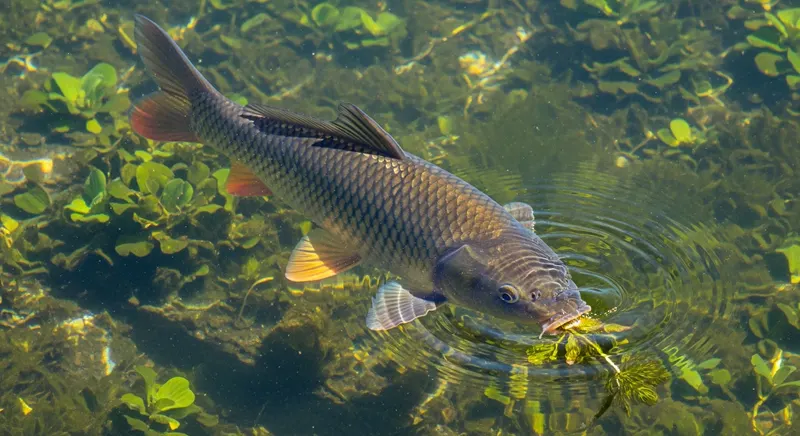
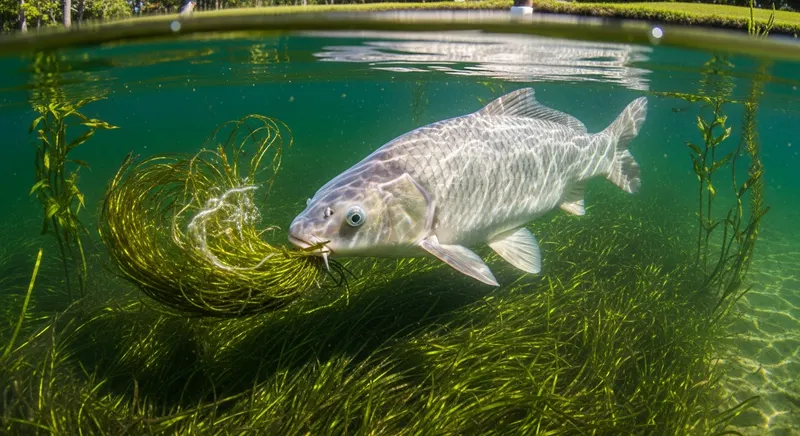
Grass carp (Ctenopharyngodon idella), also known as white amur, are large, fast-growing cyprinid fish native to the large rivers of eastern China and Russia. They are obligate herbivores — in contrast to most fish, which are omnivorous — and have evolved specialized teeth (pharyngeal teeth) for grinding plant material. Under optimal water temperature conditions (above 20°C), adult grass carp can consume 40–100% of their body weight in aquatic vegetation per day. A pond stocked with 10 fish per acre at 10–20 lbs per fish carries significant grazing pressure on aquatic vegetation — grazing pressure that grows as the fish grow.
The triploid (sterile) form of grass carp — produced by pressure- or temperature-shocking newly fertilized eggs to prevent chromosome division — has three sets of chromosomes instead of two, making it reproductively sterile. This critical safety feature prevents triploid grass carp from reproducing if they escape containment, limiting their potential impact on natural ecosystems. Certificates of triploid status are required at the time of purchase and for stocking permits in most states. Full biological control guide →
Stocking Rate Guidance
Getting the stocking rate right is the most critical decision in grass carp management. Rates that are too low produce minimal weed suppression. Rates that are too high eliminate all aquatic vegetation, including native plants critical for fish habitat, water quality, and wildlife. General guidance by weed coverage level:
- Light coverage (under 25% of water surface): 3–5 fish per acre
- Moderate coverage (25–50%): 5–10 fish per acre
- Heavy coverage (over 50%): 10–15 fish per acre
These rates are starting points — stocking rate should be refined based on species composition (grass carp are more aggressive grazers of preferred species like hydrilla than less-preferred species like bulrush), water temperature regime (warmer water = higher feeding rate = more fish needed for a given period of control), and management objectives (complete vegetation elimination requires higher rates than partial suppression). Annual monitoring of vegetation coverage allows stocking rate adjustment. Private pond management guide →
Containment Requirements
All states that permit grass carp stocking require containment — the prevention of fish escape into natural water bodies. Standard containment measures include: screening of all outlet structures (spillways, drain pipes, overflows) with appropriately sized bar screens or grates; verification that there is no surface connection to natural streams, rivers, or lakes during flood events; and fencing or netting of any stream inlets that fish could exit through during high water. Most state stocking permits require a site inspection or applicant certification of containment adequacy before permit issuance. The penalty for allowing grass carp to escape into natural waters can be significant.
Combining Grass Carp with Other Methods
Grass carp are most effective as part of an integrated weed management program rather than as a standalone solution. A common approach for hydrilla or Eurasian watermilfoil-infested ponds: initial herbicide treatment reduces weed biomass rapidly, providing immediate access improvement; grass carp are then stocked at maintenance rates to prevent re-establishment over the following 3–5 years; annual vegetation monitoring adjusts stocking rate and determines when to add more fish. This sequence achieves faster initial results than grass carp alone (which require 1–3 seasons to produce significant impacts) while reducing the ongoing herbicide costs that a treatment-only approach would require. Integrated management guide →
Sources & Scientific References
- Wattendorf, R.J. (1991). Triploid grass carp management in Florida: a model for invasive species control. Transactions of the American Fisheries Society, 120(5), 603–609.
- Masser, M.P. & Grant, W.E. (1986). Grass Carp Biology and Management. SRAC Publication No. 340. Southern Regional Aquaculture Center.
- Chilton, E. & Muoneke, M.I. (1992). Biology and management of grass carp for vegetation control in North American waters. Reviews in Fish Biology and Fisheries, 2(4), 283–320.
Frequently Asked Questions
What types of aquatic weeds can grass carp control?
Grass carp readily consume most common submerged aquatic weeds, including hydrilla, Eurasian watermilfoil, pondweeds, coontail, elodea, and naiad. They are less effective on filamentous algae (which they consume but do not prefer), emergent plants (cattails, Phragmites — roots are accessible but large stems are not readily consumed), and mature water hyacinth. Grass carp preference varies by plant species and season; hydrilla is among their preferred foods, making them particularly well-suited for hydrilla management.
How many grass carp do I need per acre?
Standard stocking rate recommendations are 5–10 grass carp per acre for moderate weed coverage (25–50% of the water surface) and 10–15 fish per acre for heavy coverage (above 50%). Overstocking is a common mistake — too many fish will eliminate all vegetation, including ecologically valuable native plants, reducing habitat quality for fish and wildlife. It is better to start conservatively and add fish if needed. At recommended stocking rates, 3–5 years of management may be needed before fish need replacement as they grow and their feeding rate changes.
Do grass carp need a permit?
Yes, in virtually all US states. Most states require a stocking permit from the state fish and wildlife or department of natural resources before grass carp can be purchased and stocked. Some states restrict grass carp to truly isolated water bodies with no potential for escape to natural water bodies. The permit process typically involves confirming that the water body has appropriate containment (screens on all outflows to prevent escape) and that the water body meets other criteria for stocking approval. Contact your state fish and wildlife agency for current stocking permit requirements and certified supplier lists.
Are grass carp effective for hydrilla control?
Yes. Grass carp are among the most effective biological control options for hydrilla, which is a preferred food source. Studies in Florida and Georgia have documented significant hydrilla reductions within 2–3 growing seasons of appropriate-density grass carp stocking. However, hydrilla's multiple reproductive mechanisms — particularly dormant tubers in the sediment — mean that vegetation suppression by grass carp does not eliminate the infestation completely; tubers can resprout even after above-ground vegetation is eliminated. Grass carp stocking is often combined with initial herbicide treatment to reduce hydrilla biomass rapidly, followed by fish for long-term maintenance.
What are the risks of stocking grass carp?
The primary risks are: over-grazing — excessive stocking rates can eliminate all aquatic vegetation including native plants, harming fish habitat and water quality; escape — if fish escape containment into natural water bodies, they can eliminate aquatic vegetation in rivers and lakes and compete with native fish; non-selectivity — grass carp consume preferred native plants along with target invasive species; and lifespan management — grass carp can live 10–15 years and continue growing throughout their life, requiring permit renewal and stocking reassessment over time. Careful initial stocking rate and pond containment assessment minimizes these risks.
Key Takeaways
- Triploid (sterile) grass carp are legal and commonly used for aquatic weed control; diploid (fertile) grass carp are prohibited in most states.
- Grass carp stocking requires a permit from your state fish and wildlife agency in nearly all US states.
- Stocking rates of 5–15 fish per acre are typical — too many carp will eliminate all vegetation, including native plants.
- Grass carp take 1–3 growing seasons to achieve significant weed reduction — they are a long-term tool, not a quick fix.
- Grass carp are highly non-selective — they will consume native plants and target species alike, requiring careful stocking rate management.
Ten-Year Lake Management Plan: Lake Wingra, WI
Lake Wingra, a 342-acre urban lake in Madison, WI, developed a comprehensive 10-year management plan coordinating the City of Madison, University of Wisconsin, and adjacent neighborhood associations. The plan addressed Eurasian watermilfoil, curly-leaf pondweed, and purple loosestrife through an integrated approach including targeted herbicide treatment, mechanical harvesting, native plant restoration, and public education.
Key outcome: The structured multi-agency planning process secured consistent funding across multiple budget cycles, a key advantage over ad hoc management. Native plant restoration efforts showed measurable progress in designated restoration zones within three years of initiation.
The species identification guides on AquaticWeed.org are the most accurate I've used in 18 years of lake management. I now send all my new clients here first before we discuss treatment options.
Robert Harmon Certified Lake Manager, FL · Lake Okeechobee regionWe referenced the biological control pages extensively when evaluating our grass carp stocking proposal. The detail on stocking rates and target species specificity helped us present a credible case to our board.
Karen Ostrowski HOA Lake Committee Chair, MN · Lake Minnetonka association