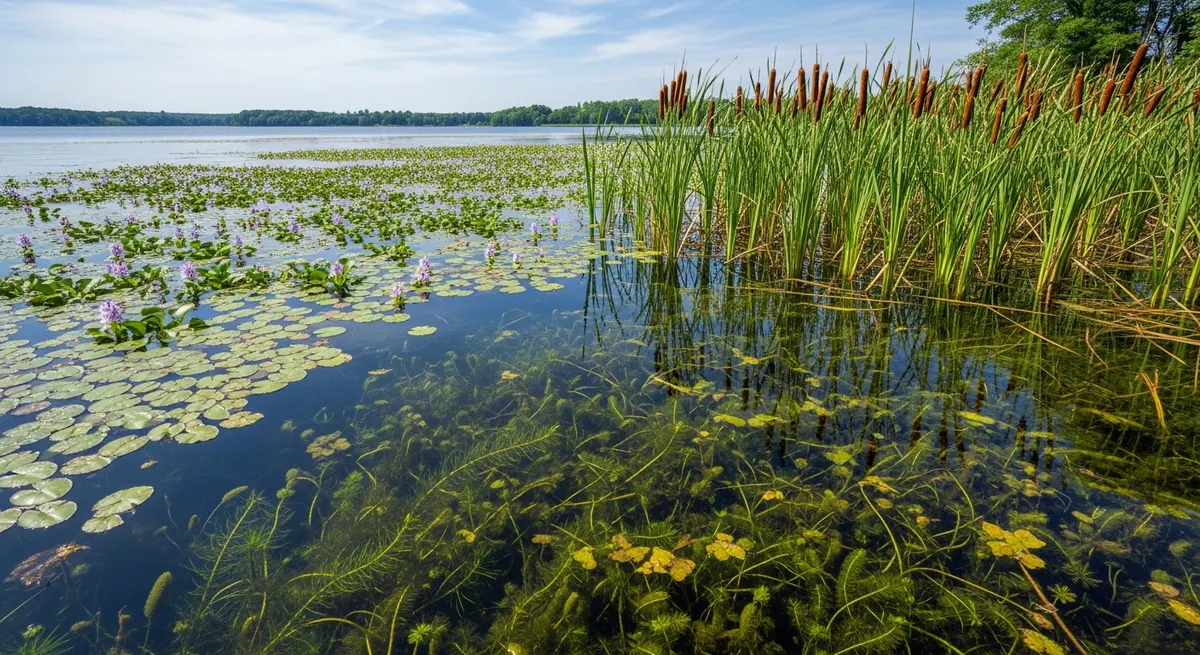
Biological control for aquatic weeds uses living organisms — insects, herbivorous fish, pathogens, or other organisms — that feed on or suppress target weed populations. It is most effective as a component of an integrated management program, not a stand-alone solution. Properly deployed biological control agents provide long-term, cost-effective suppression that reduces dependence on repeated chemical or mechanical treatments.
- EPA-approved biocontrol agents include insects, pathogens, and herbivorous fish like triploid grass carp.
- Biocontrol provides long-term, self-sustaining suppression but typically takes 3–10 years to reach meaningful impact.
- Host specificity testing ensures approved agents are safe for native, non-target plant species.
- Grass carp are highly effective but non-selective — they consume native plants as readily as target species.
- Classical biocontrol (imported natural enemies) is distinct from augmentative biocontrol (mass-released organisms).
Types of Biological Control
Biological control for aquatic weeds falls into several categories based on the type of organism used and the mechanisms of suppression.
Herbivorous Fish
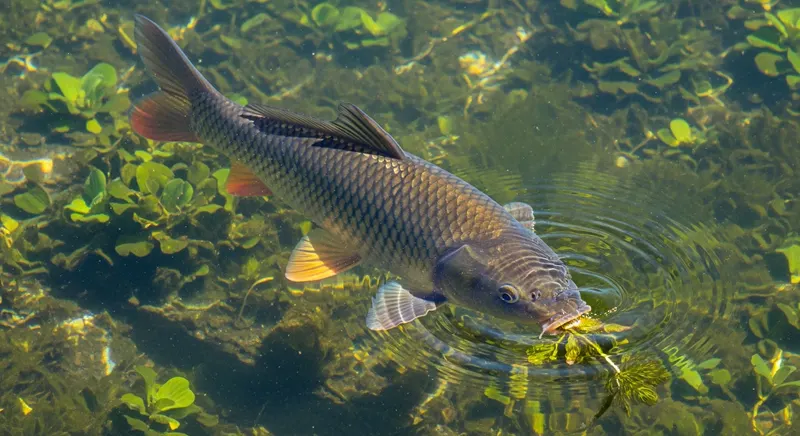
Triploid (sterile) grass carp are the most widely used biological control agent for aquatic weeds in the U.S. Sterile triploids are used rather than diploid (fertile) fish to prevent establishment of reproducing populations, which would be uncontrollable and ecologically disruptive. At appropriate stocking rates (typically 5–15 fish per vegetated acre, depending on vegetation density), grass carp can significantly reduce dense submersed and floating-leaf vegetation. They are non-selective herbivores and will eat both target weeds and desirable native plants, requiring careful monitoring. Biological control methods guide →
Classical Biocontrol Insects
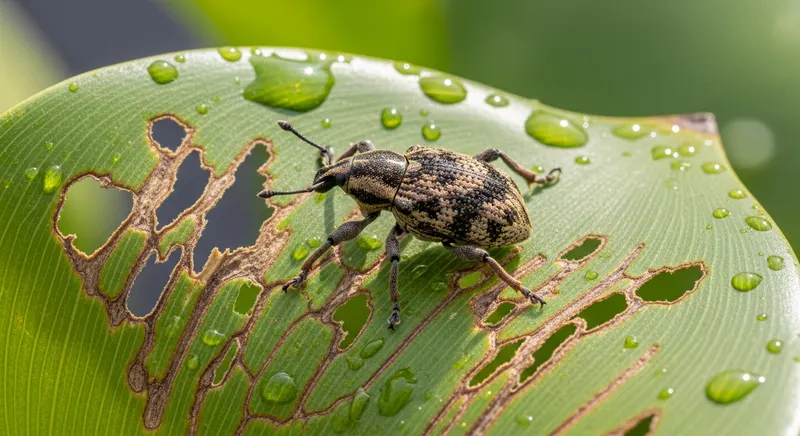
Classical biological control introduces host-specific insects, mites, or other invertebrates from the plant's native range to suppress it in its introduced range. This approach has had notable successes in U.S. waters. The water hyacinth weevils (Neochetina eichhorniae and N. bruchi) have been established throughout infested states and provide significant suppression of water hyacinth populations, though they rarely provide complete control. The alligator weed flea beetle (Agasicles hygrophila) has been highly effective in reducing emergent alligator weed and is considered one of the most successful aquatic biocontrol programs in the world. Cyrtobagous salviniae has dramatically suppressed giant salvinia in tropical climates, with more limited but real effectiveness in temperate U.S. conditions.
Pathogens
Fungal, bacterial, and viral pathogens of aquatic weeds have been researched as potential biocontrol agents but have rarely reached commercial application in U.S. waters. A rust fungus (Puccinia spegazzinii) for water hyacinth control has been approved for field release in several countries. Research into Mycoleptodiscus terrestris as a mycoherbicide for hydrilla showed early promise but did not advance to registration.
Limitations of Biological Control
Biological control is fundamentally limited by two factors: host specificity and time. The same host specificity that makes classical biocontrol agents safe for non-target plants prevents them from controlling a broad spectrum of weed species — a different agent is needed for each target species. And biological control works slowly, often requiring multiple years for agent populations to build and exert meaningful suppression pressure.
Biological control is best understood as a long-term management investment, most valuable in extensive, geographically large infestations where repeated chemical or mechanical treatment would be prohibitively expensive. For small water bodies with discrete, accessible infestations, chemical or mechanical methods typically provide faster and more controllable results.
Sources & Scientific References
- Center, T.D. et al. (2002). The mosaic of biological control agents. In: Biological Control of Invasive Plants in the Eastern United States. USDA Forest Service.
- Julien, M. et al. (2001). Biological control of water hyacinth. Biocontrol Science and Technology, 11, 273–297.
- Buckingham, G.R. (1994). Biological control of alligatorweed. Weed Technology, 8(4), 840–851.
Frequently Asked Questions
What is the best biological control for aquatic weeds?
Triploid (sterile) grass carp are the most widely deployed biological control agent for aquatic weeds in the U.S. and are approved in most states for management of submersed and floating vegetation. Classical biocontrol insects — particularly the water hyacinth weevil (Neochetina species) and the alligator weed flea beetle (Agasicles hygrophila) — have been highly successful for their target species. The 'best' agent depends on the target species, water body type, and state regulations.
Are grass carp effective for aquatic weed control?
Triploid grass carp can effectively reduce or eliminate dense submersed and floating-leaf vegetation, but they are non-selective — they eat both invasive weeds and desirable native vegetation. Stocking rate, timing, and follow-up monitoring are critical. Over-stocking grass carp can completely denude a water body of vegetation, destroying fish habitat and increasing algae blooms. State regulations typically specify maximum stocking rates and require permits for grass carp use.
Are biocontrol insects safe for native plants?
Classical biocontrol agents used for aquatic weeds — insects like the water hyacinth weevil, salvinia weevil, and alligator weed flea beetle — undergo extensive host-specificity testing before approval to ensure they will not damage non-target plants, including native species. This testing process, managed by USDA APHIS, typically takes 10–15 years before an agent is approved for field release. Approved agents have strong specificity for their target weed species.
How long does biological control take to work?
Biological control agents generally work slowly — suppression develops over years, not weeks. This is the fundamental tradeoff: biocontrol is inexpensive over long timescales but does not provide the rapid results of herbicide or mechanical treatment. Biocontrol is best suited for situations where long-term sustainable management is the goal, where chemical treatment is impractical or undesirable, or where it is integrated with other methods that provide immediate results while biocontrol builds population pressure on the target weed.
Key Takeaways
- EPA-approved biocontrol agents include insects, pathogens, and herbivorous fish like triploid grass carp.
- Biocontrol provides long-term, self-sustaining suppression but typically takes 3–10 years to reach meaningful impact.
- Host specificity testing ensures approved agents are safe for native, non-target plant species.
- Grass carp are highly effective but non-selective — they consume native plants as readily as target species.
- Classical biocontrol (imported natural enemies) is distinct from augmentative biocontrol (mass-released organisms).
Ten-Year Lake Management Plan: Lake Wingra, WI
Lake Wingra, a 342-acre urban lake in Madison, WI, developed a comprehensive 10-year management plan coordinating the City of Madison, University of Wisconsin, and adjacent neighborhood associations. The plan addressed Eurasian watermilfoil, curly-leaf pondweed, and purple loosestrife through an integrated approach including targeted herbicide treatment, mechanical harvesting, native plant restoration, and public education.
Key outcome: The structured multi-agency planning process secured consistent funding across multiple budget cycles, a key advantage over ad hoc management. Native plant restoration efforts showed measurable progress in designated restoration zones within three years of initiation.
I've managed aquatic vegetation on Texas reservoirs for 15 years. The water hyacinth control content here is the most up-to-date, practical guidance I've found anywhere online.
Travis McKinley Commercial Fishing Guide, TX · Lake Travis / Lake AustinThe species identification guides on AquaticWeed.org are the most accurate I've used in 18 years of lake management. I now send all my new clients here first before we discuss treatment options.
Robert Harmon Certified Lake Manager, FL · Lake Okeechobee region