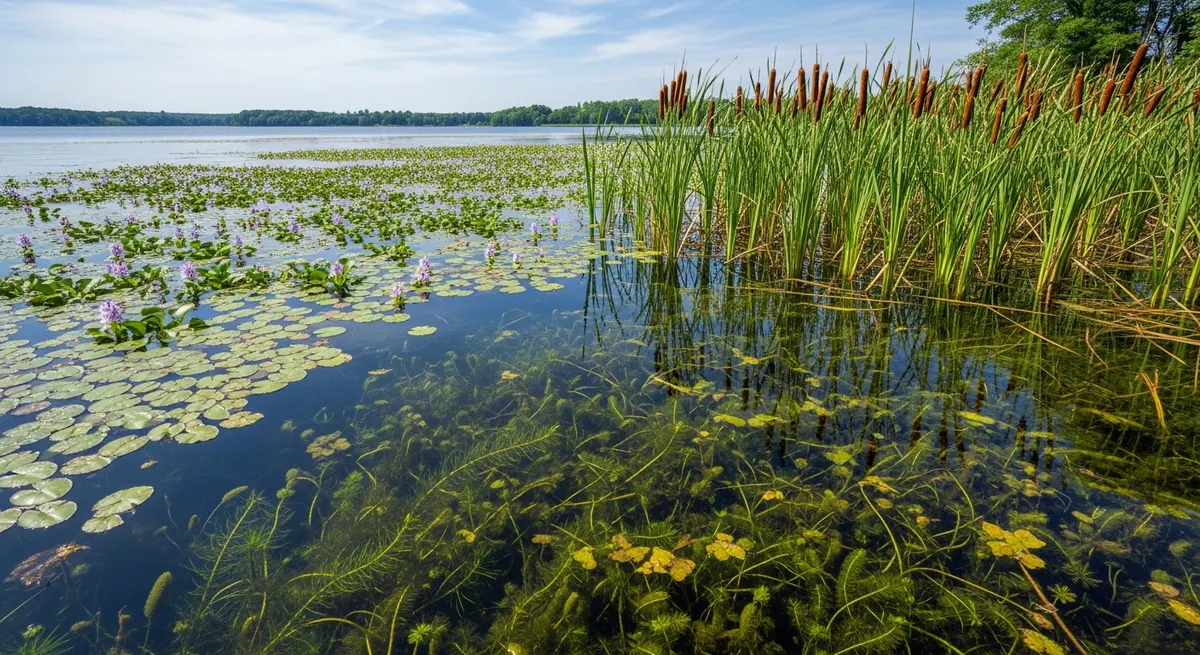
Water hyacinth (Eichhornia crassipes) is a free-floating aquatic plant native to South America and widely considered the world's most problematic aquatic weed. It is invasive because its growth rate — capable of doubling coverage every two weeks — vastly outpaces any management response, its dense mats completely alter aquatic ecosystems, and it thrives in the eutrophic conditions created by human activity.
- Water hyacinth is widely regarded as the world's worst aquatic weed — doubling in population every 12 days.
- Dense mats block 100% of sunlight from reaching submerged plants and fish habitat below.
- Originally from South America, it was introduced to the US as an ornamental plant in the 1880s.
- A 1-acre infestation can expand to 2 acres in 12 days without intervention under optimal conditions.
- Despite being harmful as an invasive, it is used in some wastewater treatment systems for nutrient uptake.
Biology of Water Hyacinth
Water hyacinth is native to tropical South America, where it naturally occurs in rivers, lakes, and slow-moving waterways. In its native range, insects (particularly several weevil species now used as biocontrol agents globally), competing plant communities, and natural water level fluctuations keep population growth in check. Introduced outside its native range in the mid-to-late 1800s as an ornamental — first to international expositions, then widely sold as a water garden plant — it established invasive populations throughout tropical and subtropical regions worldwide.
The plant's extraordinary growth rate is driven by vegetative reproduction through stolons (horizontal stems) that produce daughter rosettes. A single well-nourished plant in optimal conditions (warm water, high nutrients) can generate a new daughter plant every two weeks. This exponential growth, unchecked by the specialist insects and competing plants present in South America, allows coverage to expand from a few square yards to acres within a single growing season.
Water hyacinth's photosynthetic efficiency is enhanced by its inflated petioles — which maximize surface area exposure to sunlight — and by its ability to adjust leaf position in response to light availability. It absorbs nutrients directly from the water through its root system, making it extraordinarily efficient at exploiting eutrophic conditions. Ironically, the nutrient-enriched waterways created by agricultural runoff and urban development provide ideal habitat for water hyacinth — the anthropogenic nutrient loading that worsens water quality simultaneously creates optimal conditions for the weed. Full water hyacinth species profile →
Ecological Impacts
Water hyacinth mats on U.S. waterways cause severe ecological damage through multiple pathways. The dense surface coverage blocks virtually all sunlight from reaching the water column, eliminating submerged aquatic vegetation and the invertebrate and fish communities that depend on it. Decomposition of dead plant material (each plant has a relatively short functional life before new growth overtops it) consumes dissolved oxygen, driving hypoxic conditions beneath the mat. Water temperatures within and beneath dense mats increase significantly, creating thermal conditions that shift community composition toward warm-water-adapted invasive species.
The physical extent of water hyacinth mats impedes all water-dependent uses: boating, fishing, swimming, and water supply operations. Water intake structures clogged with water hyacinth require constant mechanical clearing. In the Sacramento-San Joaquin Delta, water hyacinth reduces water flow rates through channels, alters salinity dynamics, and threatens the operation of the state water pumps that supply water to 27 million Californians.
Management in the US
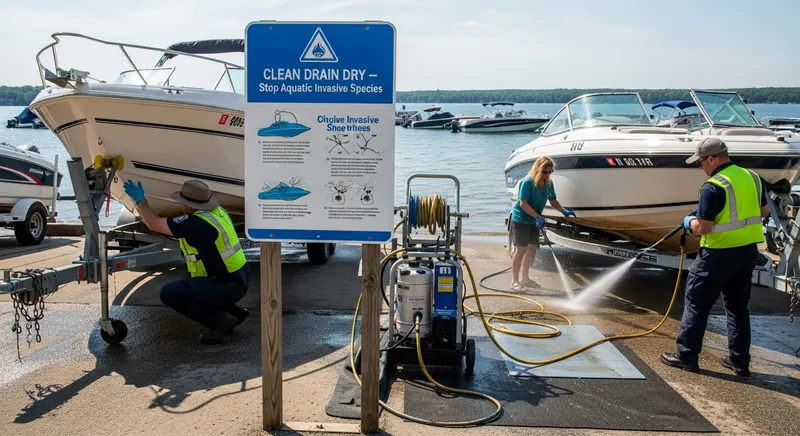
Water hyacinth is managed through a combination of professional herbicide application, mechanical harvesting, and biological control agents. The Neochetina weevil biocontrol program — established in the U.S. in the 1970s — provides ongoing suppression throughout the Southeast and is considered a successful classical biological control program, though it does not eliminate the need for additional management. Florida and Louisiana maintain large-scale annual management programs spending tens of millions of dollars combined, demonstrating the scale of investment required to maintain water hyacinth at tolerable levels in heavily infested states. Biological control guide →
Sources & Scientific References
- Penfound, W.T. & Earle, T.T. (1948). The biology of the water hyacinth. Ecological Monographs, 18(4), 447–472.
- Gopal, B. (1987). Water Hyacinth. Elsevier.
- Center, T.D. et al. (1999). Biological control of water hyacinth. In: Biological Control of Weeds.
Frequently Asked Questions
What does water hyacinth look like?
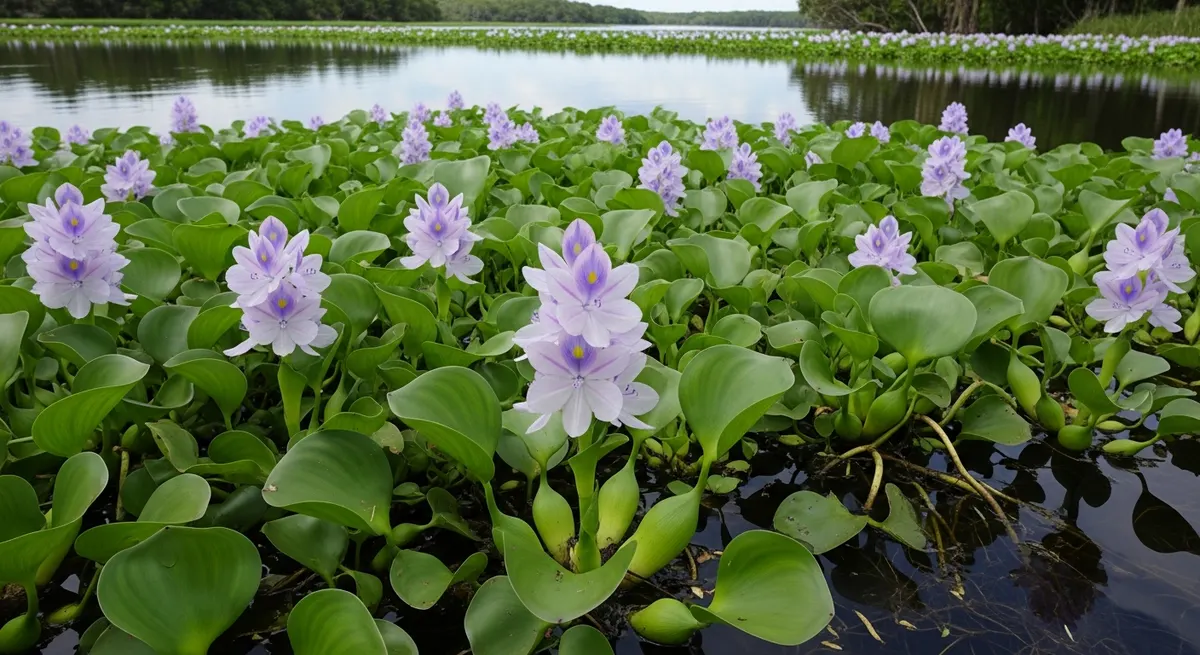
Water hyacinth has distinctive inflated, bulbous petioles (leaf stalks) that serve as flotation organs, giving the plant a very recognizable appearance. Leaves are broadly oval, waxy, and dark green with a glossy surface. The plant produces striking lavender-blue flowers with a yellow spot on the uppermost petal. Root systems are dense, feathery, and dark purple — visible hanging below the floating rosette. It grows in floating rosettes that spread and coalesce into continuous surface mats.
Where is water hyacinth found in the US?
Water hyacinth is established primarily in the Gulf Coast states (Louisiana, Florida, Texas, Mississippi), the Southeast Atlantic coast, and California (Sacramento-San Joaquin Delta). It requires warm temperatures and cannot survive hard freezes, limiting its permanent establishment in northern states. In Florida and Louisiana, it infests hundreds of thousands of acres of lakes, rivers, coastal waterways, and drainage canals. The Sacramento-San Joaquin Delta infestation in California threatens critical water supply infrastructure.
Can you eat water hyacinth?
Water hyacinth is edible — young leaves and petioles are consumed in some Asian countries where the plant is native or naturalized. However, water hyacinth growing in natural water bodies in the U.S. should not be consumed because of potential contamination with heavy metals (water hyacinth hyperaccumulates contaminants from polluted water) and exposure to aquatic pesticides if the water body has been treated. Plants grown specifically for food in controlled conditions are a different matter.
What kills water hyacinth?
Registered aquatic herbicides — primarily 2,4-D, glyphosate, and triclopyr — effectively kill water hyacinth when applied by licensed applicators. Two biocontrol weevils (Neochetina eichhorniae and N. bruchi) have been released extensively throughout infested states and provide supplemental suppression. Mechanical harvesting removes biomass immediately but cannot prevent regrowth. Frost kills above-ground plants but surviving stems can resprout in mild climates.
Key Takeaways
- Water hyacinth is widely regarded as the world's worst aquatic weed — doubling in population every 12 days.
- Dense mats block 100% of sunlight from reaching submerged plants and fish habitat below.
- Originally from South America, it was introduced to the US as an ornamental plant in the 1880s.
- A 1-acre infestation can expand to 2 acres in 12 days without intervention under optimal conditions.
- Despite being harmful as an invasive, it is used in some wastewater treatment systems for nutrient uptake.
Ten-Year Lake Management Plan: Lake Wingra, WI
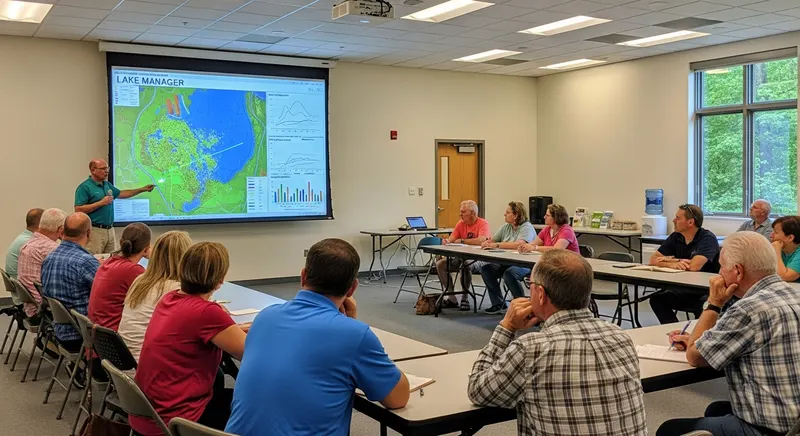
Lake Wingra, a 342-acre urban lake in Madison, WI, developed a comprehensive 10-year management plan coordinating the City of Madison, University of Wisconsin, and adjacent neighborhood associations. The plan addressed Eurasian watermilfoil, curly-leaf pondweed, and purple loosestrife through an integrated approach including targeted herbicide treatment, mechanical harvesting, native plant restoration, and public education.
Key outcome: The structured multi-agency planning process secured consistent funding across multiple budget cycles, a key advantage over ad hoc management. Native plant restoration efforts showed measurable progress in designated restoration zones within three years of initiation.
The species identification guides on AquaticWeed.org are the most accurate I've used in 18 years of lake management. I now send all my new clients here first before we discuss treatment options.
Robert Harmon Certified Lake Manager, FL · Lake Okeechobee regionWe referenced the biological control pages extensively when evaluating our grass carp stocking proposal. The detail on stocking rates and target species specificity helped us present a credible case to our board.
Karen Ostrowski HOA Lake Committee Chair, MN · Lake Minnetonka association