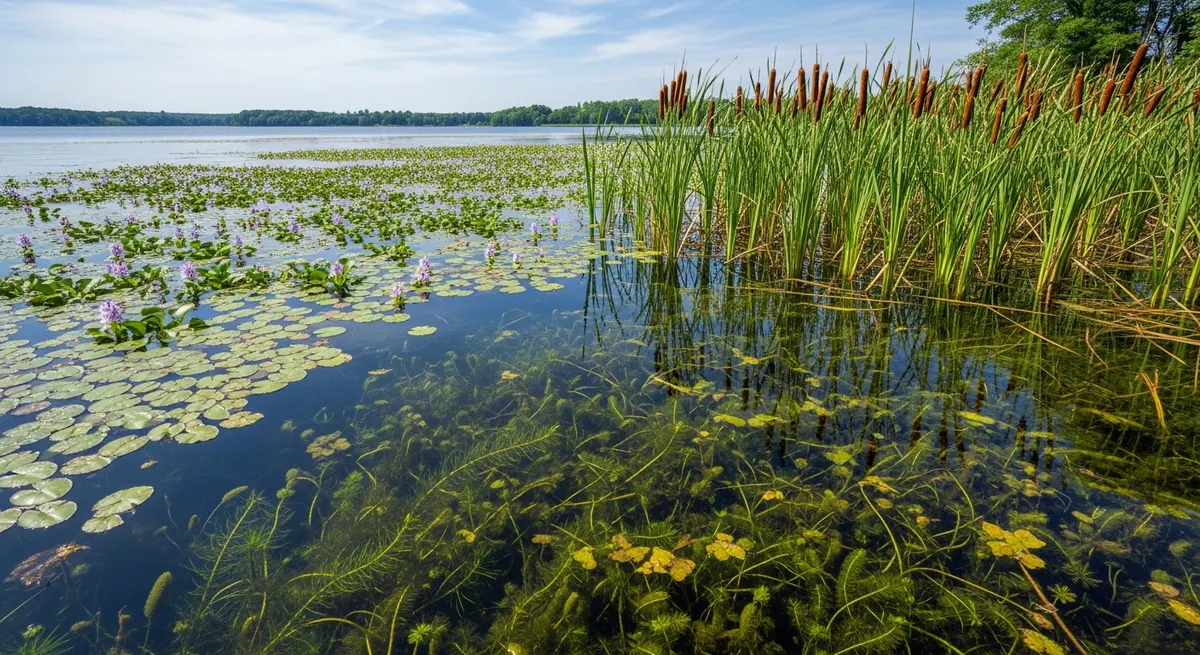
Aquatic weed identification follows a three-step process: first determine the plant's growth position (floating, submerged, or emergent), then examine leaf shape and arrangement, then check diagnostic features specific to the candidate species. Most aquatic weed identifications can be made in the field with practice, a good hand lens, and a reliable reference guide.
- The first step is determining growth form — floating, submerged, or emergent — this narrows the field significantly.
- Leaf shape, arrangement, and texture are the most reliable diagnostic features for most aquatic weed species.
- Root structure (fibrous, stoloniferous, tuberous) provides critical clues for submerged and rooted plants.
- Many aquatic weeds look similar to beneficial native plants — proper ID before treatment is essential.
- University extension services and state aquatic invasive species programs offer free ID assistance.
- Hydrilla is often misidentified as Elodea; the key difference is 1–2 teeth on the leaf margin of hydrilla.
Step 1: Determine Growth Position
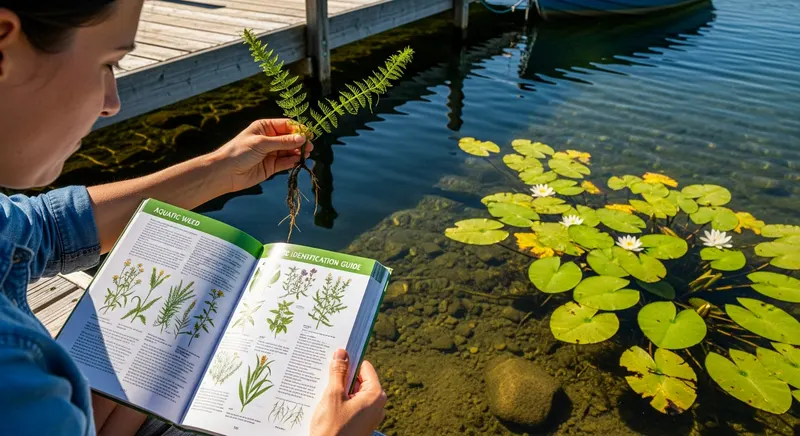
Before touching or collecting the plant, observe its position relative to the water surface. This single observation narrows the candidate species to a manageable subset. The three growth positions — floating, submerged, and emergent — correspond to completely different species groups with distinct identification approaches.
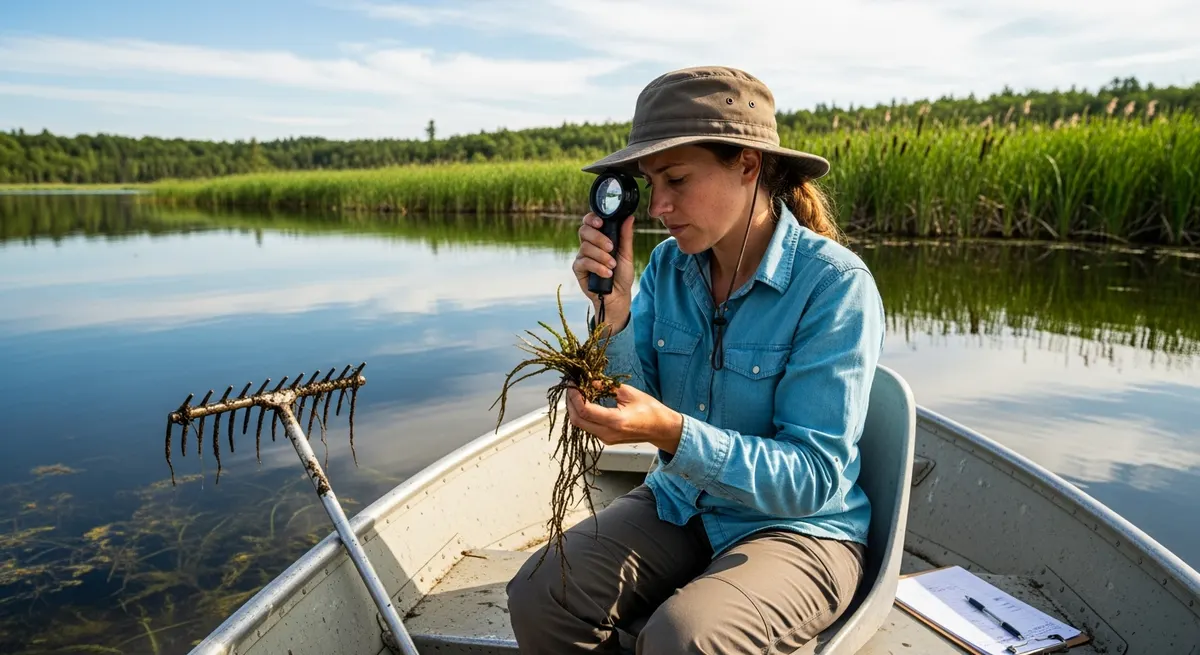
Floating plants may be free-floating (duckweed, water hyacinth, giant salvinia) with no root connection to sediment, or rooted-floating (water lilies, watershield, spatterdock) with leaves floating on the surface but roots anchored in bottom sediment. Submerged plants grow entirely or primarily below the surface — look for them by observing underwater from a boat, using a rake to collect samples, or wading in shallow areas. Emergent plants are the most visible — their stems and leaves rise above the water surface from roots in shallow water or wet soil. Floating vs. submerged vs. emergent guide →
Step 2: Examine Leaf Characteristics
Leaf shape, size, arrangement on the stem, and texture are the primary identification characters for most aquatic weed species. After determining growth position, collect a representative sample including several leaves intact on the stem and examine these features systematically.
Leaf Arrangement
Whorled leaves (3 or more leaves arising from the same point on the stem) characterize key submerged species including hydrilla, Eurasian watermilfoil, and coontail. Opposite leaves (2 leaves arising from the same point) are typical of elodea and some emergent species. Alternate leaves arise singly and alternately along the stem — typical of pondweeds and water primrose.
Leaf Margins
Examine leaf edges with a hand lens. Serrated or toothed margins (hydrilla, Eurasian watermilfoil, curly-leaf pondweed) vs. smooth margins (elodea, most floating-leaf species) is a critical distinguishing character. The nature and pattern of teeth — coarse, fine, irregular — further narrows identification to species level.
Leaf Texture and Shape
Feather-like (pinnately divided) leaves are characteristic of watermilfoil species, cabomba, and coontail. Ribbon-like, strap-shaped leaves characterize tape grass (Vallisneria) and pondweeds. Broad, floating leaves with entire margins characterize water lilies and watershield. Aquatic weed leaf shapes guide →
Step 3: Check Diagnostic Features
Once you have narrowed candidates to 2–3 species, species-specific diagnostic characters will usually make the final identification. For hydrilla, the raised midrib tooth on the leaf underside is definitive. For Eurasian vs. native northern watermilfoil, the number of leaflet pairs on each feathery leaf (12 or more for Eurasian; fewer than 12 for most native milfoils) is the key character. For curly-leaf pondweed, the distinctively wavy, crisped leaf margins are unmistakable.
For emergent species, flower structure and color, stem cross-section (round vs. triangular for sedge vs. cattail), and root/rhizome characteristics are important in addition to above-ground features. For difficult cases, herbarium specimens with multiple vegetative and reproductive parts should be submitted to your state's invasive species program or extension service. Comprehensive identification guide →
Regional Variation and Look-Alikes
Some of the most ecologically important distinctions in aquatic weed identification involve telling invasive species from their native look-alikes. Hydrilla is frequently confused with elodea (native waterweed) and naiad; Eurasian watermilfoil is confused with native milfoil species; invasive Phragmites must be distinguished from native Phragmites americanus. Misidentification can lead to misguided management that kills native plants while leaving invasive species untouched, or to regulatory problems when native species are mistakenly treated as invasives. Weeds vs. beneficial native plants →
Sources & Scientific References
- Crow, G.E. & Hellquist, C.B. (2000). Aquatic and Wetland Plants of Northeastern North America. University of Wisconsin Press.
- Langeland, K.A. & Burks, K.C. (Eds.) (1998). Identification and Biology of Non-Native Plants in Florida's Natural Areas.
- Jacobs, R.P. & ODonnell, E.B. (2002). A Fisheries Guide to Lakes and Ponds of Connecticut.
Frequently Asked Questions
What is the easiest way to identify aquatic weeds?
Start with growth position: is the plant floating on the surface, growing entirely submerged, or rooted with stems rising above water? This single observation eliminates most species from consideration. Then examine leaf shape, arrangement (opposite, whorled, alternate), and texture. Finally check diagnostic features like midrib teeth, flower color, or stem cross-section shape. Photos compared against a reliable regional guide will confirm most identifications.
How do you tell the difference between hydrilla and elodea?
Both are submerged plants with whorled leaves, but hydrilla has serrated leaf margins (tiny teeth visible under magnification), while elodea has smooth margins. Hydrilla leaves typically appear in whorls of 4–8 while elodea usually has 3. Most importantly, hydrilla has a distinctive raised midrib tooth (a small bump in the center of the underside of the leaf) that elodea lacks.
What tools do I need to identify aquatic weeds?
A hand lens (10x magnification), a clear bucket or white tray to view collected specimens, and a reliable identification guide for your region are the minimum tools needed. For submerged species, collecting a representative shoot with multiple leaves intact is important. For difficult cases or potential invasive species, contact your state's aquatic invasive species program — many offer free identification assistance.
Are there apps that identify aquatic weeds?
General plant identification apps (like iNaturalist or PlantNet) can identify some aquatic plants, but they struggle with submerged species and with distinguishing closely related species that require diagnostic features not visible in photos. For management decisions, especially involving potential invasive species, field verification or expert consultation is strongly recommended over app-based identification alone.
Key Takeaways
- The first step is determining growth form — floating, submerged, or emergent — this narrows the field significantly.
- Leaf shape, arrangement, and texture are the most reliable diagnostic features for most aquatic weed species.
- Root structure (fibrous, stoloniferous, tuberous) provides critical clues for submerged and rooted plants.
- Many aquatic weeds look similar to beneficial native plants — proper ID before treatment is essential.
- University extension services and state aquatic invasive species programs offer free ID assistance.
- Hydrilla is often misidentified as Elodea; the key difference is 1–2 teeth on the leaf margin of hydrilla.
Ten-Year Lake Management Plan: Lake Wingra, WI
Lake Wingra, a 342-acre urban lake in Madison, WI, developed a comprehensive 10-year management plan coordinating the City of Madison, University of Wisconsin, and adjacent neighborhood associations. The plan addressed Eurasian watermilfoil, curly-leaf pondweed, and purple loosestrife through an integrated approach including targeted herbicide treatment, mechanical harvesting, native plant restoration, and public education.
Key outcome: The structured multi-agency planning process secured consistent funding across multiple budget cycles, a key advantage over ad hoc management. Native plant restoration efforts showed measurable progress in designated restoration zones within three years of initiation.
I've managed aquatic vegetation on Texas reservoirs for 15 years. The water hyacinth control content here is the most up-to-date, practical guidance I've found anywhere online.
Travis McKinley Commercial Fishing Guide, TX · Lake Travis / Lake AustinThe species identification guides on AquaticWeed.org are the most accurate I've used in 18 years of lake management. I now send all my new clients here first before we discuss treatment options.
Robert Harmon Certified Lake Manager, FL · Lake Okeechobee region