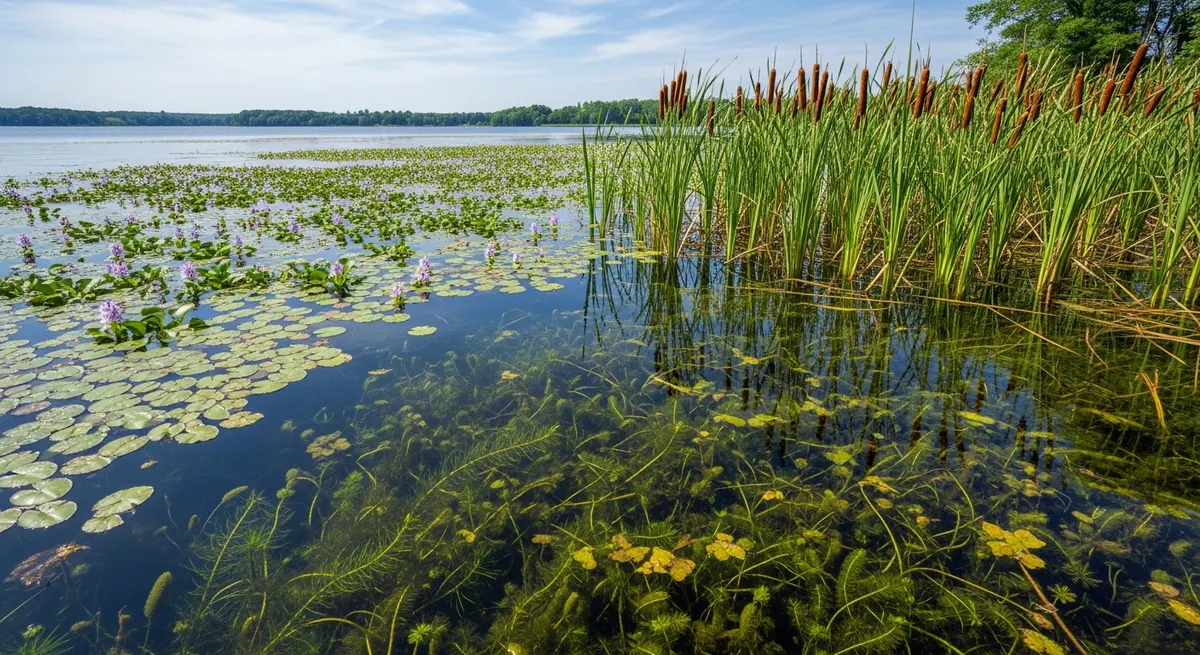
Integrated aquatic weed management (IAWM) is a science-based framework that combines multiple control methods — mechanical, chemical, biological, and physical — with nutrient management, monitoring, and prevention to achieve sustainable, long-term aquatic weed control. It is the approach consistently recommended by aquatic management professionals over single-method programs because it addresses both the symptom (weeds) and the underlying causes.
- Integrated Aquatic Weed Management (IAWM) combines physical, chemical, biological, and preventive methods in one coordinated program.
- IAWM is the recommended approach of EPA, USDA, and state natural resource agencies for sustainable weed control.
- No single method achieves durable control for most species — combining methods creates synergistic effects.
- Monitoring and adaptive management are core components — IAWM responds to results, not a fixed treatment calendar.
- Long-term IAWM programs consistently produce lower per-acre costs than repeated single-method treatments.
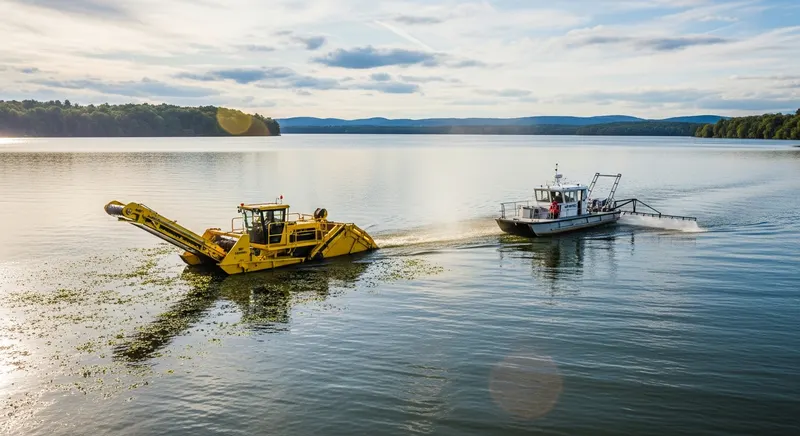
The IAWM Framework
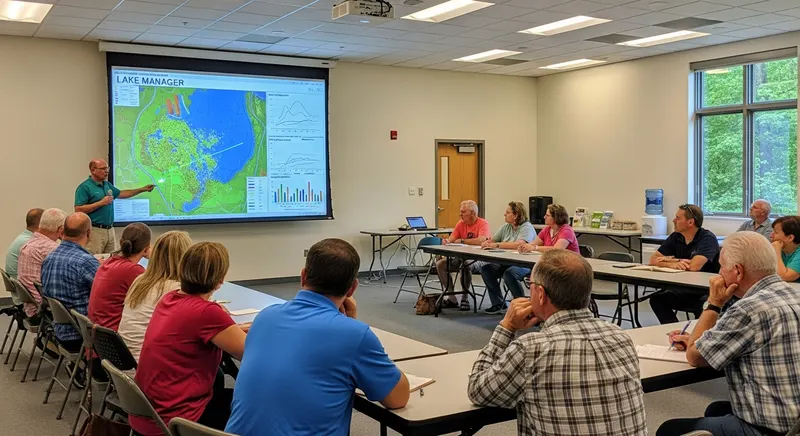
Integrated aquatic weed management draws from integrated pest management (IPM) principles — the recognition that no single pest control tool is effective, economical, or environmentally appropriate in all circumstances, and that combining tools synergistically with an understanding of the pest's biology and the ecosystem context produces better results than any single approach.
Applied to aquatic weed management, IAWM involves five core elements working in coordination:
- Monitoring: Annual or twice-annual vegetation surveys that map species distribution, estimate biomass, and track population trends over time
- Treatment: Appropriately timed, permitted application of the most effective and least impactful control method for each target species and location
- Root cause management: Nutrient loading reduction, watershed management, and restoration of native communities to reduce the conditions that sustain weed growth
- Prevention: Watercraft inspection, user education, and early detection programs to stop new introductions before they establish
- Adaptive management: Annual evaluation of monitoring data to adjust treatment approaches based on population response
Why IAWM Outperforms Single-Method Programs
Single-method programs — relying exclusively on herbicides, or exclusively on mechanical harvesting — consistently underperform integrated approaches over multi-year horizons. Herbicide-only programs provide efficient biomass control but may not address the root causes that sustain weed populations, leading to treatment dependency. Harvesting-only programs provide immediate results but require very frequent repeat treatments as weeds regrow. Biological control alone works too slowly to address urgent management needs.
IAWM programs, by contrast, use each tool for what it does best: early-season herbicide treatment for efficient population reduction before peak biomass; mechanical harvesting for immediate access improvement in high-use areas; biological control for long-term supplemental suppression where agents are available; nutrient management to gradually reduce weed-favorable conditions; and native plant restoration to improve competitive resistance to future invasions. The combination produces both better short-term results and better long-term trajectory than any single method. Full IAWM guide →
Developing an IAWM Plan
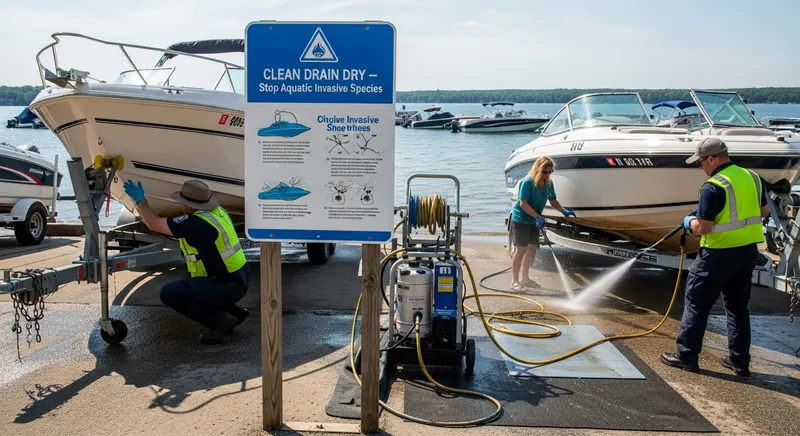
A practical integrated lake management plan begins with a baseline assessment: what species are present, in what locations and densities, what are the primary nutrient sources, what are the water use objectives, and what regulatory constraints apply? This assessment — typically conducted by a licensed aquatic management professional — provides the foundation for a management plan with specific treatment prescriptions, monitoring schedule, nutrient management recommendations, and budget projections over a 3–5 year planning horizon.
Many state aquatic invasive species programs offer planning assistance, cost-sharing, or grant funding for IAWM programs targeting priority invasive species. Lake associations and municipal lake managers should contact their state's department of natural resources or environmental quality for available resources. Management planning hub →
Sources & Scientific References
- Madsen, J.D. (1997). Methods for management of nonindigenous aquatic plants. In: Assessment and Management of Plant Invasions. Springer.
- Getsinger, K.D. et al. (2002). Integrated management of Eurasian watermilfoil in Guntersville Reservoir. ERDC/EL TR-02-24.
- Cooke, G.D. et al. (2005). Restoration and Management of Lakes and Reservoirs. Taylor & Francis.
Frequently Asked Questions
What is integrated aquatic weed management (IAWM)?
Integrated aquatic weed management (IAWM) is a framework that uses a combination of complementary control methods — mechanical, chemical, biological, and physical — coordinated with monitoring, nutrient management, and prevention programs to achieve sustainable aquatic weed control. It is adapted from integrated pest management (IPM) principles developed in agriculture and applied to the specific ecology and regulatory context of aquatic systems.
Why is integrated management better than a single method?
No single control method addresses all aspects of aquatic weed management: herbicides provide efficient control but do not remove biomass or address root causes; mechanical harvesting removes biomass but weeds regrow rapidly; biological control is slow but sustainable. Each method has weaknesses that other methods can compensate for. Integrated programs achieve better results with less total chemical and mechanical input than single-method programs, and are more durable over time because they address underlying causes rather than just treating symptoms.
What are the components of an integrated lake management plan?
A comprehensive integrated lake management plan typically includes: (1) baseline vegetation survey; (2) nutrient loading assessment and source reduction plan; (3) target species identification and management objectives; (4) control method selection and scheduling (chemical, mechanical, biological as appropriate); (5) annual monitoring protocol to track progress; (6) prevention measures to stop new introductions; (7) native plant restoration where appropriate; and (8) stakeholder communication and regulatory compliance management.
Who should develop an integrated aquatic management plan?
Integrated aquatic management plans should be developed by licensed aquatic plant management professionals with expertise in your region's species and regulatory environment. Many states have aquatic invasive species programs that can assist with planning and may offer cost-sharing for management programs targeting priority species. Lake associations often contract with professional lake managers to develop and implement multi-year management plans.
Key Takeaways
- Integrated Aquatic Weed Management (IAWM) combines physical, chemical, biological, and preventive methods in one coordinated program.
- IAWM is the recommended approach of EPA, USDA, and state natural resource agencies for sustainable weed control.
- No single method achieves durable control for most species — combining methods creates synergistic effects.
- Monitoring and adaptive management are core components — IAWM responds to results, not a fixed treatment calendar.
- Long-term IAWM programs consistently produce lower per-acre costs than repeated single-method treatments.
Ten-Year Lake Management Plan: Lake Wingra, WI
Lake Wingra, a 342-acre urban lake in Madison, WI, developed a comprehensive 10-year management plan coordinating the City of Madison, University of Wisconsin, and adjacent neighborhood associations. The plan addressed Eurasian watermilfoil, curly-leaf pondweed, and purple loosestrife through an integrated approach including targeted herbicide treatment, mechanical harvesting, native plant restoration, and public education.
Key outcome: The structured multi-agency planning process secured consistent funding across multiple budget cycles, a key advantage over ad hoc management. Native plant restoration efforts showed measurable progress in designated restoration zones within three years of initiation.
As a lakefront property owner I was completely lost until I found AquaticWeed.org. The permit guidance alone saved me from making costly, potentially illegal treatment mistakes.
Gerald Renfrew Lakefront Landowner, WI · Vilas CountyI've managed aquatic vegetation on Texas reservoirs for 15 years. The water hyacinth control content here is the most up-to-date, practical guidance I've found anywhere online.
Travis McKinley Commercial Fishing Guide, TX · Lake Travis / Lake Austin