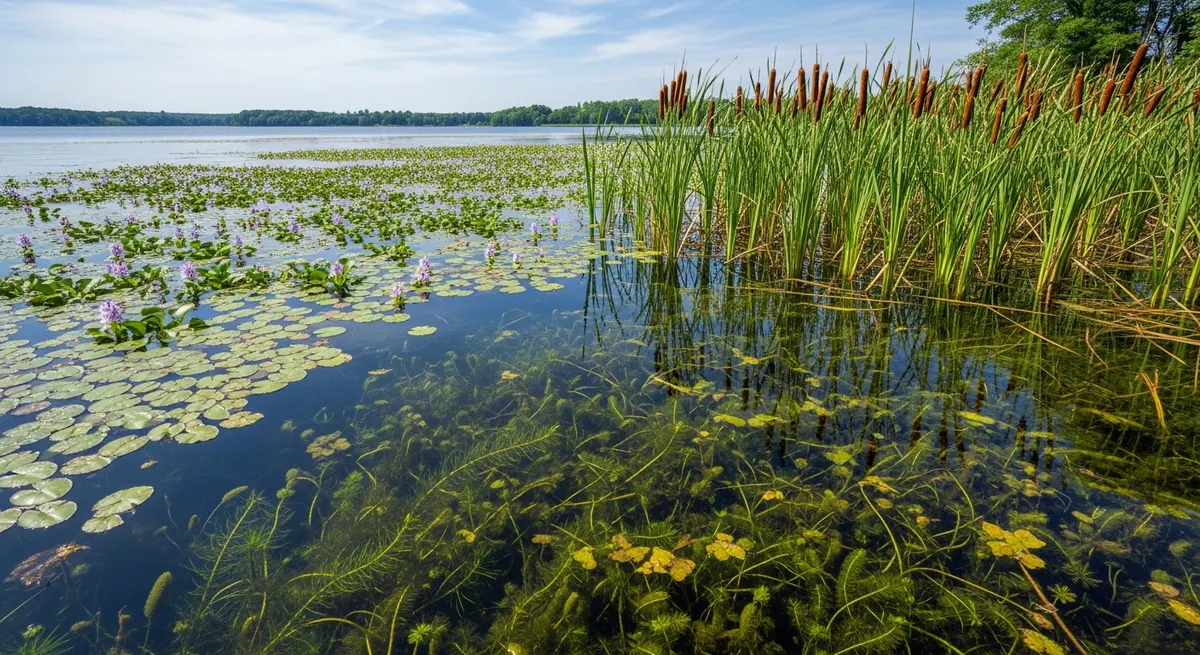
Algae and aquatic weeds are fundamentally different organisms. Algae are simple, non-vascular organisms that lack true roots, stems, leaves, and flowers; aquatic weeds are true vascular plants with differentiated tissues. This biological difference has major implications for identification, management, and the selection of effective control methods.
- Aquatic weeds are true vascular plants with roots, stems, and leaves; algae are simpler organisms without these structures.
- Filamentous algae form hair-like, slimy mats that feel slippery; aquatic weeds have recognizable leaf and stem structure.
- Algae lack roots — they float or attach loosely to substrate; most aquatic weeds anchor firmly in sediment.
- Treatment differs significantly: algaecides (copper sulfate) target algae; herbicides target true aquatic weeds.
- Both can co-occur in the same water body, often simultaneously indicating high nutrient levels.
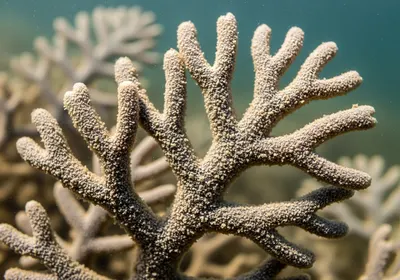
Fundamental Biological Differences
The core biological distinction between algae and aquatic weeds is vascular tissue. True aquatic plants — whether floating, submerged, or emergent — are vascular plants with xylem and phloem for transporting water and nutrients, differentiated roots that anchor in sediment, true stems with node-internode organization, and true leaves with stomata. Most also produce flowers, pollen, and seeds as part of sexual reproduction.
Algae, even the largest multicellular forms like kelp or Chara, lack all of these features. They have no true vascular tissue, no true roots (though some have anchoring holdfasts), no true leaves, and reproduce through spores, fission, or other non-seed mechanisms. In the water, this means algae depend entirely on dissolved nutrients in the water column for growth, while rooted aquatic plants can access nutrients in both the water column and the sediment.
This biological difference has practical consequences. Systemic herbicides that work by disrupting plant vascular transport systems or interfering with processes specific to vascular plant metabolism are ineffective against algae. Conversely, algaecides that target algae-specific physiological pathways do not affect vascular plants. Using the wrong product type — a mistake that happens when algae and weeds are confused — produces no beneficial result.
Types of Problem Algae
Planktonic Algae
Single-celled or colonial algae suspended in the water column. At high densities, they produce water discoloration (green, brown, or red "water blooms"), turbidity, and — in the case of cyanobacteria (blue-green algae) — potentially toxic blooms that close recreational areas and harm wildlife. Planktonic algae blooms are primarily managed through nutrient reduction; copper-based algaecides are used as emergency treatments. Nutrient loading and eutrophication →
Filamentous Algae
Multicellular algae that form hair-like or cotton-like masses anchored to the sediment, rocks, or other structures. Filamentous algae are a common nuisance in ponds, lakes, and drainage channels, forming unsightly mats that can cover significant areas in spring and early summer. They are often confused with fine-leaved aquatic plants. How to treat filamentous algae →
Chara (Stonewort)
Chara and Nitella are macroalgae that closely mimic the appearance of true submerged vascular plants. They are anchored in sediment, have a distinct plant-like growth form with whorled "leaves" on a central "stem," and can form dense beds in shallow water. Chara is distinguished from true plants by its distinctive musky or sulfurous odor, its brittle texture (due to calcium carbonate deposition), and its lack of true vascular tissue. Importantly, Chara can be a valuable indicator of good water quality and often colonizes habitats that would otherwise be occupied by invasive weeds. Chara species profile →
Management Implications
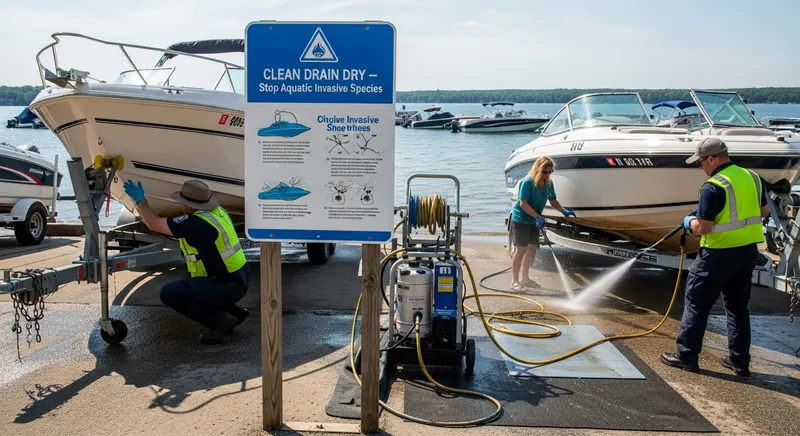
Correctly distinguishing algae from aquatic weeds before treatment is essential for both efficacy and regulatory compliance. Many state and federal permits for aquatic herbicide use specify the target species and prohibit application for different organisms than those listed. The wrong treatment wastes money, may have no effect on the target organism, and can sometimes produce unintended negative consequences — for example, killing non-target native plants while the actual problem (algae) continues unaffected.
For ponds and lakes with both algae and weed problems, sequential treatment is often appropriate: address the dominant driver (usually nutrients) first, then treat specific organisms as needed with the appropriate product. Integrated management of both problems simultaneously requires a clear treatment plan that accounts for the distinct biology of each organism type. Control methods hub →
Sources & Scientific References
- Graham, L.E. et al. (2009). Algae. Benjamin Cummings.
- Wetzel, R.G. (2001). Limnology: Lake and River Ecosystems. Academic Press.
- USEPA (2012). National Lakes Assessment: A Collaborative Survey of the Nation's Lakes.
Frequently Asked Questions
Is algae the same as aquatic weeds?
No. Algae are simple, non-vascular organisms — ranging from single-celled phytoplankton to multicellular filamentous forms — that lack the true roots, stems, leaves, and vascular tissue of plants. Aquatic weeds are true vascular plants with differentiated tissues. While both can cause problematic blooms and require management, they respond very differently to control methods and have different ecological effects.
What is the difference between green algae and aquatic plants?
Green algae (such as filamentous algae and Chara) may superficially resemble small aquatic plants but lack vascular tissue. True aquatic plants have conducting tissues (xylem and phloem) for transporting water and nutrients, differentiated roots, stems, and leaves, and in most species the ability to produce flowers and seeds. Chara (stonewort) is particularly often confused with submerged aquatic plants due to its plant-like appearance, but it is an alga — its 'stems' and 'leaves' are not true vascular tissue.
Do algae and aquatic weeds require different treatments?
Yes, significantly so. Most aquatic herbicides used for submerged vascular plants (such as fluridone, triclopyr, and endothall) are not effective against algae. Algae are typically managed with algaecides (copper-based products like copper sulfate or chelated copper) or by addressing the root cause through nutrient reduction. Using a herbicide designed for vascular plants on an algae problem, or vice versa, wastes resources and provides no benefit.
What causes algae blooms vs. aquatic weed blooms?
Both are driven by excess nutrients (eutrophication), but the species that proliferates depends on conditions. Algae (particularly cyanobacteria/blue-green algae) tend to dominate in highly enriched, warm, shallow systems — often outcompeting rooted aquatic plants when turbidity is high. Submerged aquatic weeds tend to dominate in clearer water where light penetration allows photosynthesis at depth. In some systems, algae and aquatic weeds compete for the same resources, and management of one can benefit or inadvertently promote the other.
Key Takeaways
- Aquatic weeds are true vascular plants with roots, stems, and leaves; algae are simpler organisms without these structures.
- Filamentous algae form hair-like, slimy mats that feel slippery; aquatic weeds have recognizable leaf and stem structure.
- Algae lack roots — they float or attach loosely to substrate; most aquatic weeds anchor firmly in sediment.
- Treatment differs significantly: algaecides (copper sulfate) target algae; herbicides target true aquatic weeds.
- Both can co-occur in the same water body, often simultaneously indicating high nutrient levels.
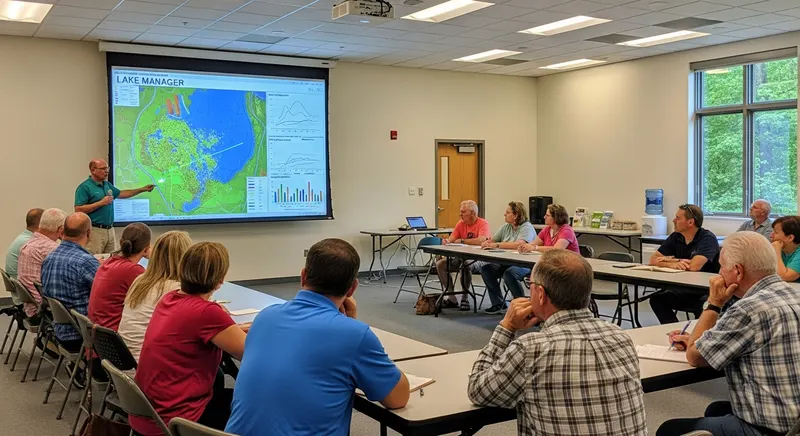
Ten-Year Lake Management Plan: Lake Wingra, WI
Lake Wingra, a 342-acre urban lake in Madison, WI, developed a comprehensive 10-year management plan coordinating the City of Madison, University of Wisconsin, and adjacent neighborhood associations. The plan addressed Eurasian watermilfoil, curly-leaf pondweed, and purple loosestrife through an integrated approach including targeted herbicide treatment, mechanical harvesting, native plant restoration, and public education.
Key outcome: The structured multi-agency planning process secured consistent funding across multiple budget cycles, a key advantage over ad hoc management. Native plant restoration efforts showed measurable progress in designated restoration zones within three years of initiation.
I've managed aquatic vegetation on Texas reservoirs for 15 years. The water hyacinth control content here is the most up-to-date, practical guidance I've found anywhere online.
Travis McKinley Commercial Fishing Guide, TX · Lake Travis / Lake AustinThe species identification guides on AquaticWeed.org are the most accurate I've used in 18 years of lake management. I now send all my new clients here first before we discuss treatment options.
Robert Harmon Certified Lake Manager, FL · Lake Okeechobee region