Permanent prevention is achievable for water bodies not yet infested with invasive species, provided rigorous prevention protocols are maintained. For already-established invasive species, permanent eradication is practically impossible at the watershed scale — management goals shift to long-term population suppression. The most effective and least expensive form of aquatic weed prevention is preventing new introductions before they establish.
- Permanent eradication of established populations is rarely achievable — prevention of new introductions is the only reliable solution.
- Early detection and rapid response (EDRR) programs dramatically improve the odds of eradicating new invasions.
- Clean, Drain, Dry compliance by all watercraft users is the most cost-effective prevention measure available.
- Nutrient management (reducing runoff, upgrading septic systems) reduces growth potential of all invasive weeds.
- Long-term plans combining monitoring, prevention, and adaptive response are the practical alternative to eradication.
The Distinction: Prevention vs. Eradication
A critical conceptual distinction in aquatic weed management is between prevention (stopping new introductions before they occur) and eradication (eliminating established populations after they have colonized a water body). These two goals require fundamentally different strategies and have very different success rates.
Prevention of new introductions into currently uninfested water bodies is achievable with consistent application of the Clean, Drain, Dry protocol, watercraft inspection programs, aquatic plant trade regulation, and early detection monitoring. Lakes that maintain rigorous prevention programs can remain free of new invasive introductions for extended periods.
Eradication of established populations is practically impossible for most invasive aquatic species at the watershed scale, due to their propagule persistence (tubers, seeds, fragments), dispersal through connected waterways, and potential for reintroduction from adjacent water bodies. The important exception is very early detection and rapid response — a new introduction detected as a small population before it spreads can sometimes be eradicated with intensive effort. This is why early detection monitoring programs are among the highest-value investments a lake management program can make. Monitoring methods guide →
Prevention Protocols That Work
Clean, Drain, Dry
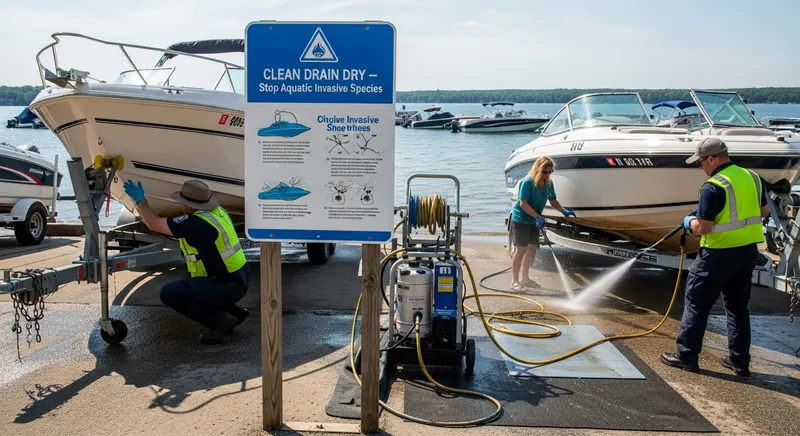
The Clean, Drain, Dry (CDD) protocol is the standard prevention practice for recreational watercraft users. Clean: remove all visible plant material, mud, and debris from boats, motors, trailers, and equipment before leaving a water body. Drain: empty all water from live wells, bilge compartments, and bait buckets before transport. Dry: allow all equipment to dry completely before using it in a new water body — sufficient drying time varies by species and climate, but generally 5–10 days is recommended. Studies have confirmed that consistent CDD compliance dramatically reduces the probability of transporting viable plant fragments.
Boat Inspection Programs
Mandatory boat inspection programs at launches for high-priority water bodies — as implemented in several states and Canadian provinces — are more effective than voluntary CDD compliance alone. Inspectors can identify plant material not visible to boaters, ensure draining has occurred, and provide real-time education. Cost-benefit analyses consistently find inspection programs highly cost-effective when the management cost of a new invasive species establishment is considered.
Long-Term Maintenance Strategies
For water bodies that have maintained invasive-free status, long-term prevention involves: annual aquatic plant surveys to detect new introductions early; ongoing user education through launch signage and outreach; reporting of new invasive species sightings to state programs; supporting state and local boat inspection programs financially and politically; and maintaining healthy native plant communities to resist colonization. The investment in prevention is always small compared to the cost of managing an established invasive weed population — typically orders of magnitude less. Prevention best practices →
Sources & Scientific References
- Leung, B. et al. (2006). An ounce of prevention or a pound of cure. Proceedings of the Royal Society B, 273, 2407–2413.
- Rothlisberger, J.D. et al. (2010). Aquatic invasive species transport via trailered boats. Fisheries, 35(3), 108–118.
- Colautti, R.I. et al. (2006). Propagule pressure: a null model for biological invasions. Biological Invasions, 8(5), 1023–1037.
Frequently Asked Questions
Can aquatic weeds be permanently eliminated?
For most invasive aquatic weed species established in a water body, permanent eradication is not practically achievable. Hydrilla produces tubers that persist in sediment for 3–5+ years; Eurasian watermilfoil fragments readily and recolonizes from tiny stem segments; seeds of water hyacinth remain viable in soil for years. Management goals for established species focus on maintaining populations below levels that impair water use and ecology — not elimination. Prevention before introduction is the only reliably permanent strategy.
What is the best way to prevent aquatic weed infestations?
The most effective prevention strategy for new introductions is enforcement of the Clean, Drain, Dry (CDD) protocol for watercraft: remove all plant material from boats, trailers, and equipment before leaving a water body; drain all water from live wells, bilges, and bait buckets; and allow equipment to dry completely before use in a new water body. On-water boat inspection programs at launches (implemented by some states for high-priority water bodies) are more effective than voluntary CDD compliance alone.
Can native plants prevent aquatic weeds?
Yes, in part. Intact, diverse native aquatic plant communities have demonstrably better resistance to invasive species colonization than disturbed, degraded, or species-poor communities. Native plants compete with potential colonizers for light, nutrients, and growing space. Restoration of native plant communities, combined with nutrient management to support their establishment, is a legitimate component of aquatic weed prevention for susceptible water bodies.
Does nutrient reduction prevent aquatic weeds?
Nutrient reduction significantly reduces the growth potential and competitive advantage of invasive aquatic weeds, particularly nuisance native species. Highly nutrient-enriched water bodies are more vulnerable to invasive species because the abundant resources allow rapid establishment and growth. However, nutrient reduction alone is unlikely to prevent invasive species that are extraordinarily competitive even in low-nutrient conditions (hydrilla is effective at light levels and nutrient concentrations that would suppress most native plants). Nutrient management is a component of prevention, not a complete solution by itself.
Key Takeaways
- Permanent eradication of established populations is rarely achievable — prevention of new introductions is the only reliable solution.
- Early detection and rapid response (EDRR) programs dramatically improve the odds of eradicating new invasions.
- Clean, Drain, Dry compliance by all watercraft users is the most cost-effective prevention measure available.
- Nutrient management (reducing runoff, upgrading septic systems) reduces growth potential of all invasive weeds.
- Long-term plans combining monitoring, prevention, and adaptive response are the practical alternative to eradication.
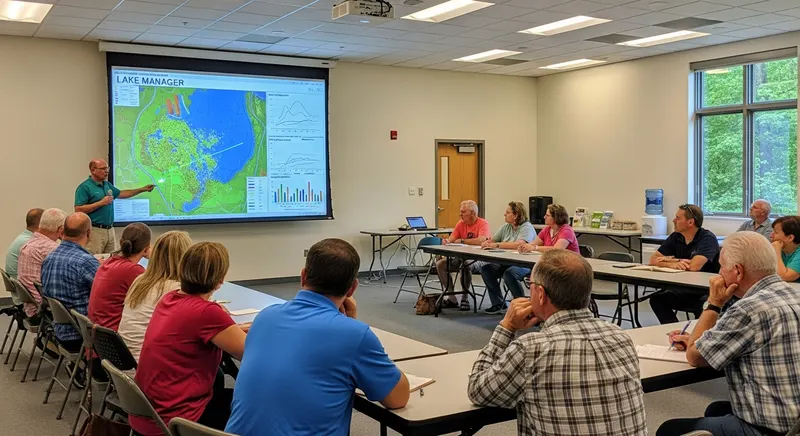
Ten-Year Lake Management Plan: Lake Wingra, WI
Lake Wingra, a 342-acre urban lake in Madison, WI, developed a comprehensive 10-year management plan coordinating the City of Madison, University of Wisconsin, and adjacent neighborhood associations. The plan addressed Eurasian watermilfoil, curly-leaf pondweed, and purple loosestrife through an integrated approach including targeted herbicide treatment, mechanical harvesting, native plant restoration, and public education.
Key outcome: The structured multi-agency planning process secured consistent funding across multiple budget cycles, a key advantage over ad hoc management. Native plant restoration efforts showed measurable progress in designated restoration zones within three years of initiation.
We used the integrated management framework from this site to structure our Eurasian watermilfoil control program. After three seasons we've reduced lake-wide coverage by 78% on our 340-acre water body.
Susan Thibodeau Lake District Manager, MN · Crow Wing CountyThe seasonal timing guidance has been invaluable. Treating at the right growth stage cut our herbicide costs by nearly 30% without sacrificing efficacy on our county-managed reservoir.
Dale Buchanan County Parks Director, MI · Kalamazoo County