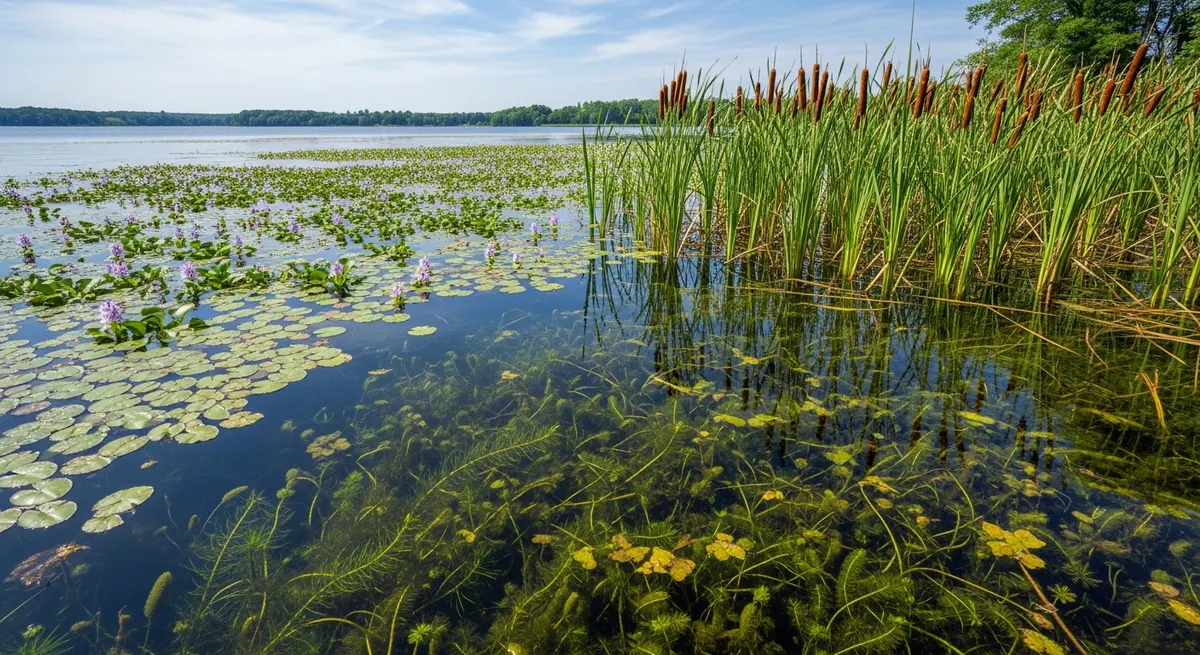
Aquatic weeds have both negative and positive effects on fish, depending on species, density, and context. Moderate aquatic vegetation provides essential fish habitat — spawning sites, juvenile refuge, invertebrate prey — but dense, invasive monocultures deplete oxygen, homogenize habitat, block sunlight, and cause fish kills. The relationship is non-linear: a little vegetation is beneficial; too much is catastrophic.
- Native aquatic vegetation at moderate density is beneficial for bass and panfish; dense invasive mats harm most species.
- Hydrilla infestations are associated with major fish kills in southeastern U.S. water bodies.
- Dense weed cover disrupts the predator-prey dynamics that healthy fish populations depend on.
- Oxygen depletion from weed decomposition is the leading cause of aquatic weed-related fish kills.
- Largemouth bass thrive at 20–30% weed coverage; beyond 40–50%, most fish species are negatively affected.
The Benefits of Moderate Aquatic Vegetation for Fish
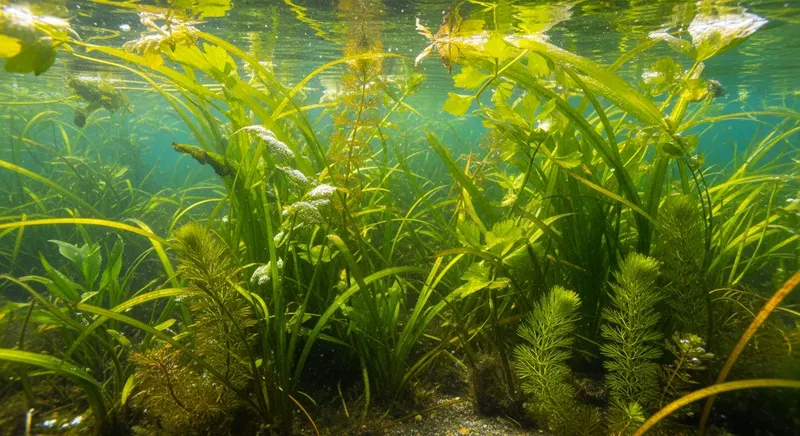
Aquatic vegetation, at appropriate densities, is fundamental to healthy fish communities. Native aquatic plants provide the structural complexity that fish depend on for spawning, juvenile refuge, invertebrate production, and thermal regulation. Research consistently shows that water bodies with moderate, diverse native aquatic plant communities support more fish species at higher densities than systems with sparse vegetation or dense invasive monocultures.
Largemouth bass actively use submerged and emergent vegetation for spawning (nest construction in beds) and for ambush hunting. Northern pike and chain pickerel are highly associated with submerged vegetation. Bluegill and other panfish breed in shallow weed beds. Even open-water species like walleye depend indirectly on weedy habitats as the primary habitat for invertebrates and small fish that constitute their prey. The keystone role of aquatic vegetation in fish community structure is one of the strongest findings in fisheries ecology.
When Aquatic Weeds Harm Fish
The relationship between aquatic vegetation and fish quality reverses sharply at high vegetation densities. Dense invasive weed monocultures — particularly of hydrilla, Eurasian watermilfoil, and water hyacinth — cause several types of harm to fish populations.
Oxygen Depletion
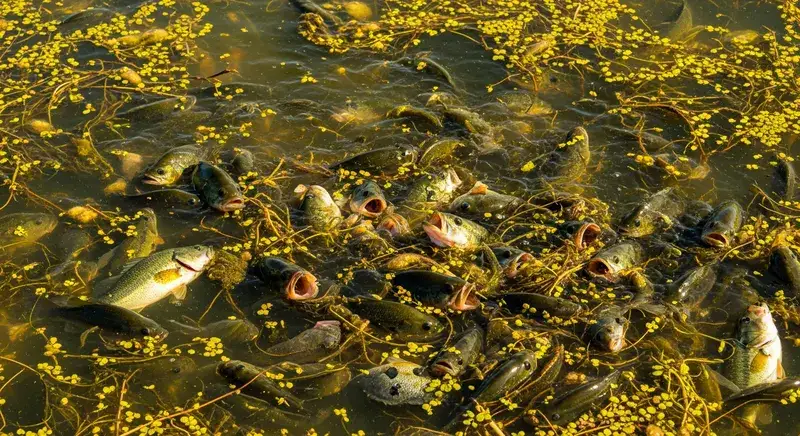
Dense aquatic plant beds cause extreme dissolved oxygen fluctuations: very high during the day (photosynthesis produces oxygen) and very low at night (respiration consumes it). In summer, overnight oxygen levels in heavily vegetated systems can drop to near zero — below the minimum threshold for fish survival. Nocturnal oxygen depletion is a documented cause of fish kills in eutrophic, heavily vegetated systems. Do aquatic weeds reduce oxygen? →
Die-Off Events
Mass die-offs of aquatic vegetation — whether from natural senescence, drought, sudden temperature changes, or herbicide treatment — trigger intense bacterial decomposition that can deplete dissolved oxygen over large areas within days. Post-treatment oxygen crashes are a known risk of rapid, large-scale herbicide application, which is why professional management programs apply herbicides in sections over multiple years rather than treating an entire water body at once.
Habitat Homogenization
Dense monocultures of invasive aquatic weeds replace the structurally diverse native plant community with a uniform, species-poor bed that provides far less habitat variety. Fish communities in invaded systems show reduced species diversity, altered size structure (smaller fish due to more intense intra-species competition), and reduced overall abundance compared to systems with intact native plant communities. Ecological impact hub →
Sources & Scientific References
- Engel, S. (1990). Ecological impacts of harvesting macrophytes in Halverson Lake, Wisconsin. Journal of Aquatic Plant Management, 28, 41–45.
- Thayer, D.D. et al. (1993). Aquatic vegetation management. Florida Department of Environmental Protection.
- Sass, G.G. et al. (2006). Effects of aquatic macrophytes on largemouth bass behavior. North American Journal of Fisheries Management, 26(4), 886–896.
Frequently Asked Questions
Do aquatic weeds hurt fish?
Dense aquatic weed infestations can kill fish by depleting dissolved oxygen at night (weeds consume oxygen through respiration when they are not photosynthesizing) and during decomposition after die-offs. However, moderate aquatic vegetation benefits many fish species by providing spawning sites, juvenile refuge from predation, and habitat for invertebrate prey. The effect depends on density — a thin to moderate vegetation bed benefits fish; a dense monoculture harms them.
Do aquatic weeds cause fish kills?
Yes. Fish kills associated with dense aquatic weed infestations occur through two primary mechanisms: nocturnal oxygen depletion (when dense plant respiration consumes dissolved oxygen overnight, dropping below the minimum threshold for fish) and die-off oxygen depletion (when large masses of aquatic vegetation decompose following herbicide treatment, drought, or natural senescence, bacterial decomposition consumes oxygen). Summer is the most dangerous period because warm water holds less oxygen and metabolic demands of fish are highest.
Do fish eat aquatic weeds?
Some fish graze directly on aquatic vegetation. Grass carp (Ctenopharyngodon idella) are herbivores that feed extensively on aquatic plants and are used as a biological control method in many states. Triploid (sterile) grass carp are approved for aquatic weed control in most U.S. states. Other fish species benefit from weed beds as habitat and food source (invertebrates associated with plants) without directly consuming the plants.
Is it good to have some aquatic weeds for fishing?
Yes. Anglers generally recognize that sparse to moderate aquatic vegetation improves fishing quality. Bass, pike, pickerel, and panfish use aquatic vegetation for spawning, feeding, and cover. The best fishing lakes typically have 10–20% vegetative coverage. Problems arise with dense coverage (>30–40%) that limits fish movement, reduces dissolved oxygen, and homogenizes habitat structure.
Key Takeaways
- Native aquatic vegetation at moderate density is beneficial for bass and panfish; dense invasive mats harm most species.
- Hydrilla infestations are associated with major fish kills in southeastern U.S. water bodies.
- Dense weed cover disrupts the predator-prey dynamics that healthy fish populations depend on.
- Oxygen depletion from weed decomposition is the leading cause of aquatic weed-related fish kills.
- Largemouth bass thrive at 20–30% weed coverage; beyond 40–50%, most fish species are negatively affected.
Ten-Year Lake Management Plan: Lake Wingra, WI
Lake Wingra, a 342-acre urban lake in Madison, WI, developed a comprehensive 10-year management plan coordinating the City of Madison, University of Wisconsin, and adjacent neighborhood associations. The plan addressed Eurasian watermilfoil, curly-leaf pondweed, and purple loosestrife through an integrated approach including targeted herbicide treatment, mechanical harvesting, native plant restoration, and public education.
Key outcome: The structured multi-agency planning process secured consistent funding across multiple budget cycles, a key advantage over ad hoc management. Native plant restoration efforts showed measurable progress in designated restoration zones within three years of initiation.
The ecological impact section helped our team explain to county commissioners why early intervention matters. The oxygen depletion data alone secured funding for our early-detection monitoring program.
Donna Whitfield State Wildlife Biologist, GA · Okefenokee regionWe used the integrated management framework from this site to structure our Eurasian watermilfoil control program. After three seasons we've reduced lake-wide coverage by 78% on our 340-acre water body.
Susan Thibodeau Lake District Manager, MN · Crow Wing County