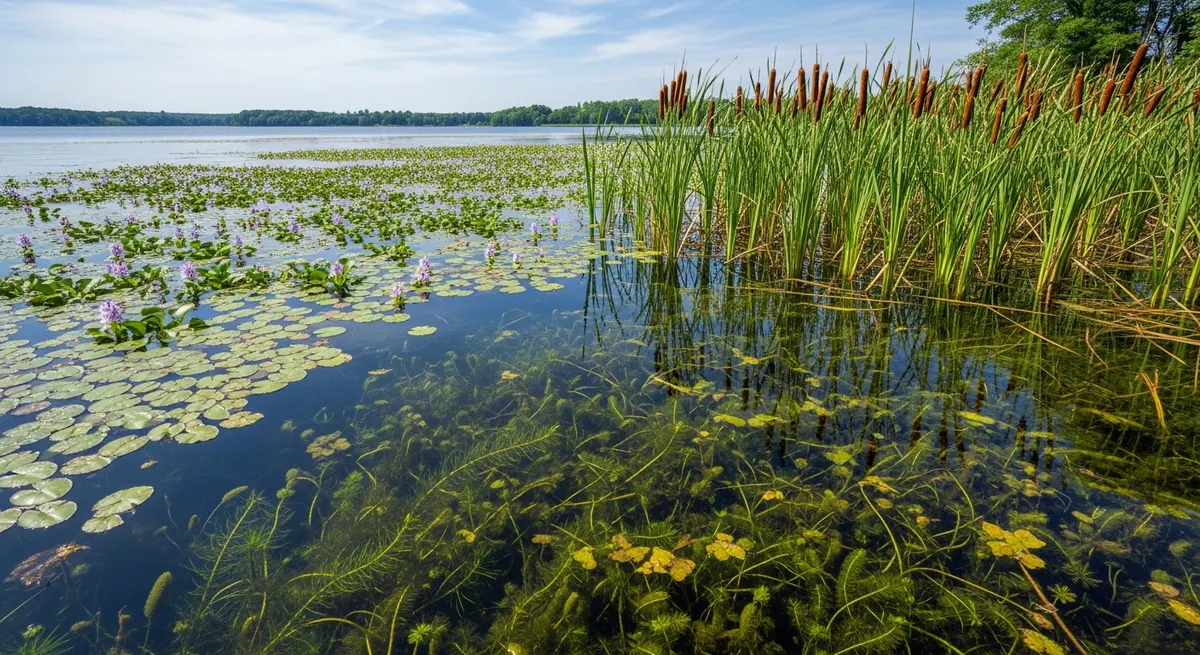
Aquatic weeds both produce and consume oxygen — which one dominates depends on time of day, plant density, and temperature. During daylight, dense weed beds produce oxygen through photosynthesis and can supersaturate the water. At night, the same plants consume oxygen through respiration, causing crashes that can kill fish. The net oxygen budget of a dense weed bed over 24 hours is often negative.
- Dense aquatic weeds produce oxygen during the day but consume it at night — causing dissolved oxygen crashes before dawn.
- Decomposing weed biomass after die-off can consume oxygen faster than it replenishes, causing fish kills.
- Summer and fall are peak risk seasons for oxygen-related fish kills tied to aquatic weed die-offs.
- Dissolved oxygen below 3 mg/L stresses most fish; below 2 mg/L can be lethal within hours.
- Early morning DO monitoring (5–7 AM) captures the daily minimum and best predicts fish kill risk.
The Oxygen Paradox of Dense Weed Beds
Aquatic weeds are photosynthetic organisms — like all plants, they produce oxygen as a byproduct of converting carbon dioxide and sunlight into sugars. This is the basis of the common perception that "plants are good for water quality." In moderate amounts, this is true: native aquatic vegetation at appropriate densities is a net oxygen contributor to a water body, supporting the invertebrate and fish communities that depend on adequate oxygen concentrations.
The paradox emerges at high plant densities. When aquatic vegetation covers large areas of a shallow water body, the combined photosynthesis of millions of plants during daylight can drive dissolved oxygen to supersaturation levels (>100% saturation) — far above what the system can maintain without off-gassing. Then at night, the same massive plant biomass — plus the bacteria decomposing dead plant material in the sediment — all consumes oxygen without any photosynthetic replenishment. The result is a steep overnight oxygen decline that can crash dissolved oxygen from >15 mg/L in the afternoon to <1 mg/L before dawn.
When Fish Kills Occur
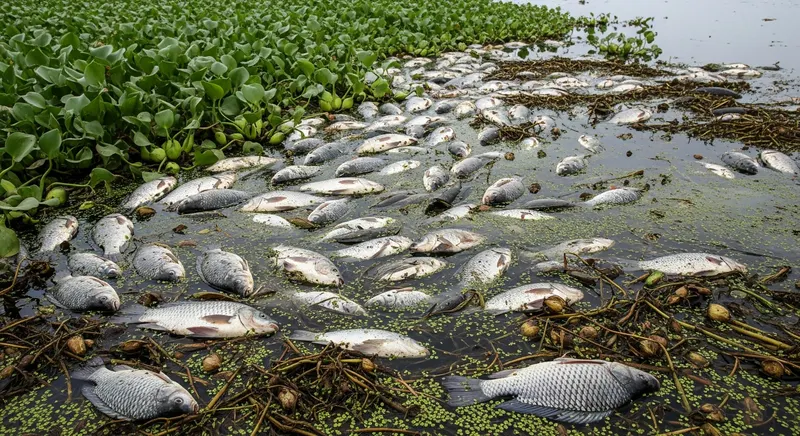
Aquatic plant-related fish kills follow a predictable pattern that lake managers learn to watch for. The highest-risk periods are: warm summer nights (warm water holds less oxygen and metabolic demand of both plants and fish is highest), overcast weather (reduced photosynthesis during the day, followed by full respiration at night), and immediately after plant die-offs from senescence, drought, or herbicide treatment.
Post-treatment fish kills are a significant management risk when large areas of dense vegetation are treated simultaneously with systemic herbicides. The treated plants die and decompose over 7–21 days, and bacterial decomposition of the dying biomass consumes oxygen at rates that can crash dissolved oxygen across the treated area. Professional management programs mitigate this risk by treating sections sequentially over multiple seasons rather than applying total treatments. Chemical control methods →
Measuring and Monitoring Dissolved Oxygen
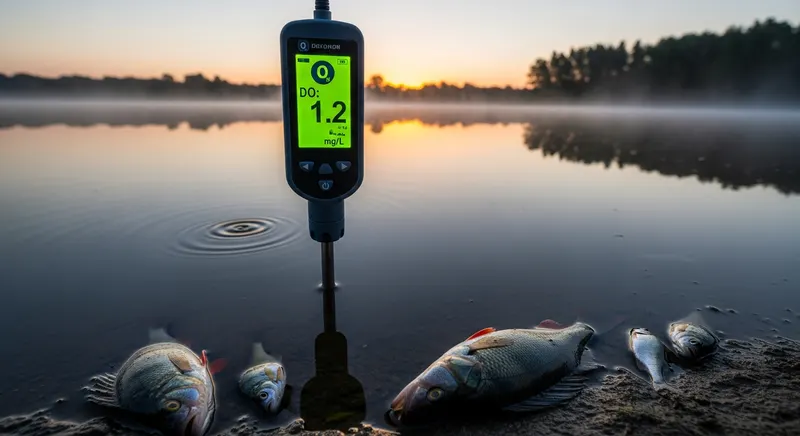
Dissolved oxygen monitoring is a critical tool for lakes with dense aquatic weed infestations. Inexpensive DO meters now allow lake managers to measure oxygen levels directly. Monitoring is most useful when conducted in early morning (pre-dawn) to capture minimum daily oxygen levels, in late afternoon to capture maximum levels, and at multiple depths (oxygen stratification is common in vegetated systems, with very high surface oxygen and hypoxic conditions at depth beneath dense canopy layers).
Many state lake management programs provide dissolved oxygen monitoring guidance and can help interpret results. Lakes showing pre-dawn oxygen levels below 4 mg/L should be considered at elevated risk for fish kill, and management actions — aeration, vegetation management, or both — should be considered. Monitoring methods guide →
Sources & Scientific References
- Caraco, N.F. & Cole, J.J. (2002). Contrasting impacts of a native and alien macrophyte on dissolved oxygen in a large river. Ecological Applications, 12(5), 1496–1509.
- Mayer, T. et al. (2001). Eutrophication and dissolved oxygen dynamics in aquatic systems. Water Research, 35(14), 3302–3314.
- USEPA (1994). Water Quality Standards Handbook.
Frequently Asked Questions
Do aquatic plants produce or consume oxygen?
Aquatic plants do both. During daylight, photosynthesis produces oxygen — dense weed beds can supersaturate water during peak afternoon hours (150–200% saturation). At night, when photosynthesis stops but respiration continues, the same dense beds consume dissolved oxygen rapidly. Whether a weed bed is a net oxygen producer or consumer depends on plant density, cloud cover, day length, water temperature, and nighttime respiration rates.
What dissolved oxygen level kills fish?
Most fish begin experiencing stress at dissolved oxygen levels below 5 mg/L and can survive short periods down to 2–3 mg/L. Sustained levels below 2 mg/L cause fish kills. Different species have different tolerances: bluegill tolerate lower oxygen than trout; carp tolerate lower levels than bass. Water temperature affects oxygen availability — warm water holds less dissolved oxygen than cold water at the same saturation percentage.
When do aquatic weeds cause the lowest oxygen levels?
Dissolved oxygen reaches its lowest point just before dawn, after a full night of plant and bacterial respiration without photosynthetic replenishment. In heavily vegetated systems in summer (warm water = less oxygen capacity, high respiration rates), pre-dawn oxygen levels can drop to 0–2 mg/L — lethal for most fish. Overcast days that reduce photosynthesis, followed by warm nights, are particularly dangerous periods.
Does harvesting aquatic weeds improve oxygen levels?
Harvesting reduces nighttime oxygen demand by removing plant biomass, but the harvested material must be removed from the water body. If cut vegetation remains in the water and decomposes, bacterial oxygen demand can cause the same or worse oxygen depletion as the living plants. Properly managed mechanical harvesting with full removal of cut material is the safest control approach from a dissolved oxygen perspective.
Key Takeaways
- Dense aquatic weeds produce oxygen during the day but consume it at night — causing dissolved oxygen crashes before dawn.
- Decomposing weed biomass after die-off can consume oxygen faster than it replenishes, causing fish kills.
- Summer and fall are peak risk seasons for oxygen-related fish kills tied to aquatic weed die-offs.
- Dissolved oxygen below 3 mg/L stresses most fish; below 2 mg/L can be lethal within hours.
- Early morning DO monitoring (5–7 AM) captures the daily minimum and best predicts fish kill risk.
Ten-Year Lake Management Plan: Lake Wingra, WI
Lake Wingra, a 342-acre urban lake in Madison, WI, developed a comprehensive 10-year management plan coordinating the City of Madison, University of Wisconsin, and adjacent neighborhood associations. The plan addressed Eurasian watermilfoil, curly-leaf pondweed, and purple loosestrife through an integrated approach including targeted herbicide treatment, mechanical harvesting, native plant restoration, and public education.
Key outcome: The structured multi-agency planning process secured consistent funding across multiple budget cycles, a key advantage over ad hoc management. Native plant restoration efforts showed measurable progress in designated restoration zones within three years of initiation.
We referenced the biological control pages extensively when evaluating our grass carp stocking proposal. The detail on stocking rates and target species specificity helped us present a credible case to our board.
Karen Ostrowski HOA Lake Committee Chair, MN · Lake Minnetonka associationThe ecological impact section helped our team explain to county commissioners why early intervention matters. The oxygen depletion data alone secured funding for our early-detection monitoring program.
Donna Whitfield State Wildlife Biologist, GA · Okefenokee region