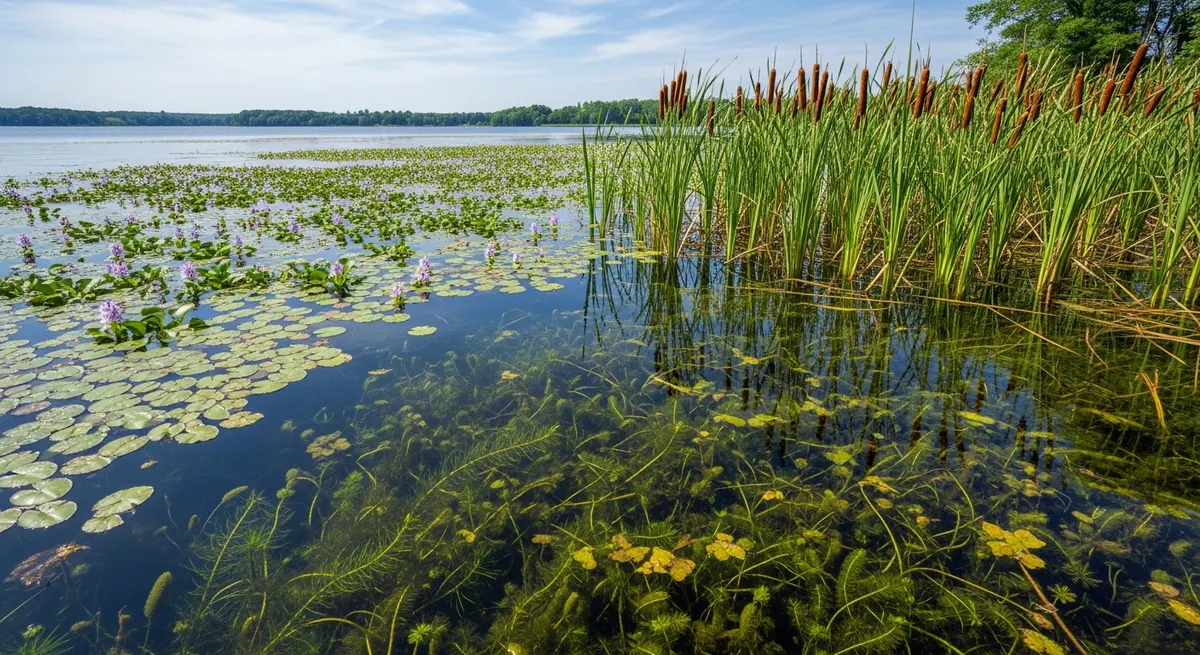
The Pacific Northwest — encompassing Washington, Oregon, and Idaho — faces unique aquatic weed challenges shaped by its pristine lake and river ecosystems, major river connectivity through the Columbia River system, and relatively recent invasion history. Brazilian elodea and Eurasian watermilfoil are the two highest-priority submerged invasive plants, while yellow flag iris and Phragmites dominate emergent invasive management. The region's many uninfested high-value water bodies make prevention the highest-return investment in aquatic invasive species management.
- Brazilian elodea (Egeria densa) and Eurasian watermilfoil are the two highest-priority aquatic invasive plants in the Pacific Northwest.
- Washington, Oregon, and Idaho all maintain prohibited plant lists and require permits for aquatic herbicide application.
- The Columbia River system creates connectivity across hundreds of miles, making spread prevention especially critical.
- The Pacific Northwest's many pristine lakes and rivers have low natural nutrient levels — meaning invasives can establish even in clean water.
- Washington State's WDFW and Oregon's ODA coordinate regional management with USDA APHIS and the Army Corps of Engineers.
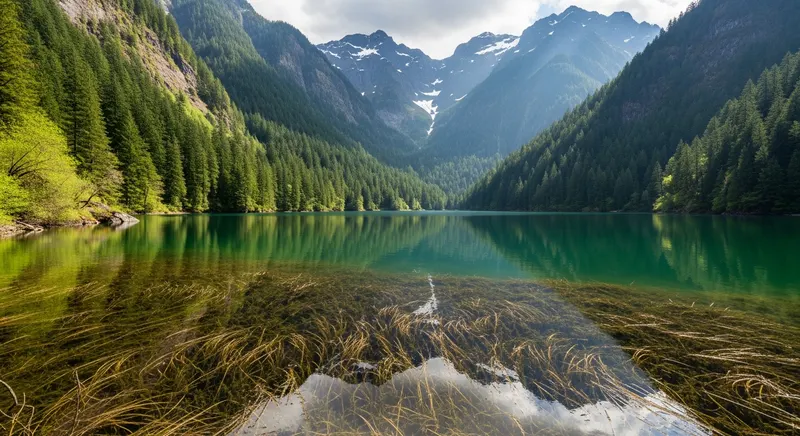
The Pacific Northwest Aquatic Weed Situation
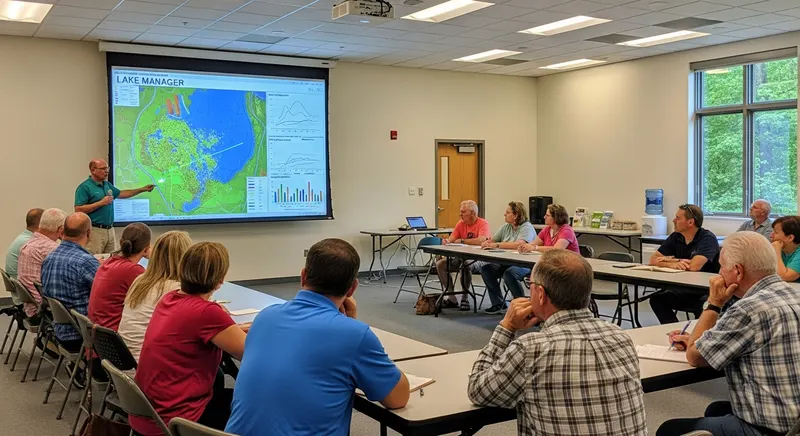
The Pacific Northwest presents a different management challenge than Florida or Texas. Rather than responding to millions of already-infested acres, Pacific Northwest managers face the strategic challenge of protecting a landscape where many high-value water bodies remain uninfested. This "ahead of the invasion front" situation means that prevention, early detection, and rapid response programs have a much higher return on investment than in already-heavily-invaded regions — eradicating a small population is feasible; managing a landscape-scale infestation is not.
The Columbia River system creates a critical connectivity challenge. The Columbia and its tributaries drain approximately 260,000 square miles across six states and two Canadian provinces. Aquatic invasive species established anywhere in this drainage have the potential to spread throughout the system via natural dispersal and watercraft transport. Washington, Oregon, and Idaho have collaborated on regional watercraft inspection programs at high-traffic boat launches to intercept potentially contaminated watercraft before they access uninfested waters. How aquatic weeds spread →
Priority Species in the Pacific Northwest
Brazilian Elodea (Egeria densa)
Brazilian elodea is a dense, fast-growing submerged plant introduced through the aquarium trade that forms thick beds capable of reaching the surface in water up to 20 feet deep. It is present in portions of the Columbia River system and several lakes and reservoirs in Washington and Oregon. Early detection is critical because eradication of small populations is feasible using systemic aquatic herbicides, while large established populations require long-term management without prospect of eradication.
Eurasian Watermilfoil (Myriophyllum spicatum)
Eurasian watermilfoil is the most widespread submerged aquatic invasive in the Pacific Northwest, present in hundreds of lakes and reservoirs across Washington, Oregon, and Idaho. It forms dense surface canopies that shade native submerged plants, impair boating and fishing access, and alter aquatic ecology. Washington's Aquatic Invasive Species Prevention Program and county noxious weed control boards coordinate management on individual water bodies, typically using herbicide treatment (triclopyr, 2,4-D) combined with monitoring.
State Programs and Resources
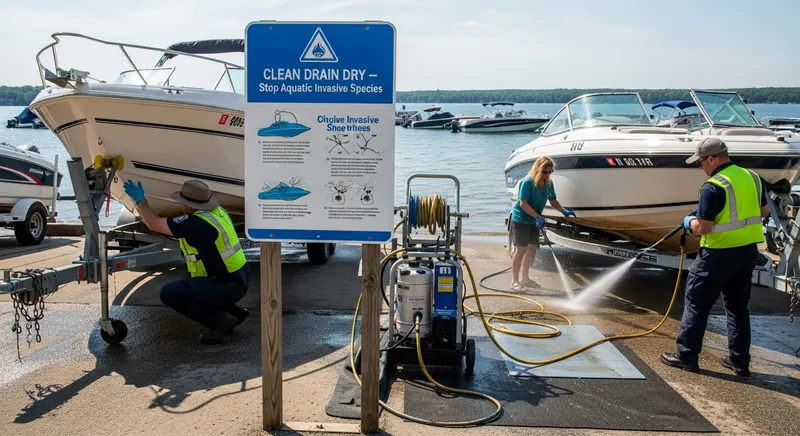
Each Pacific Northwest state maintains its own aquatic invasive species program, with varying emphasis on prevention, detection, and management. Washington's WDFW Aquatic Invasive Species Program is considered one of the more comprehensive in the region, with mandatory watercraft inspection authority at high-risk launch sites and a dedicated prevention fund supported by vessel registration fees. Oregon and Idaho have similar programs with state-specific regulatory frameworks. All three states require permits for aquatic herbicide application and maintain state noxious weed lists that include aquatic invasive plants. Permits guide →
Sources & Scientific References
- Washington Department of Fish and Wildlife. (2022). Aquatic Invasive Species Strategic Plan. Olympia, WA: WDFW.
- US Geological Survey. (2021). Nonindigenous Aquatic Species Database — Pacific Northwest region. Gainesville, FL: USGS.
- Grevstad, F.S. et al. (2003). The impact of a biological control agent, Galerucella calmariensis, on purple loosestrife in the Pacific Northwest. Biological Control, 28(3), 356–365.
Frequently Asked Questions
What is the worst aquatic weed in the Pacific Northwest?
Brazilian elodea (Egeria densa) — a dense submerged plant that can reach the surface in water up to 20 feet deep — is arguably the highest-priority submerged aquatic invasive plant in the Pacific Northwest. It is present in the Columbia River system and several Washington and Oregon water bodies. Eurasian watermilfoil is the most widespread submerged invasive, present throughout the region. Yellow flag iris (Iris pseudacorus) dominates emergent invasive management in many wetland and riparian areas.
How does the Columbia River affect aquatic weed spread in the Northwest?
The Columbia River system — which connects Idaho, Oregon, and Washington across over 1,200 miles — creates a major connectivity corridor that facilitates the spread of aquatic invasive species between states. An infestation established in one water body within the Columbia drainage can spread downstream (and via boat transport upstream) to new locations across the region. This connectivity makes prevention and early detection programs at boat launches particularly important — a single undetected introduction can reach dozens of connected water bodies.
Who manages aquatic weeds in Washington state?
The Washington Department of Fish and Wildlife (WDFW) manages aquatic invasive species in the state, including aquatic plants. The Washington State Department of Agriculture (WSDA) regulates noxious weeds, including aquatic species. The Department of Ecology oversees water quality and pesticide use in aquatic environments. Many counties also have noxious weed control boards that assist with management on private and public lands. A state aquatic pesticide permit is required for all aquatic herbicide applications in Washington.
What makes the Pacific Northwest aquatic weed situation different from other regions?
The Pacific Northwest has two characteristics that distinguish it from other regions: many water bodies remain uninfested by the most aggressive invasives, making prevention exceptionally high-value; and the region's water bodies tend to be low in nutrients (oligotrophic), which means invasive species that can thrive in nutrient-poor conditions — including Brazilian elodea and Eurasian watermilfoil — can establish even without the nutrient enrichment that facilitates weed growth elsewhere. This makes nutrient management a less reliable prevention tool than in other regions.
Are there grants for aquatic weed control in the Pacific Northwest?
Yes. Washington's Aquatic Invasive Species Prevention Program provides funding to counties and tribes for boat inspection and decontamination programs. Oregon's Department of Fish and Wildlife and Idaho Department of Fish and Game administer state invasive species programs with treatment cost-sharing components. The Pacific States Marine Fisheries Commission coordinates regional grant programs. Federal USDA EQIP and EPA Section 319 grants are also available for qualifying projects throughout the region.
Key Takeaways
- Brazilian elodea (Egeria densa) and Eurasian watermilfoil are the two highest-priority aquatic invasive plants in the Pacific Northwest.
- Washington, Oregon, and Idaho all maintain prohibited plant lists and require permits for aquatic herbicide application.
- The Columbia River system creates connectivity across hundreds of miles, making spread prevention especially critical.
- The Pacific Northwest's many pristine lakes and rivers have low natural nutrient levels — meaning invasives can establish even in clean water.
- Washington State's WDFW and Oregon's ODA coordinate regional management with USDA APHIS and the Army Corps of Engineers.
Ten-Year Lake Management Plan: Lake Wingra, WI
Lake Wingra, a 342-acre urban lake in Madison, WI, developed a comprehensive 10-year management plan coordinating the City of Madison, University of Wisconsin, and adjacent neighborhood associations. The plan addressed Eurasian watermilfoil, curly-leaf pondweed, and purple loosestrife through an integrated approach including targeted herbicide treatment, mechanical harvesting, native plant restoration, and public education.
Key outcome: The structured multi-agency planning process secured consistent funding across multiple budget cycles, a key advantage over ad hoc management. Native plant restoration efforts showed measurable progress in designated restoration zones within three years of initiation.
We referenced the biological control pages extensively when evaluating our grass carp stocking proposal. The detail on stocking rates and target species specificity helped us present a credible case to our board.
Karen Ostrowski HOA Lake Committee Chair, MN · Lake Minnetonka associationThe ecological impact section helped our team explain to county commissioners why early intervention matters. The oxygen depletion data alone secured funding for our early-detection monitoring program.
Donna Whitfield State Wildlife Biologist, GA · Okefenokee region