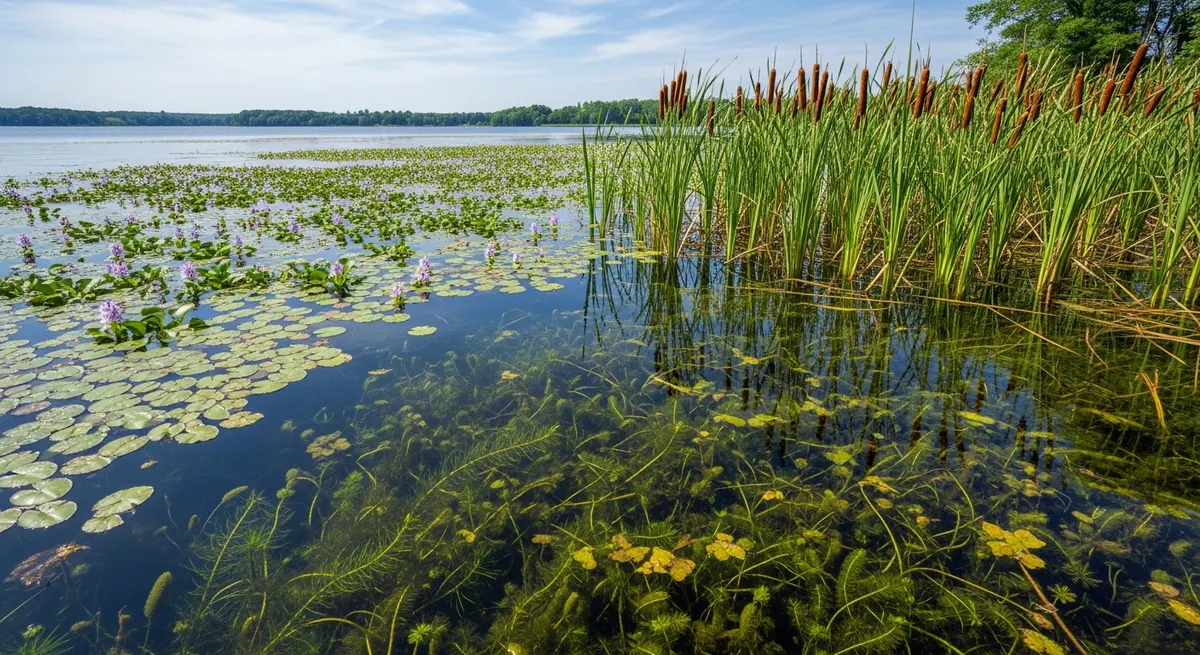
Aquatic weeds grow at rates that surprise even experienced lake managers. Water hyacinth can double its surface coverage every two weeks. Hydrilla grows up to one inch per day. Giant salvinia can double its biomass in 2–4 days. These growth rates, driven by warm temperatures, abundant nutrients, and the absence of natural controls, are what make invasive aquatic weeds so difficult to manage once established.
- Hydrilla can grow 1 inch per day under optimal conditions — one of the fastest aquatic plant growth rates.
- Water hyacinth doubles its population every 12 days under warm, nutrient-rich conditions.
- Growth slows significantly below 15°C (59°F) — seasonal cold provides natural suppression in northern states.
- Invasive species often grow faster than native competitors due to lack of herbivory, disease, and competition.
- Understanding growth rates is critical for treatment timing — treating during active growth improves herbicide uptake.
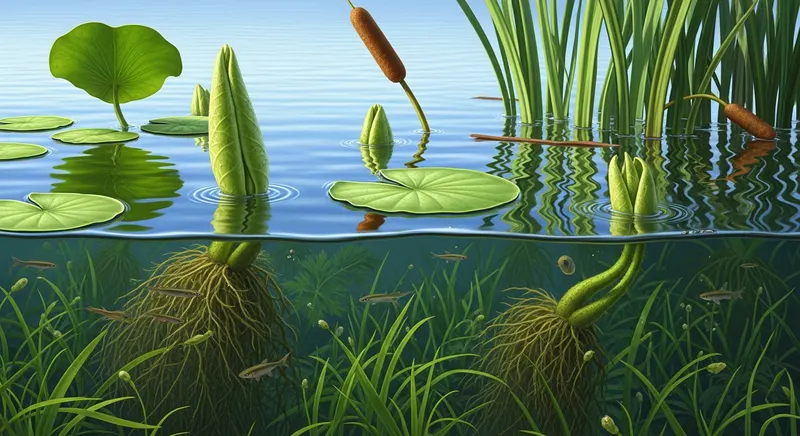
Growth Rates by Species
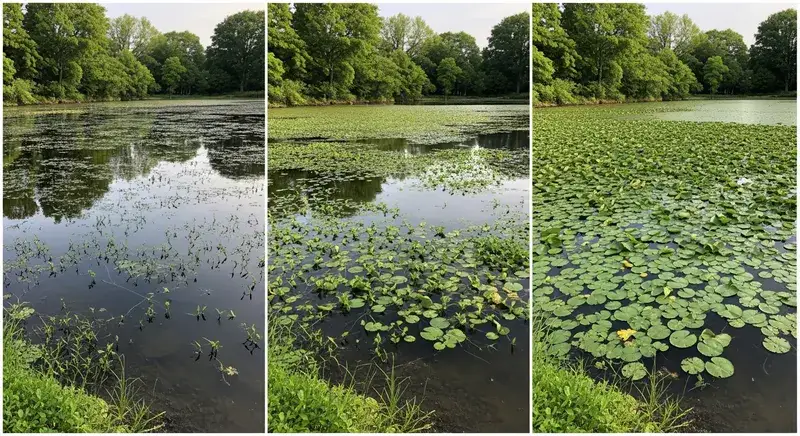
Understanding species-specific growth rates is essential for management timing decisions. Treating a species before it reaches peak biomass — or before it produces propagules for the following season — dramatically improves control efficacy.
Free-Floating Species (Fastest Growers)
- Giant salvinia: Doubling time 2–4 days under optimal conditions; documented growth from boat launch introduction to whole-lake coverage within 3–6 months
- Water hyacinth: Doubling time ~14 days; can increase from 1 acre to 50+ acres in a single growing season under ideal conditions
- Duckweed: Can double every 2–3 days under high nutrient conditions; can cover a pond surface within days to weeks of initial introduction
Submerged Species
- Hydrilla: Elongation rate up to 1 inch (2.5 cm) per day; established plants reaching the surface form lateral mats that dramatically expand horizontal coverage
- Eurasian watermilfoil: Elongation rate 0.5–1 inch per day; can go from plant fragments to dense surface mats within a single growing season in favorable conditions
- Curly-leaf pondweed: Winter and spring grower; reaches peak biomass in May–June before dying back dramatically in late June; summer die-off releases concentrated nutrients into the water column
Emergent Species
- Phragmites (common reed): Rhizomes advance at rates of 3–10 feet per year; a small patch can expand to a dense monoculture covering acres within a decade
- Cattails: Rhizome advance rates of 1–4 feet per year; dense stands can increase 20–30% in area annually in eutrophic systems
Factors Driving Rapid Growth
The exceptionally fast growth rates of invasive aquatic weeds in their introduced range reflect a combination of intrinsically rapid physiology and "enemy release" — the absence of the insects, diseases, and competing plants that limit their growth in their native range. In their home ecosystems, these growth rates are counterbalanced by specialist herbivores, pathogens, and competitors. In U.S. waterways, these controls are absent, allowing maximum growth rates to be sustained across entire growing seasons. Aquatic weed biology hub →
Management Timing Implications
Knowledge of growth rates directly informs optimal management timing. For invasive submerged species, early spring treatment before peak biomass reduces the quantity of herbicide needed and the oxygen depletion risk during die-off. For floating species with extremely rapid growth, early intervention when infestations are small is far more cost-effective than treatment of mature, dense mats. For curly-leaf pondweed, late fall or early winter treatment targeting the winter-active plants before they produce turions provides the most effective season-long control. Seasonal growth cycles guide →
Sources & Scientific References
- Madsen, J.D. (1997). Seasonal biomass and carbohydrate allocation in a southern population of Eurasian watermilfoil. Journal of Aquatic Plant Management, 35, 15–21.
- Mitchell, D.S. (1969). The ecology of vascular hydrophytes on Lake Victoria. Hydrobiologia, 34, 448–464.
- Owens, C.S. et al. (1998). Seasonal biomass of aquatic plants in southern Texas. ERDC/EL Technical Note.
Frequently Asked Questions
What is the fastest growing aquatic weed?
Giant salvinia (Salvinia molesta) is often cited as the fastest growing aquatic plant, capable of doubling its biomass in 2–4 days under optimal conditions (warm temperature, high nutrients). Water hyacinth can double population area in approximately 14 days. Hydrilla grows up to 1 inch (2.5 cm) per day under optimal conditions. These extreme growth rates — achieved in the absence of natural herbivore and competitor controls — explain the severity of invasive aquatic weed infestations.
How quickly can aquatic weeds cover a lake?
Under favorable conditions, rapid-growing floating species can cover a small lake (5–10 acres) within a single growing season. Water hyacinth has covered thousands of acres of Florida lakes in single growing seasons. The rate of lake coverage depends on initial infestation density, nutrient availability, water temperature, and weather. Submerged species like hydrilla expand more slowly in coverage terms (they grow up from the bottom rather than spreading across the surface) but can fill an entire water column from bottom to surface within 2–3 growing seasons.
When do aquatic weeds grow fastest?
Most aquatic weeds grow fastest during warm months with long days. Growth accelerates from spring through summer, peaks in July-August in most of the continental U.S. (earlier in the South), then slows in fall and stops in winter for most species. Notable exceptions include curly-leaf pondweed, which germinates and grows actively in fall and winter when native plants are dormant. In frost-free climates, warm-water invasive species grow continuously year-round.
Do aquatic weeds grow back after removal?
Yes, in most cases. The primary reasons are: vegetative regrowth from remaining root systems, rhizomes, turions, or tubers; regrowth from fragments dispersed during removal; and recolonization from seed or propagule banks in the sediment. Hydrilla tubers have been documented germinating up to 5 years after surface plants were eliminated. Effective long-term management must address these propagule sources in addition to removing above-ground biomass.
Key Takeaways
- Hydrilla can grow 1 inch per day under optimal conditions — one of the fastest aquatic plant growth rates.
- Water hyacinth doubles its population every 12 days under warm, nutrient-rich conditions.
- Growth slows significantly below 15°C (59°F) — seasonal cold provides natural suppression in northern states.
- Invasive species often grow faster than native competitors due to lack of herbivory, disease, and competition.
- Understanding growth rates is critical for treatment timing — treating during active growth improves herbicide uptake.
Ten-Year Lake Management Plan: Lake Wingra, WI
Lake Wingra, a 342-acre urban lake in Madison, WI, developed a comprehensive 10-year management plan coordinating the City of Madison, University of Wisconsin, and adjacent neighborhood associations. The plan addressed Eurasian watermilfoil, curly-leaf pondweed, and purple loosestrife through an integrated approach including targeted herbicide treatment, mechanical harvesting, native plant restoration, and public education.
Key outcome: The structured multi-agency planning process secured consistent funding across multiple budget cycles, a key advantage over ad hoc management. Native plant restoration efforts showed measurable progress in designated restoration zones within three years of initiation.
We referenced the biological control pages extensively when evaluating our grass carp stocking proposal. The detail on stocking rates and target species specificity helped us present a credible case to our board.
Karen Ostrowski HOA Lake Committee Chair, MN · Lake Minnetonka associationThe ecological impact section helped our team explain to county commissioners why early intervention matters. The oxygen depletion data alone secured funding for our early-detection monitoring program.
Donna Whitfield State Wildlife Biologist, GA · Okefenokee region