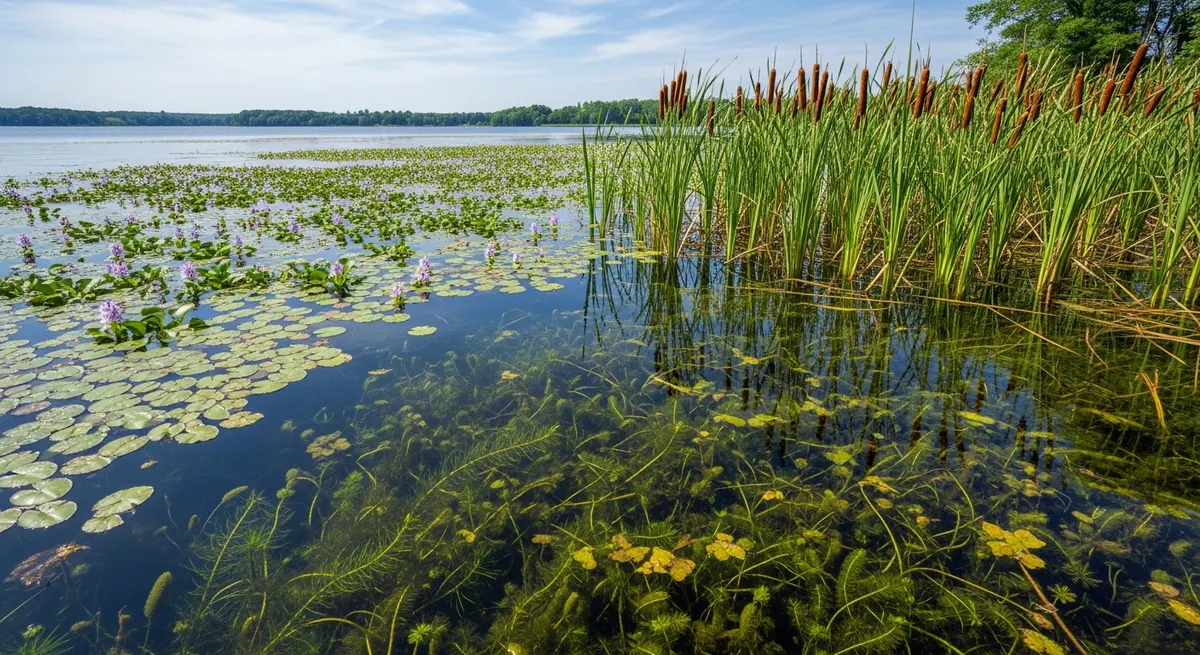
Texas manages some of the most complex aquatic weed challenges in the southern United States. The Texas Parks and Wildlife Department (TPWD) oversees aquatic invasive species management across the state's 800+ public lakes, with giant salvinia and water hyacinth representing the most urgent threats. Texas's combination of warm climate, extensive waterway network, and heavy recreational boating creates ideal conditions for rapid aquatic weed spread.
- Texas Parks and Wildlife Department (TPWD) oversees aquatic invasive species management for the state's 800+ public lakes.
- Giant salvinia is Texas's most urgent aquatic invasive, capable of covering lakes in weeks in the warm Texas climate.
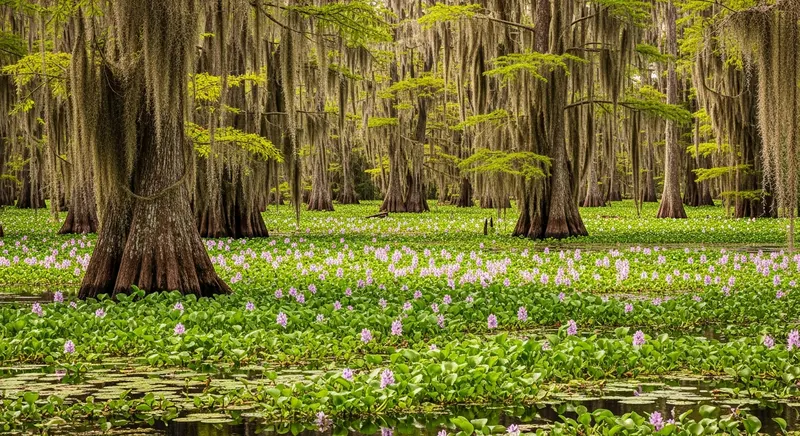
- The Caddo Lake watershed hosts Texas's most biodiverse aquatic ecosystem — and its most complex weed management challenge.
- Texas has aggressive early detection protocols for giant salvinia, triggering rapid response when new infestations are found.
- Water hyacinth, hydrilla, and Eurasian watermilfoil are also major targets of Texas aquatic plant management programs.
Texas's Aquatic Weed Challenge: Scale and Urgency
Texas's 800+ public lakes, 191,000 miles of streams and rivers, and 3.9 million acres of estuaries create an extensive network of habitat for aquatic invasive plants. The state's warm climate — with water temperatures above 20°C for much of the year in the southern and eastern portions of the state — allows aggressive invasive species like giant salvinia and water hyacinth to grow at rates that overwhelm management capacity when infestations are not caught early.
Giant salvinia is the aquatic invasive species that most concerns Texas resource managers. A single plant can produce a population covering 40 acres in one growing season under optimal conditions. In Caddo Lake and other east Texas water bodies, it has created near-complete surface coverage, blocking all light, oxygen exchange, and boat navigation. The social, economic, and ecological impacts on affected communities are severe. Most invasive aquatic weeds nationally →
Priority Species in Texas
Giant Salvinia (Salvinia molesta)
Giant salvinia is Texas's highest-priority aquatic invasive weed. A free-floating fern native to Brazil, it was introduced to the US through the aquarium and water garden trade. It has been documented in Texas since 1998 and continues to spread to new water bodies each year via boater transport. TPWD has established rapid response protocols — including same-week treatment deployment — when new salvinia infestations are confirmed in previously uninfested water bodies. A biological control program using the salvinia weevil (Cyrtobagous salviniae) provides supplemental long-term suppression on established infestations.
Water Hyacinth (Eichhornia crassipes)
Water hyacinth is well-established in slow-moving east Texas rivers, bayous, and reservoirs. The Sam Rayburn Reservoir, Toledo Bend Reservoir, and numerous smaller water bodies require ongoing water hyacinth management. TPWD contracts with licensed applicators for herbicide treatment and supplemental mechanical harvesting in high-priority areas. Water hyacinth's ability to double in population every 12 days under optimal Texas summer conditions makes early-season treatment essential. Water hyacinth guide →
TPWD Programs and Resources
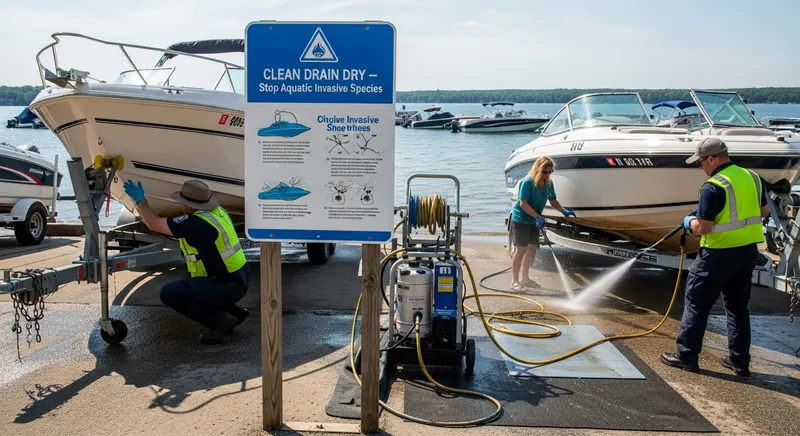
Texas Parks and Wildlife Department's Inland Fisheries Division oversees aquatic invasive species management. Key program elements include: the Aquatic Invasive Species Program — coordinating statewide management of priority invasives; rapid response fund — providing emergency resources for new introductions; boat ramp clean station program — providing wash stations at high-risk launches; and public outreach through the "Don't Haul It, Don't Dump It" campaign targeting boaters and aquarium hobbyists.
TPWD also partners with county navigation districts, water control and improvement districts, and the USACE on management of major reservoirs. Cost-sharing programs are available through the State Soil and Water Conservation Board for invasive species management on private agricultural water bodies. Government grants guide →
Sources & Scientific References
- Texas Parks and Wildlife Department. (2022). Aquatic Invasive Species Management Program Annual Report. Austin, TX: TPWD.
- Tipping, P.W. et al. (2008). Population dynamics of Salvinia molesta (Salviniaceae) and its biocontrol agent Cyrtobagous salviniae. Biological Control, 46(3), 415–422.
- Smart, R.M. et al. (1998). Introduction and use of grass carp in Texas: a model for invasive species management. Journal of Aquatic Plant Management, 36, 1–5.
Frequently Asked Questions
Who manages aquatic weeds in Texas public waters?
The Texas Parks and Wildlife Department (TPWD) is the primary agency managing aquatic invasive plants in Texas public waters. TPWD coordinates treatment programs, maintains a prohibited exotic species list, and issues permits for aquatic herbicide use. The Texas State Soil and Water Conservation Board also participates in management on agricultural water bodies. Private landowners must obtain permits from TPWD to treat aquatic vegetation in water bodies connected to public waters.
What is the biggest aquatic weed problem in Texas?
Giant salvinia (Salvinia molesta) is Texas's most urgent aquatic weed threat, capable of doubling its biomass in under a week and completely covering lake surfaces. It has spread to dozens of east Texas water bodies. Water hyacinth is the second most significant challenge, particularly in slow-moving east Texas rivers and reservoirs. Hydrilla, Eurasian watermilfoil, and water lettuce also require ongoing management across the state.
Is giant salvinia spreading in Texas?
Yes, giant salvinia continues to spread to new Texas water bodies each year. First confirmed in Texas in 1998, it has since established in dozens of east Texas lakes and rivers. TPWD operates an aggressive rapid response program when new infestations are detected in previously uninfested water bodies, deploying teams to treat new populations while they are still small enough to potentially eradicate. Boater education and Clean Drain Dry compliance are critical to slowing its spread.
What permits do I need for aquatic weed treatment in Texas?
A permit from TPWD is required to use aquatic herbicides in any water body in Texas. Private landowners on water bodies not connected to public waters may have more flexibility, but should confirm with TPWD regional offices. A commercial pesticide applicator license (aquatic category) is required for anyone applying herbicides for hire in Texas. TPWD maintains a list of licensed aquatic vegetation management contractors on its website.
What is being done about giant salvinia in Caddo Lake?
Caddo Lake — a UNESCO Biosphere Reserve and one of the most biodiverse freshwater ecosystems in the US — faces a severe giant salvinia infestation that has been actively managed since the early 2000s. TPWD, the US Army Corps of Engineers, and Caddo Lake Institute coordinate a multi-agency management program using herbicides, mechanical harvesting, and biological control (the weevil Cyrtobagous salviniae). While complete eradication is not achievable, active management prevents the complete lake-wide coverage that has occurred on some unmanaged Texas water bodies.
Key Takeaways
- Texas Parks and Wildlife Department (TPWD) oversees aquatic invasive species management for the state's 800+ public lakes.
- Giant salvinia is Texas's most urgent aquatic invasive, capable of covering lakes in weeks in the warm Texas climate.
- The Caddo Lake watershed hosts Texas's most biodiverse aquatic ecosystem — and its most complex weed management challenge.
- Texas has aggressive early detection protocols for giant salvinia, triggering rapid response when new infestations are found.
- Water hyacinth, hydrilla, and Eurasian watermilfoil are also major targets of Texas aquatic plant management programs.
Ten-Year Lake Management Plan: Lake Wingra, WI
Lake Wingra, a 342-acre urban lake in Madison, WI, developed a comprehensive 10-year management plan coordinating the City of Madison, University of Wisconsin, and adjacent neighborhood associations. The plan addressed Eurasian watermilfoil, curly-leaf pondweed, and purple loosestrife through an integrated approach including targeted herbicide treatment, mechanical harvesting, native plant restoration, and public education.
Key outcome: The structured multi-agency planning process secured consistent funding across multiple budget cycles, a key advantage over ad hoc management. Native plant restoration efforts showed measurable progress in designated restoration zones within three years of initiation.
The species identification guides on AquaticWeed.org are the most accurate I've used in 18 years of lake management. I now send all my new clients here first before we discuss treatment options.
Robert Harmon Certified Lake Manager, FL · Lake Okeechobee regionWe referenced the biological control pages extensively when evaluating our grass carp stocking proposal. The detail on stocking rates and target species specificity helped us present a credible case to our board.
Karen Ostrowski HOA Lake Committee Chair, MN · Lake Minnetonka association