Mechanical aquatic weed harvesting uses specialized equipment — weed harvesters, aquatic mowers, or suction dredges — to physically cut and remove aquatic plant biomass from a water body. It provides immediate, visible results without chemicals, but does not address root causes, requires proper fragment disposal, and typically requires repeat treatments as plants regrow.
- Mechanical harvesting removes weed biomass immediately without chemicals — making it popular near swim areas.
- Harvesting does not kill root systems; regrowth to pre-harvest density typically occurs in 4–8 weeks.
- Fragment dispersal is a significant risk — harvesting can spread invasive species within the same water body.
- Large hydraulic harvesters cost $150,000–$400,000; rental and contractor options are available.
- Best used as part of an integrated program — combined with herbicide treatment, control duration extends significantly.
How Mechanical Harvesting Works
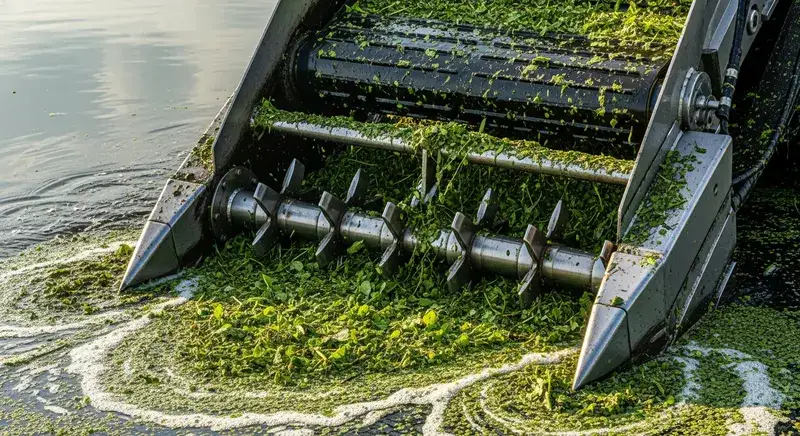
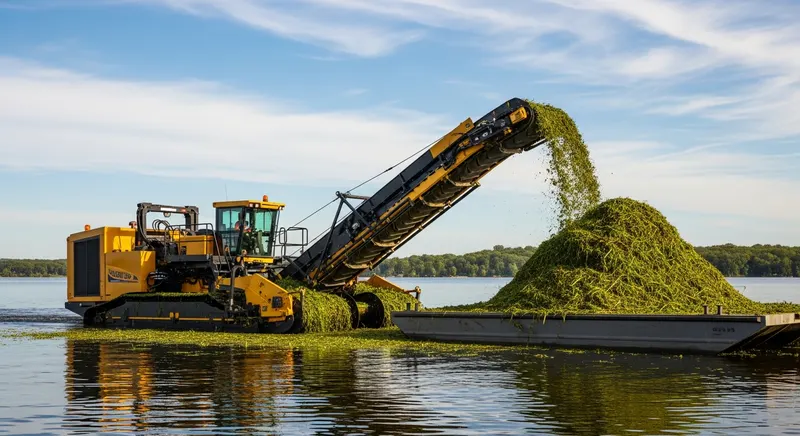
Commercial aquatic weed harvesters are purpose-built machines typically operated by trained contractors or lake management districts. The core system is a reciprocating blade cutting head mounted at the bow of a barge, which severs vegetation at a set depth (usually 2–5 feet below the water surface). Cut material is conveyed onto the harvester deck by an auger-and-belt system and deposited in a collection hopper. When full, the harvester offloads to shore or a dump barge.
Modern harvesters can treat 1–3 acres per working day depending on vegetation density and water depth. They are most effective in water 2–8 feet deep with dense submerged vegetation beds. In shallower water, amphibious cutters or hand tools may be used. In deeper water, underwater remotely operated cutting systems are sometimes deployed for specific applications.
Fragment containment is critical for species that spread by vegetative fragmentation. Harvesters should be fitted with containment screens to prevent cut fragments from escaping downstream or into untreated areas. Improperly managed harvesting of milfoil, hydrilla, or elodea can spread infestations downstream of the treatment area. Full mechanical control guide →
What Species Are Best Controlled by Harvesting?
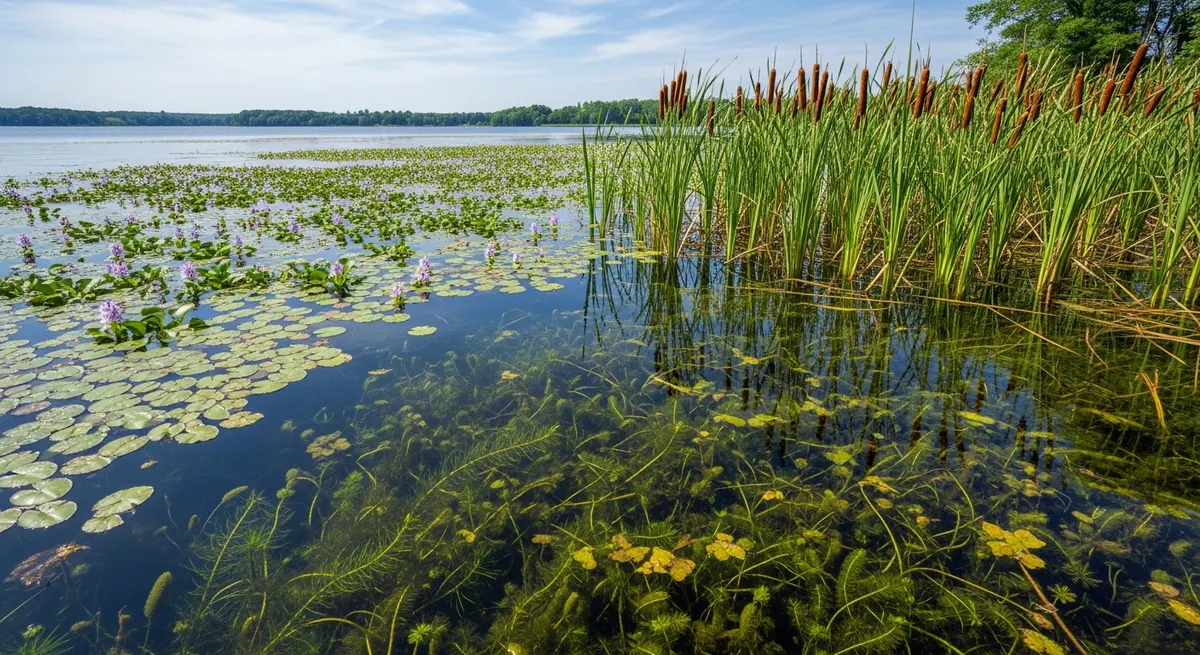
Mechanical harvesting is most effective for dense mats of submerged or emergent vegetation with limited fragmentation ability. Coontail, tape grass (Vallisneria), and non-invasive pondweed species respond well to harvesting. Water hyacinth can be harvested effectively if the entire surface mat is collected before fragments escape and reestablish. Phragmites and cattails can be cut mechanically, but root systems persist and regrowth is rapid.
Harvesting is generally not recommended as a primary control method for hydrilla or Eurasian watermilfoil in most settings, because the fragmentation risk outweighs the biomass removal benefit unless fragment containment is meticulous. In high-use recreational areas where chemical treatment is impractical, carefully managed harvesting may be the only viable option, with the understanding that repeat treatment will be frequent.
Disposal and Environmental Considerations
Cut aquatic vegetation must be properly disposed of. Large quantities of wet plant biomass are heavy and can cause odor and runoff problems at disposal sites. In many jurisdictions, aquatic plant material may not be composted or land-applied near water bodies due to the risk of spreading invasive species propagules. Permitted disposal options vary by state — contact your state's department of environmental quality for guidance before arranging disposal.
The ecological benefits of harvesting include immediate oxygen improvement in previously hypoxic conditions, improved navigation and recreation, and removal of nutrient-loaded biomass from the water body before it decomposes and recycles nutrients. These benefits must be weighed against fragmentation risk and the regrowth rates of the target species. Harvesting vs. herbicides comparison →
Sources & Scientific References
- Engel, S. (1990). Ecological impacts of harvesting macrophytes in Halverson Lake, Wisconsin. Journal of Aquatic Plant Management, 28, 41–45.
- Madsen, J.D. (2000). Advantages and disadvantages of aquatic plant management techniques. ERDC/EL SR-00-1.
Frequently Asked Questions
What is a weed harvester?
A weed harvester is a barge-mounted machine that uses a cutting head to sever aquatic vegetation at or near the sediment, then conveys the cut material onto the harvester deck for removal. Modern harvesters can treat 1–3 acres per day and deposit cut material directly onto shore or into dump trucks for disposal. They operate in water 2–8 feet deep and are most effective for dense submerged vegetation beds.
How much does mechanical weed harvesting cost?
Mechanical harvesting typically costs $400–$800 per acre per treatment, not including disposal of cut material. Annual treatment programs for a typical recreational lake of 50–100 acres with significant weed problems may cost $20,000–$80,000 per year. Capital costs for purchasing a small harvester start around $50,000–$100,000, making ownership practical only for large lakes or lake associations managing multiple water bodies.
Does mechanical harvesting remove roots?
Standard aquatic harvesters cut at a set depth and do not remove root systems or underground structures. This is why most invasive species regrow within 4–8 weeks of harvesting. Suction dredges can remove sediment and root systems simultaneously but are far more expensive and disruptive. Mechanical harvesting is most often used as a maintenance tool to keep already-managed areas clear, supplementing chemical or biological control rather than replacing it.
Is mechanical harvesting better than herbicides?
Mechanical harvesting and herbicides have complementary strengths. Harvesting provides immediate biomass removal with no chemical inputs or water use restrictions, making it preferred for high-use recreational areas and sensitive water bodies. Herbicides provide longer-lasting control (often 12–18 months from a single treatment) at lower per-acre cost for large infestations, but require permits and create temporary water use restrictions. Integrated programs often use harvesting for immediate access improvement and herbicides for longer-term control.
Key Takeaways
- Mechanical harvesting removes weed biomass immediately without chemicals — making it popular near swim areas.
- Harvesting does not kill root systems; regrowth to pre-harvest density typically occurs in 4–8 weeks.
- Fragment dispersal is a significant risk — harvesting can spread invasive species within the same water body.
- Large hydraulic harvesters cost $150,000–$400,000; rental and contractor options are available.
- Best used as part of an integrated program — combined with herbicide treatment, control duration extends significantly.
Ten-Year Lake Management Plan: Lake Wingra, WI
Lake Wingra, a 342-acre urban lake in Madison, WI, developed a comprehensive 10-year management plan coordinating the City of Madison, University of Wisconsin, and adjacent neighborhood associations. The plan addressed Eurasian watermilfoil, curly-leaf pondweed, and purple loosestrife through an integrated approach including targeted herbicide treatment, mechanical harvesting, native plant restoration, and public education.
Key outcome: The structured multi-agency planning process secured consistent funding across multiple budget cycles, a key advantage over ad hoc management. Native plant restoration efforts showed measurable progress in designated restoration zones within three years of initiation.
The ecological impact section helped our team explain to county commissioners why early intervention matters. The oxygen depletion data alone secured funding for our early-detection monitoring program.
Donna Whitfield State Wildlife Biologist, GA · Okefenokee regionWe used the integrated management framework from this site to structure our Eurasian watermilfoil control program. After three seasons we've reduced lake-wide coverage by 78% on our 340-acre water body.
Susan Thibodeau Lake District Manager, MN · Crow Wing County