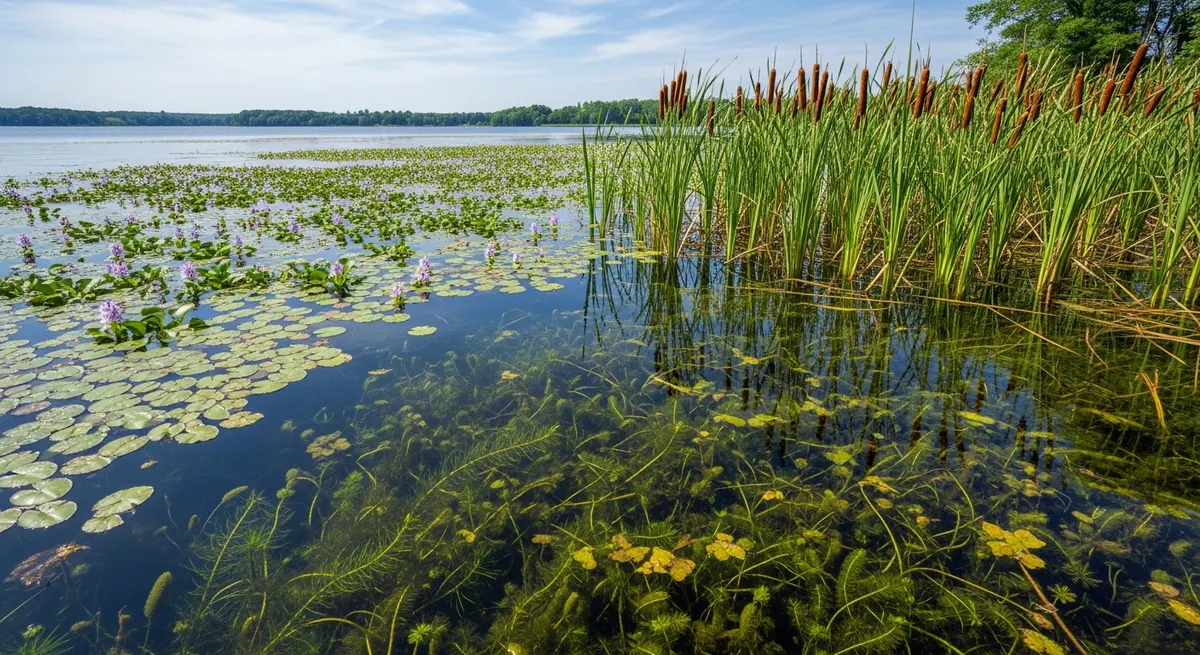
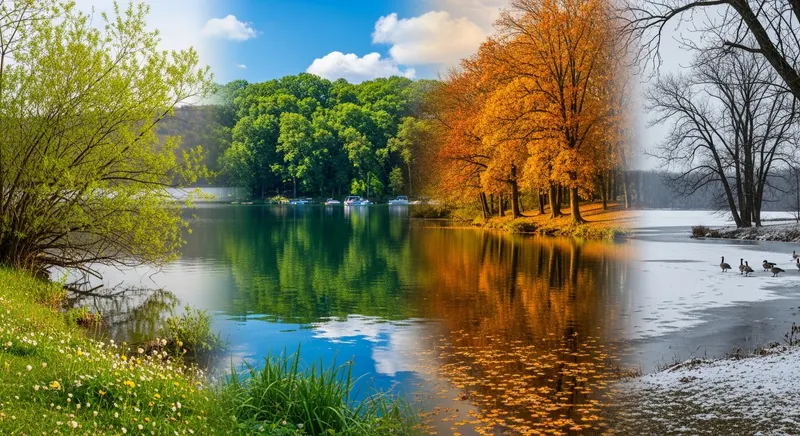
Management frequency depends entirely on the species, infestation level, and control method used. Most established invasive species require annual to biennial treatment programs. Some situations need treatment 2–3 times per season. Long-term, sustainable management requires annual monitoring to adjust treatment timing and intensity based on observed weed populations.
- An annual management program is more effective and less expensive than reactive treatment after infestations peak.
- Spring surveys (April–May) should precede treatment to identify target species and estimate infestation extent.
- Chemical treatments are typically applied once or twice per season; mechanical harvesting may be needed monthly at peak.
- Post-treatment monitoring (4–6 weeks after) evaluates effectiveness and identifies areas needing retreatment.
- Lake associations benefit from multi-year integrated management plans rather than ad hoc annual decisions.
Management Frequency by Control Method
Systemic Herbicide Programs
Systemic herbicides — particularly fluridone — provide the longest control duration of any single treatment: 12–24 months for many target species under appropriate application conditions. An annual management program using systemic herbicides typically involves one spring application followed by monitoring, with a second treatment in fall or the following spring if regrowth exceeds management thresholds. For water bodies with high tuber or seed banks (hydrilla, curly-leaf pondweed), multi-year sequential treatment programs are needed to deplete the propagule bank over time. Chemical control guide →
Mechanical Harvesting Programs
Mechanical harvesting provides immediate results but typically shorter persistence — most invasive species regrow within 4–8 weeks during peak growing season. A harvesting-based management program for a heavily vegetated lake typically requires 3–5 treatments per season (approximately every 4–6 weeks from May through September). Total annual harvesting costs for a significant recreational lake can exceed annual herbicide treatment costs, making harvesting economically attractive primarily for smaller areas, high-use zones, or situations where chemical use is restricted. Mechanical control guide →
Monitoring-Based Management
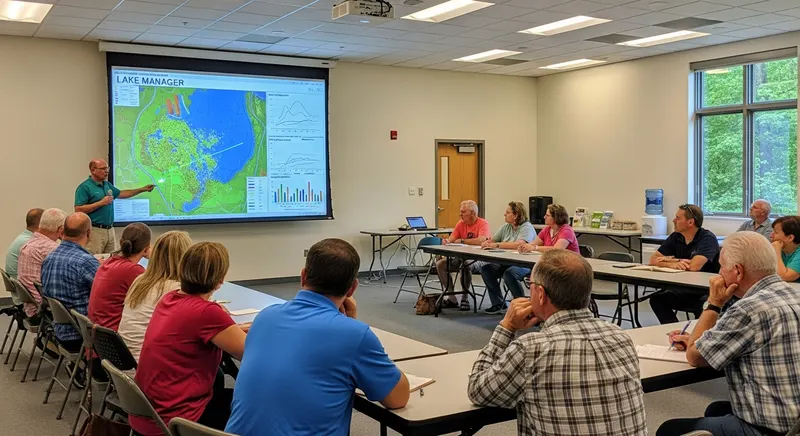
Best practice aquatic weed management is driven by monitoring data, not calendar schedules. Annual or twice-annual vegetation surveys — ideally conducted at the same time of year with standardized transect methods — provide the baseline data needed to track population trends, identify new infestations early, and evaluate management effectiveness. Lakes managed with a monitoring-based approach treat where and when needed rather than on a fixed schedule, reducing total chemical and mechanical inputs while maintaining management effectiveness. Monitoring methods guide →
Sources & Scientific References
- Madsen, J.D. (1999). Point intercept and line intercept methods for aquatic plant management. ERDC/EL TN-99-3.
- Nichols, S.A. & Shaw, B.H. (1986). Ecological life histories of the three aquatic nuisance plants. Hydrobiologia, 131, 3–21.
Frequently Asked Questions
How often do you need to treat a lake for aquatic weeds?
For established invasive aquatic weeds, most water bodies require annual treatment programs. Systemic herbicides like fluridone may provide 12–18 months of suppression from a single treatment. Contact herbicides typically require treatment 1–3 times per season as treated plants regrow. Mechanical harvesting may need to be repeated every 4–8 weeks during the growing season. Without follow-up treatment to address regrowth from roots, tubers, and seeds, a single treatment is rarely sufficient for more than 1–2 seasons.
Do aquatic weeds grow back every year?
Yes. For most invasive aquatic weed species in temperate climates, visible above-ground growth dies back in fall and resumes from roots, rhizomes, tubers, or turions every spring. This is not a management failure — it is the normal biology of aquatic plants. Effective management reduces annual peak biomass to tolerable levels; it rarely eliminates the population entirely. Budget planning should assume indefinite annual management costs for established invasive species.
What is the best time of year to treat aquatic weeds?
Optimal treatment timing depends on the target species. For most submerged invasive weeds, early spring treatment when plants are actively growing but before peak biomass reduces treatment volume and die-off oxygen risk. Curly-leaf pondweed is best treated in fall or early winter to prevent turion production. Water hyacinth is typically treated through summer before growing season peak. Emergent species like Phragmites are most effectively treated with foliar herbicides in late summer (August-September) when plants are translocating nutrients to roots before winter.
Can you treat aquatic weeds yourself?
DIY aquatic weed treatment is possible in some states for small ponds on private property using over-the-counter contact herbicides (like diquat or endothall in consumer formulations), but professional treatment is strongly recommended for: large water bodies, public water bodies, any body connecting to public waterways, any situation involving federally listed noxious weeds, and any situation where water use restrictions are needed for human health protection. Professional applicators are trained in species identification, product selection, permit compliance, and treatment design.
Key Takeaways
- An annual management program is more effective and less expensive than reactive treatment after infestations peak.
- Spring surveys (April–May) should precede treatment to identify target species and estimate infestation extent.
- Chemical treatments are typically applied once or twice per season; mechanical harvesting may be needed monthly at peak.
- Post-treatment monitoring (4–6 weeks after) evaluates effectiveness and identifies areas needing retreatment.
- Lake associations benefit from multi-year integrated management plans rather than ad hoc annual decisions.
Ten-Year Lake Management Plan: Lake Wingra, WI
Lake Wingra, a 342-acre urban lake in Madison, WI, developed a comprehensive 10-year management plan coordinating the City of Madison, University of Wisconsin, and adjacent neighborhood associations. The plan addressed Eurasian watermilfoil, curly-leaf pondweed, and purple loosestrife through an integrated approach including targeted herbicide treatment, mechanical harvesting, native plant restoration, and public education.
Key outcome: The structured multi-agency planning process secured consistent funding across multiple budget cycles, a key advantage over ad hoc management. Native plant restoration efforts showed measurable progress in designated restoration zones within three years of initiation.
I've managed aquatic vegetation on Texas reservoirs for 15 years. The water hyacinth control content here is the most up-to-date, practical guidance I've found anywhere online.
Travis McKinley Commercial Fishing Guide, TX · Lake Travis / Lake AustinThe species identification guides on AquaticWeed.org are the most accurate I've used in 18 years of lake management. I now send all my new clients here first before we discuss treatment options.
Robert Harmon Certified Lake Manager, FL · Lake Okeechobee region