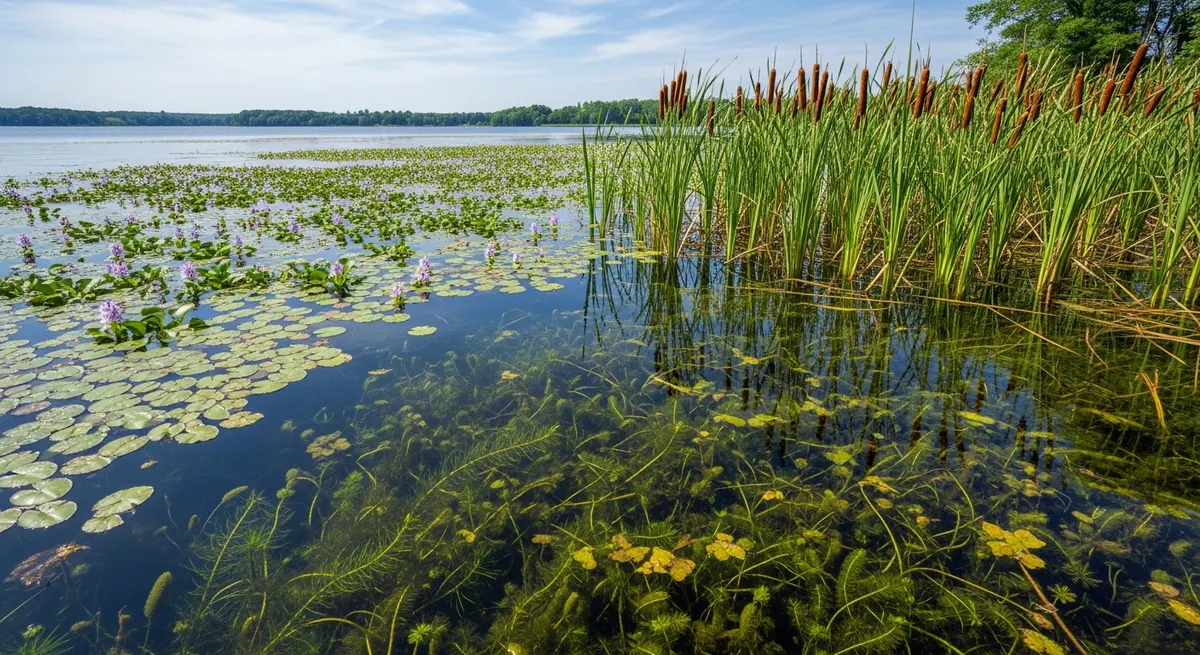
Florida manages more aquatic weed acreage than any other state in the US. The Florida Fish and Wildlife Conservation Commission (FWC) operates the largest state aquatic plant management program in the nation, treating millions of acres annually with an annual budget exceeding $20 million for public waters alone. Florida's subtropical climate — allowing year-round growth with no winter dieback — makes it both the epicenter of the national aquatic weed problem and the most sophisticated state for management programs.
- Florida has more managed acres of aquatic weeds than any other state — over 2.5 million acres of water bodies require active management.
- The Florida Fish and Wildlife Conservation Commission (FWC) operates the largest state aquatic plant management program in the US.
- Florida's subtropical climate allows hydrilla and water hyacinth to grow year-round with no winter dieback.
- The state spends over $20 million annually on aquatic plant management in public waters alone.
- Florida law prohibits planting, transporting, or possessing listed aquatic invasive species without FWC authorization.
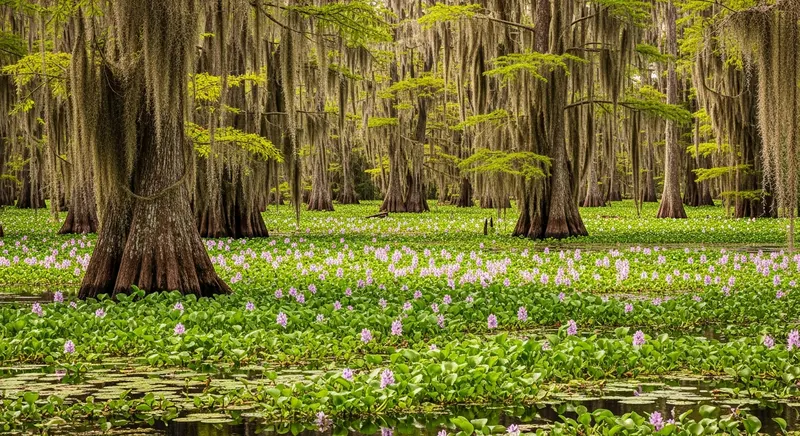
Why Florida Has the Worst Aquatic Weed Problem in the US
Florida's aquatic weed problem is unique in the United States for three interconnected reasons. First, its subtropical climate — with average water temperatures above 20°C (68°F) for 9–10 months of the year — creates near-ideal conditions for warm-water aquatic invasives. Hydrilla, water hyacinth, and giant salvinia, which experience natural die-back or dormancy in northern states, grow continuously in Florida from January through December. Second, Florida's extensive network of lakes, rivers, canals, and wetlands — over 7,800 lakes, 12,000 miles of rivers and streams, and 11 million acres of wetlands — provides abundant habitat for weed establishment and spread. Third, Florida's long history as a hub for the water garden and aquarium trade introduced dozens of invasive species decades before strict regulation was established.
The result is a management challenge without parallel in the continental US: millions of acres of water requiring active management every year, with no prospect of eradication for established species. FWC's annual treatment program covers approximately 30 million acres of water surface across the state, primarily using EPA-registered aquatic herbicides applied by licensed contractors. States with worst aquatic weed problems →
Florida's Priority Invasive Species
Hydrilla (Hydrilla verticillata)
Hydrilla is present in virtually every major public water body in Florida. It was first documented in the state in the 1950s — brought through the aquarium trade — and has since spread to an estimated 100,000 or more acres of Florida waters. FWC spends the largest portion of its aquatic plant management budget on hydrilla control, using a combination of systemic herbicides (primarily fluridone) and contact herbicides (endothall, diquat) in a carefully scheduled treatment program designed to prevent resistance development. Full hydrilla guide →
Water Hyacinth (Eichhornia crassipes)
Water hyacinth, capable of doubling its biomass every 12 days, is a persistent problem in Florida's rivers, canals, and lakes despite decades of intensive management. The St. Johns River, the Kissimmee chain of lakes, and Lake Okeechobee consistently host significant infestations. FWC manages water hyacinth primarily through a combination of mechanical harvesting and herbicide application, often supplemented by classical biological control agents — particularly weevils of the genus Neochetina, which have provided partial suppression of water hyacinth populations across the state over decades. Full water hyacinth guide →
Water Lettuce, Giant Salvinia, and Other Species
Water lettuce (Pistia stratiotes) is another free-floating invasive that forms dense mats in Florida water bodies, particularly in slow-moving canals and lake margins. Giant salvinia (Salvinia molesta), one of the world's most aggressive floating aquatic invasives, has been documented in Florida and is subject to aggressive rapid response when new populations are detected. Florida's prohibited aquatic plant list includes dozens of additional species regulated to prevent new introductions.
The FWC Aquatic Plant Management Program
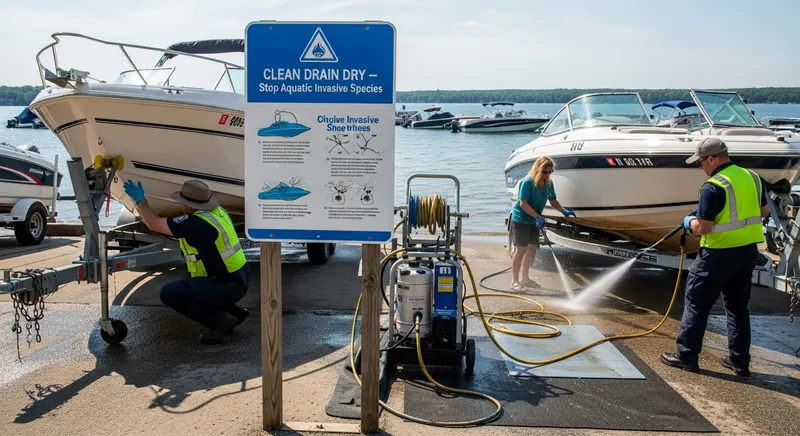
Florida's Invasive Plant Management Section (IPMS) within FWC coordinates the largest state aquatic plant management program in the US. Key program elements include: routine treatment contracts for high-priority species in designated public waters; rapid response protocols for new detections of high-priority species like giant salvinia; biological control program using host-specific insects for water hyacinth and other species; and public education and outreach to reduce new introductions from the ornamental plant trade. FWC also trains and certifies licensed aquatic plant managers who can obtain general permits to treat private water bodies on behalf of landowners.
Florida landowners who want to manage aquatic plants in their private ponds, lakes, or canals must either hire a licensed aquatic plant manager or obtain individual permits from FWC. The FWC website provides permit applications, target species guidance, and a list of licensed contractors by county. Permits guide →
Regulatory Framework for Private Landowners
Florida Statutes Chapter 369 establishes the regulatory framework for aquatic plant management in the state. Under this framework, FWC has authority over aquatic plant management in all state waters, including private lakes, ponds, and canals that are connected to or affect state waters. Prohibited aquatic plants — including hydrilla, water hyacinth, giant salvinia, and dozens of others — cannot be possessed, propagated, sold, or introduced into Florida waters without specific FWC authorization. Violations carry civil and criminal penalties. Landowners with questions about specific water bodies should contact FWC's regional offices or consult the FWC Invasive Plant Management website.
Sources & Scientific References
- Florida Fish and Wildlife Conservation Commission (FWC). (2023). Invasive Plant Management Section Annual Report. Tallahassee, FL: FWC.
- Haller, W.T. (1997). Aquatic weed management in Florida. In: Bossard, C.C. et al. (Eds.) Invasive Plants of California's Wildlands.
- Langeland, K.A. et al. (2008). Natural Area Weeds: Identification and Control of Non-Native Plants in Florida's Natural Areas. University of Florida IFAS.
- USDA NRCS. (2020). Plant invasions and management in aquatic systems. Plant Materials Program Technical Note.
Frequently Asked Questions
Who manages aquatic weeds in Florida?
The Florida Fish and Wildlife Conservation Commission (FWC) is the primary agency responsible for aquatic plant management in Florida public waters. FWC's Invasive Plant Management Section contracts with licensed aquatic plant management firms to treat thousands of miles of waterways annually. For private water bodies, landowners must obtain permits from FWC before applying any aquatic herbicides.
What are the worst aquatic weeds in Florida?
Hydrilla, water hyacinth, and water lettuce are Florida's three highest-priority aquatic invasive plants, managed continuously across the state. Giant salvinia, Eurasian watermilfoil, and various pondweeds also require significant management attention. Florida's list of prohibited aquatic plants — plants that cannot be possessed, transported, or sold in the state — includes dozens of species.
Do I need a permit to treat aquatic weeds in Florida?
Yes. Florida requires an aquatic plant management permit from FWC for all herbicide treatments of aquatic vegetation in public waters and most private water bodies in Florida. The permit specifies the target species, treatment area, products authorized, and any water use restrictions. Licensed aquatic plant managers hold general permits and can treat on behalf of landowners after obtaining site-specific authorization.
How much does Florida spend on aquatic weed management?
The Florida Legislature appropriates over $20 million annually for FWC's aquatic plant management program — the largest single state aquatic weed management expenditure in the US. This funding covers treatment of approximately 30 million acres of waterways annually, primarily targeting hydrilla, water hyacinth, and water lettuce. The cost does not include spending by water management districts, counties, or private landowners.
What is Florida's most invasive aquatic weed?
Hydrilla is widely considered Florida's most damaging aquatic invasive plant. It is present in virtually every major water body in the state, grows up to 1 inch per day, and forms dense surface mats that block navigation, kill fish, and eliminate native plant communities. Water hyacinth is a close second in terms of management challenge — it remains a severe problem in the St. Johns River, Lake Okeechobee, and numerous other water bodies despite decades of intensive management.
Key Takeaways
- Florida has more managed acres of aquatic weeds than any other state — over 2.5 million acres of water bodies require active management.
- The Florida Fish and Wildlife Conservation Commission (FWC) operates the largest state aquatic plant management program in the US.
- Florida's subtropical climate allows hydrilla and water hyacinth to grow year-round with no winter dieback.
- The state spends over $20 million annually on aquatic plant management in public waters alone.
- Florida law prohibits planting, transporting, or possessing listed aquatic invasive species without FWC authorization.
Ten-Year Lake Management Plan: Lake Wingra, WI
Lake Wingra, a 342-acre urban lake in Madison, WI, developed a comprehensive 10-year management plan coordinating the City of Madison, University of Wisconsin, and adjacent neighborhood associations. The plan addressed Eurasian watermilfoil, curly-leaf pondweed, and purple loosestrife through an integrated approach including targeted herbicide treatment, mechanical harvesting, native plant restoration, and public education.
Key outcome: The structured multi-agency planning process secured consistent funding across multiple budget cycles, a key advantage over ad hoc management. Native plant restoration efforts showed measurable progress in designated restoration zones within three years of initiation.
The seasonal timing guidance has been invaluable. Treating at the right growth stage cut our herbicide costs by nearly 30% without sacrificing efficacy on our county-managed reservoir.
Dale Buchanan County Parks Director, MI · Kalamazoo CountyRunning a golf course with three retention ponds means constant weed pressure. The prevention and best management practices guide gave us a systematic approach that replaced our reactive spray schedule.
Paul Esteban Golf Course Superintendent, SC · Myrtle Beach area