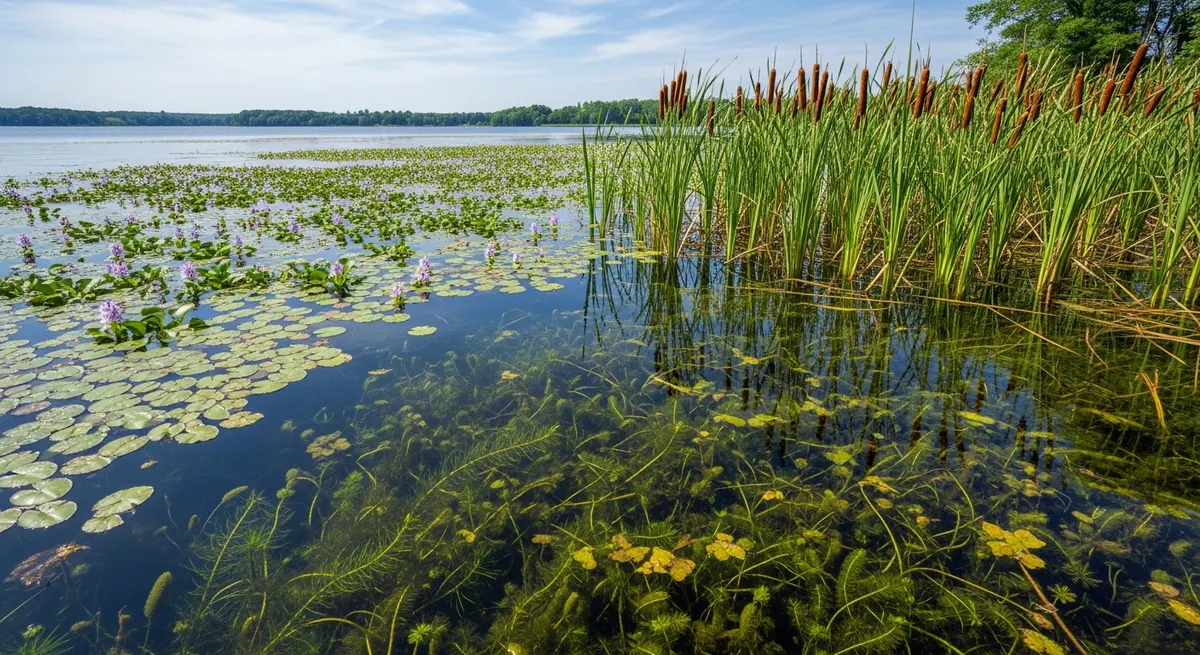
California faces some of the most complex aquatic weed management challenges in the United States. The Sacramento-San Joaquin Delta — the heart of California's water supply system — is severely impacted by water hyacinth, Brazilian waterweed, and other invasive species. Management is coordinated among multiple state and federal agencies and involves tens of millions of dollars annually.
- California Department of Fish and Wildlife (CDFW) issues permits for all chemical aquatic weed treatments.
- The Sacramento-San Joaquin Delta is California's most heavily infested water body, with hydrilla and water hyacinth.
- California maintains its own prohibited plant list with many species not on the federal list.
- Water rights and downstream irrigation users must be notified before many aquatic herbicide treatments.
- California's extensive agriculture is disproportionately affected by aquatic weed blockage of irrigation systems.
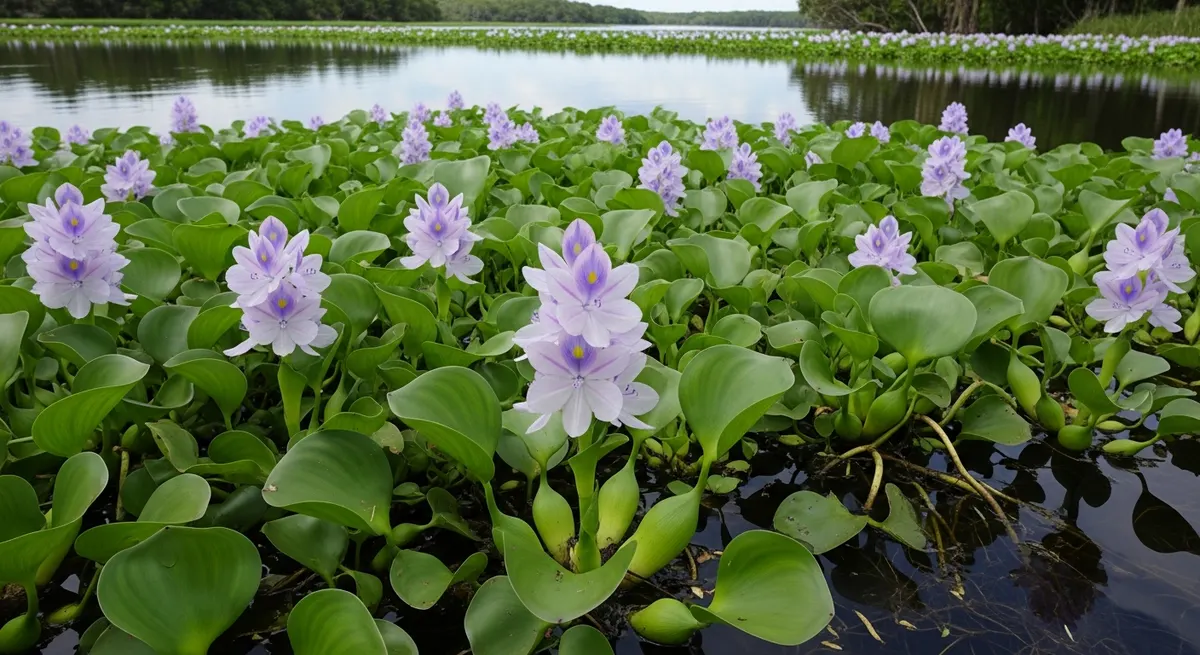
The Sacramento-San Joaquin Delta Crisis
The Sacramento-San Joaquin Delta is a web of more than 1,100 miles of interconnected waterways — the largest estuary on the U.S. Pacific Coast and the hub of California's water supply system. It provides water to approximately 27 million Californians and 3 million acres of farmland through the State Water Project and Central Valley Project. Water hyacinth has severely impacted the Delta for over a century, requiring ongoing large-scale management to maintain water flow, protect pumping equipment, and preserve navigation and recreation.
The California Department of Water Resources operates the Delta Aquatic Weed Control Program, which treats water hyacinth, Brazilian waterweed, water primrose, and other species across the Delta complex annually. Treatment involves professional herbicide application (primarily using EPA-registered products with appropriate permits), mechanical harvesting for areas near residential docks and marinas, and ongoing monitoring. The state typically spends $10–20 million per year on Delta aquatic weed management.
Key California Invasive Species
Brazilian Waterweed (Egeria densa)
A South American native, Brazilian waterweed (also called Brazilian elodea) is a submerged plant established throughout California waterways. Dense beds interfere with navigation, recreation, and water intake infrastructure. It is particularly problematic in reservoirs and slower-moving river channels.
Water Primrose (Ludwigia hexapetala)
Water primrose is a floating and emergent plant increasingly problematic in the Delta and Sacramento Valley. Its expanding mats block light, reduce dissolved oxygen, and alter water flow. It has dramatically expanded its California distribution in the past two decades.
Regulatory Framework
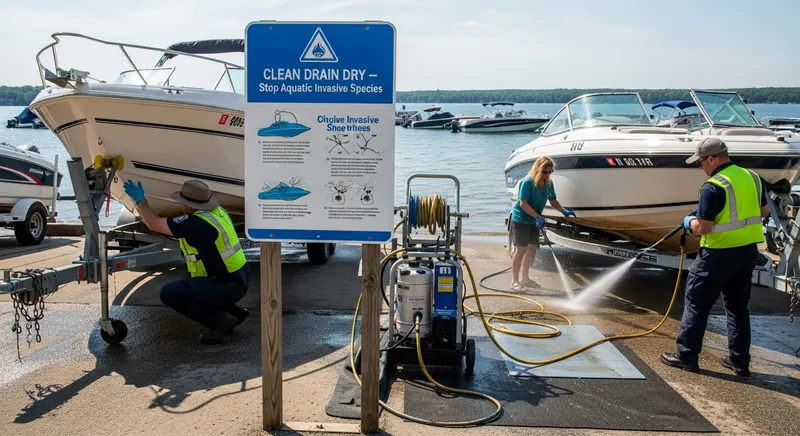
Aquatic herbicide use in California requires coordination of multiple permits: a Lake or Streambed Alteration Agreement from CDFW, a National Pollutant Discharge Elimination System (NPDES) permit from the appropriate Regional Water Quality Control Board, and compliance with CDFA regulations on restricted plant species. This multi-agency coordination makes California one of the most complex permitting environments for aquatic weed management in the nation, though the regulatory structure ensures comprehensive environmental review of management actions. California distribution profile →
Sources & Scientific References
- California Department of Water Resources. (2020). Delta Aquatic Weed Control Program Annual Report.
- Stanton, J.C. et al. (2016). Water hyacinth management in the Sacramento-San Joaquin Delta. Invasive Plant Science and Management, 9(1), 41–52.
- CDFA (2023). Noxious weed list — aquatic species. California Department of Food and Agriculture.
Frequently Asked Questions
What is the biggest aquatic weed problem in California?
Water hyacinth (Eichhornia crassipes) in the Sacramento-San Joaquin Delta is California's most significant aquatic weed problem. The Delta is the hub of California's water supply system — providing water to 25+ million people and millions of acres of farmland — and water hyacinth impedes water flow, clogs pumping infrastructure, reduces navigation, and degrades fish and waterfowl habitat. The state spends $10–20 million annually on Delta water hyacinth management.
What agencies manage aquatic weeds in California?
Aquatic weed management in California involves multiple agencies: the California Department of Water Resources (DWR) manages Delta water hyacinth under the Aquatic Weed Control Program; the California Department of Fish and Wildlife (CDFW) regulates aquatic invasive species and issues permits; the California Department of Food and Agriculture (CDFA) maintains the state's prohibited plant list; and local Resource Conservation Districts coordinate regional programs. Federal agencies including USACE and USBR also have roles in Delta management.
Is water hyacinth illegal in California?
Yes. Water hyacinth (Eichhornia crassipes) is listed as a restricted species in California under CDFA regulations, making its sale and transportation without a permit illegal. Despite this restriction, it remains one of the most significant management problems in the Delta, where established populations persist and require ongoing annual control.
What aquatic plants are invasive in California?
California's most problematic invasive aquatic plants include: water hyacinth (Eichhornia crassipes) in the Delta; Brazilian waterweed (Egeria densa) throughout the state; water primrose (Ludwigia hexapetala) in the Delta and Sacramento Valley; Eurasian watermilfoil in lakes throughout the state; alligator weed in the Delta and southern California; and salvinia species in warm-water areas of southern California.
Key Takeaways
- California Department of Fish and Wildlife (CDFW) issues permits for all chemical aquatic weed treatments.
- The Sacramento-San Joaquin Delta is California's most heavily infested water body, with hydrilla and water hyacinth.
- California maintains its own prohibited plant list with many species not on the federal list.
- Water rights and downstream irrigation users must be notified before many aquatic herbicide treatments.
- California's extensive agriculture is disproportionately affected by aquatic weed blockage of irrigation systems.
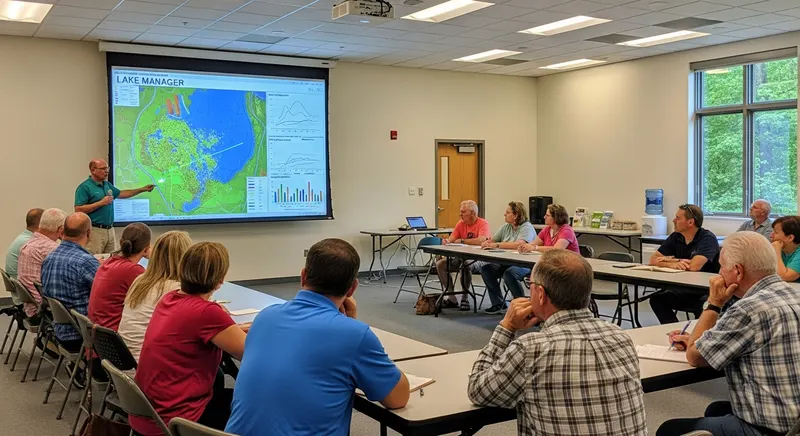
Ten-Year Lake Management Plan: Lake Wingra, WI
Lake Wingra, a 342-acre urban lake in Madison, WI, developed a comprehensive 10-year management plan coordinating the City of Madison, University of Wisconsin, and adjacent neighborhood associations. The plan addressed Eurasian watermilfoil, curly-leaf pondweed, and purple loosestrife through an integrated approach including targeted herbicide treatment, mechanical harvesting, native plant restoration, and public education.
Key outcome: The structured multi-agency planning process secured consistent funding across multiple budget cycles, a key advantage over ad hoc management. Native plant restoration efforts showed measurable progress in designated restoration zones within three years of initiation.
We referenced the biological control pages extensively when evaluating our grass carp stocking proposal. The detail on stocking rates and target species specificity helped us present a credible case to our board.
Karen Ostrowski HOA Lake Committee Chair, MN · Lake Minnetonka associationThe ecological impact section helped our team explain to county commissioners why early intervention matters. The oxygen depletion data alone secured funding for our early-detection monitoring program.
Donna Whitfield State Wildlife Biologist, GA · Okefenokee region