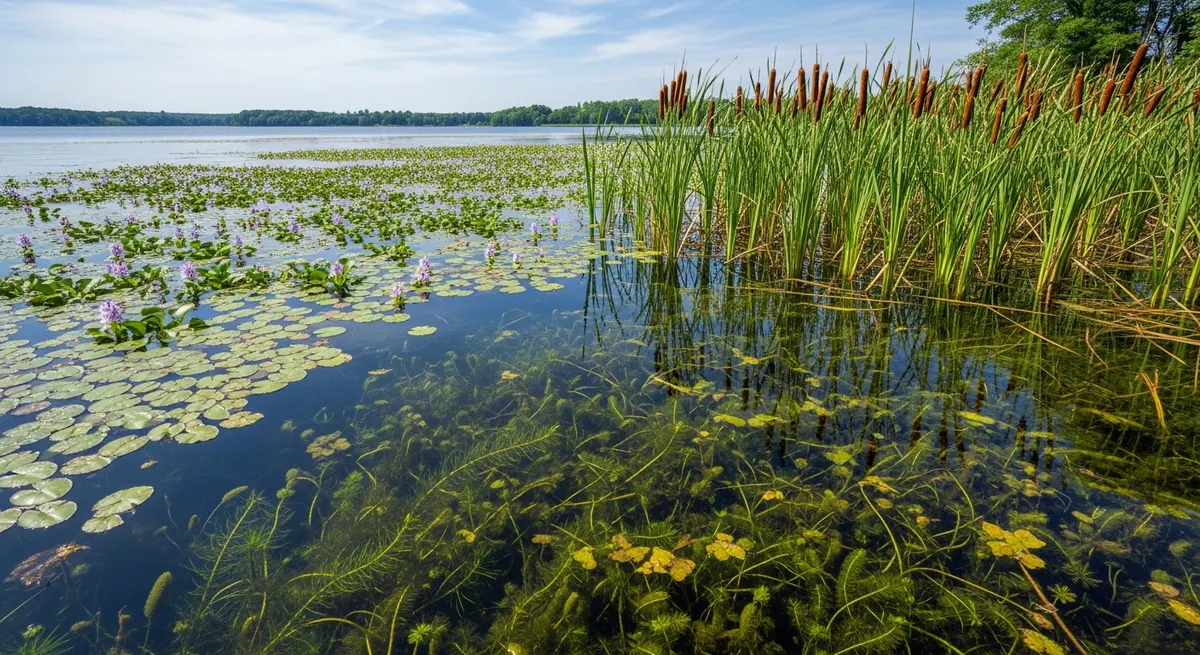
Duckweed (primarily Lemna minor and related species) is the world's smallest flowering plant — a free-floating, nutrient-rich, native aquatic plant that becomes a nuisance in ponds and lakes with excess nutrients. It is not typically considered invasive (most U.S. species are native), but dense coverage in high-nutrient water bodies requires management. Control begins with nutrient reduction — without it, duckweed will return after any mechanical or chemical removal.
- Duckweed is the world's smallest flowering plant — individual fronds are 1–3 mm across.
- Unlike most invasive aquatic weeds, duckweed is native throughout the US and ecologically valuable in moderation.
- A duckweed bloom indicates high nutrients — it is a symptom of eutrophication, not a primary cause.
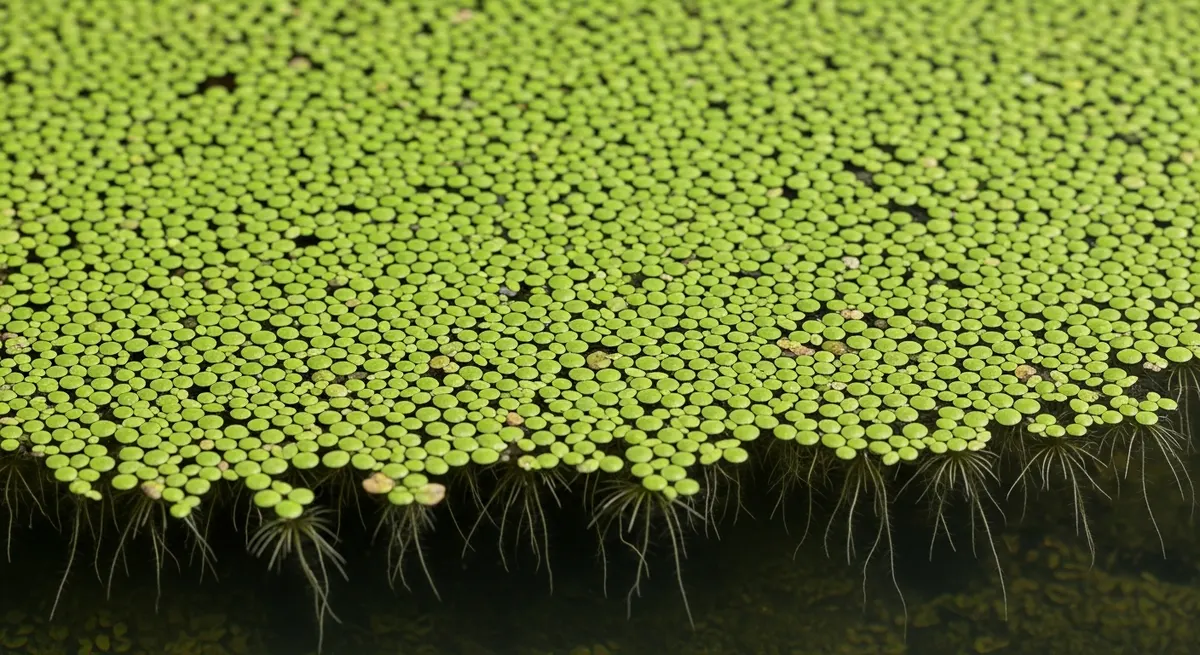
- Duckweed can cover still-water ponds completely within days under high-nutrient, calm conditions.
- Nutrient reduction is the most durable control — without addressing nutrients, removal provides only temporary relief.
What Is Duckweed?
Duckweed (family Lemnaceae) is a group of tiny free-floating flowering plants found on slow-moving or still water surfaces worldwide. Despite their simple appearance, duckweed plants are structurally complete flowering plants — they have roots, a stem (the frond), and produce tiny flowers and seeds (though reproduction is predominantly vegetative). Lemna minor (common duckweed) is the most widespread U.S. species; Spirodela polyrhiza (greater duckweed) is slightly larger; and several other Lemna and Wolffia species (including Wolffia, the world's smallest flowering plant, barely 1mm across) may co-occur in similar habitats.
Most duckweed species found in U.S. water bodies are native and play legitimate ecological roles as food for waterfowl, fish, and invertebrates, and as high-protein-content organic matter that enters aquatic food webs. Their nuisance status in many ponds and lakes is a symptom of eutrophication (excess nutrients) rather than an inherent characteristic of the plants themselves.
Why Duckweed Becomes a Problem
Duckweed thrives in high-nutrient conditions — it grows fastest when phosphorus and nitrogen are abundantly available in the water column. In small, high-nutrient ponds (those receiving agricultural runoff, lawn fertilizer runoff, or septic leachate), duckweed growth rates outpace any grazing pressure or natural control, leading to complete surface coverage within days. Complete surface coverage blocks light to submerged plants and phytoplankton, reducing photosynthesis in the water column, decreasing dissolved oxygen, and fundamentally altering the ecosystem beneath the mat.
Control Methods
Address Nutrients First
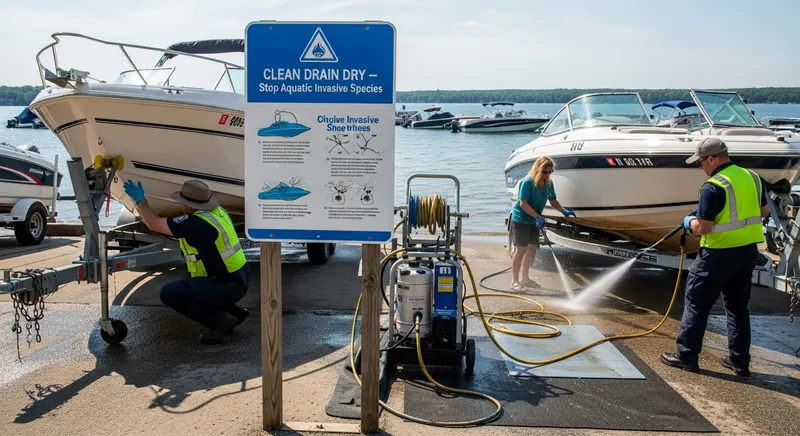
Any effective duckweed management program must begin with nutrient reduction. Identify and reduce the primary nutrient inputs: reduce fertilizer application near the water body, establish vegetated buffer strips to intercept runoff, repair or upgrade failing septic systems, and reduce direct nutrient inputs (duck or goose feeding, feeding fish). Without nutrient management, duckweed will rebound after any physical or chemical treatment within days to weeks. What causes aquatic weeds to grow? →
Physical Removal
For small ponds, raking or skimming duckweed from the surface provides temporary relief and removes nutrient-loaded biomass from the water body — slightly reducing the internal nutrient cycling that fuels continued growth. Physical removal should be done frequently and completely before the removed duckweed decomposes back into the water. Even small quantities left behind will reestablish coverage rapidly in high-nutrient conditions.
Biological Control
Stocking triploid grass carp (where permitted by state law) is the most effective biological control for duckweed in enclosed water bodies. Ducks actively grazing pond surfaces can provide meaningful suppression. Aeration (surface aerators or subsurface diffusers) disrupts the still surface water that duckweed prefers and reduces the internal nutrient loading from sediment that sustains growth.
Chemical Control
Aquatic herbicides including diquat, endothall, and fluridone can effectively control duckweed, but treatment without nutrient management typically results in rapid regrowth within weeks. Chemical treatment is most appropriate as a short-term tactical tool in conjunction with longer-term nutrient management and biological control. Chemical control guide →
Sources & Scientific References
- Landolt, E. (1986). The Family of Lemnaceae — A Monographic Study. Veröffentlichungen des Geobotanischen Institutes der ETH.
- Poole, A. et al. (2007). Duckweed as a wetland bioremediation system. Water Research, 41, 2437–2448.
Frequently Asked Questions
What does duckweed look like?
Duckweed (Lemna and related genera) appears as tiny, bright green discs or ovals floating on the water surface — each frond is 1–5mm across. Multiple fronds are often connected, forming clusters of 2–5 plants. Common duckweed (Lemna minor) has one root per frond hanging beneath the surface; greater duckweed (Spirodela polyrhiza) is slightly larger with multiple roots per frond. In nutrient-rich ponds, duckweed can cover the entire surface within days, giving the appearance of green paint on the water.
Is duckweed harmful?
Duckweed at moderate coverage is not harmful and is actually ecologically valuable as waterfowl food and a habitat element. At high density — covering more than 50% of the water surface — it blocks light to submerged plants and other organisms, reduces oxygen production in the water column, and degrades water quality for fish and invertebrates. Very dense duckweed coverage is typically a symptom of excess nutrients (nitrogen and phosphorus) rather than an independent ecological problem.
What eats duckweed?
Duckweed is an important food source for many animals. Mallards and other ducks actively consume duckweed and are among the most effective natural grazers. Grass carp readily eat duckweed and are used as a biological control method in ponds approved for grass carp stocking. Koi and goldfish graze duckweed. Muskrats consume it. The high protein content of duckweed (20–35% dry weight protein) makes it nutritionally valuable for all of these consumers.
How do you permanently get rid of duckweed?
Permanent duckweed elimination requires addressing its root cause: excess nutrients. Without nutrient reduction (through reduced fertilizer inputs, buffer plantings to intercept runoff, and aeration to reduce internal loading), duckweed will return after any physical or chemical removal. Nutrient management combined with biological grazing (ducks, grass carp where permitted) and physical removal in problem areas can maintain duckweed at low densities. Truly 'permanent' elimination without habitat modification is not achievable.
Key Takeaways
- Duckweed is the world's smallest flowering plant — individual fronds are 1–3 mm across.
- Unlike most invasive aquatic weeds, duckweed is native throughout the US and ecologically valuable in moderation.
- A duckweed bloom indicates high nutrients — it is a symptom of eutrophication, not a primary cause.
- Duckweed can cover still-water ponds completely within days under high-nutrient, calm conditions.
- Nutrient reduction is the most durable control — without addressing nutrients, removal provides only temporary relief.
Ten-Year Lake Management Plan: Lake Wingra, WI
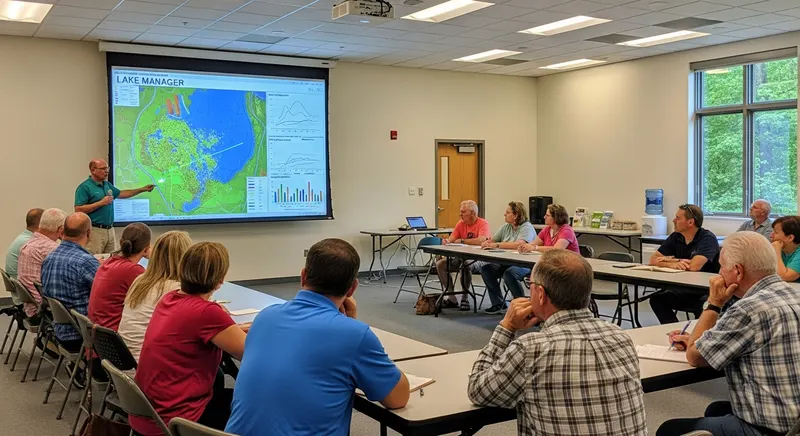
Lake Wingra, a 342-acre urban lake in Madison, WI, developed a comprehensive 10-year management plan coordinating the City of Madison, University of Wisconsin, and adjacent neighborhood associations. The plan addressed Eurasian watermilfoil, curly-leaf pondweed, and purple loosestrife through an integrated approach including targeted herbicide treatment, mechanical harvesting, native plant restoration, and public education.
Key outcome: The structured multi-agency planning process secured consistent funding across multiple budget cycles, a key advantage over ad hoc management. Native plant restoration efforts showed measurable progress in designated restoration zones within three years of initiation.
We referenced the biological control pages extensively when evaluating our grass carp stocking proposal. The detail on stocking rates and target species specificity helped us present a credible case to our board.
Karen Ostrowski HOA Lake Committee Chair, MN · Lake Minnetonka associationThe ecological impact section helped our team explain to county commissioners why early intervention matters. The oxygen depletion data alone secured funding for our early-detection monitoring program.
Donna Whitfield State Wildlife Biologist, GA · Okefenokee region